
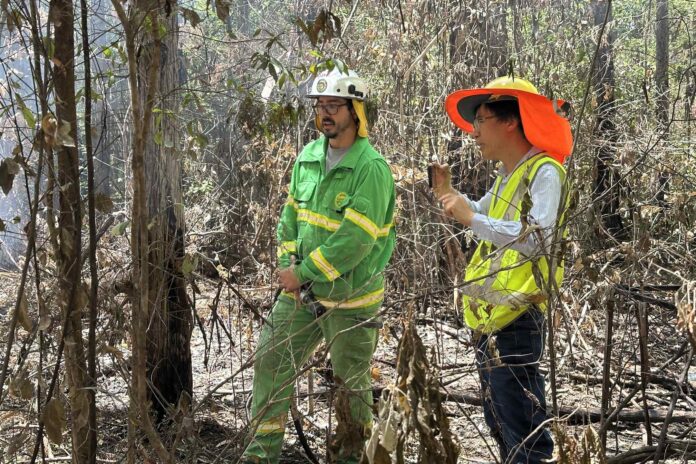
Researchers have commenced collecting samples from a Sunshine Coast state forest to help unlock new insights into how planned burns affect ecosystems.
Following a planned burn in Peachester State Forest in December, the researchers have returned to collect soil, leaf litter and insect samples to assess chemical and biological changes.
It is part of a program that began in 1969 and is Queensland’s longest-running fire regime study.
It has showed planned burns can have a positive impact on environmental health if they’re conducted at intervals specific to the ecosystem.
The analysis of decades of data shows different frequencies of low-intensity planned burns influence carbon storage, nutrient ratios, nutrient cycling and associated microbial and invertebrate communities.
Griffith University School of Environment and Science and Australian Rivers Institute Distinguished Professor Chengrong Chen and Dr Bruce Lan are leading the research, with support from the Queensland Parks and Wildlife Service (QPWS). Their latest findings are set to be published by Griffith University.
Help us deliver more news by registering for our FREE daily news feed. All it requires is your email at the bottom of this article.
QPWS Maleny senior ranger Donna Haslam said studies such as that at Peachester, west of Beerwah, provided science-based evidence of the best time to conduct planned burns in similar environments.
“When we’re planning a burn, we consider how the area’s plants, animals and ecosystems respond to fire and we tailor our plans to suit those needs,” she said.
“It’s important we continue to look at how the landscapes and ecosystems we’re working in respond to fire and planned burns to ensure our work is supporting a healthy environment.”
The ongoing study facilitates the use of planned burns for landscape management – a practice used by Australia’s First Nations peoples for thousands of years and continues to be used by QPWS.
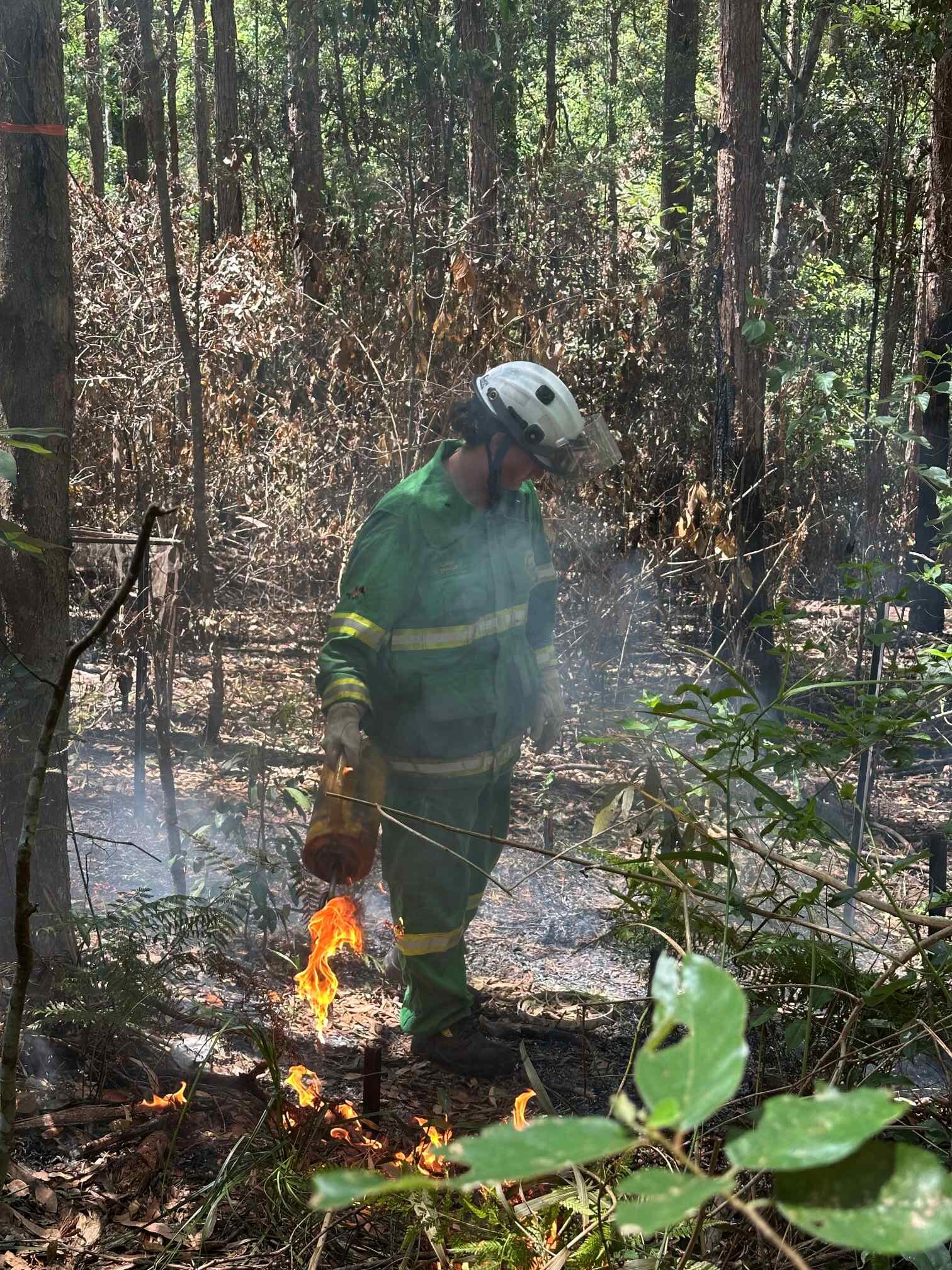
Professor Chen said that as part of the study, dedicated plots of the state forest are burned either about every two years or four years, with the remainder left unburned.
“This study is allowing researchers to understand the long-term benefits of repeated fire frequency on ecosystem diversity and function, soil carbon and nutrient stocks and soil health,” he said.
“This study has shown that significant fire regime improvements can be made by adjusting the frequency of these burns.
“In Peachester, planned burns every four years are highly effective in supporting healthy native wet sclerophyll forests by introducing phosphorus, calcium and potassium into the soil.
“Planned burns are important to mitigate the impacts of bushfire, but our research has shown that they can improve protected areas if they are conducted at intervals that best suit the ecosystem.”
Other fire regime research projects are taking place in Bauple State Forest near Gympie and Tagalaka National Park in Far North Queensland to paint a clearer picture of how frequent planned burns influence Queensland’s ecosystems.