
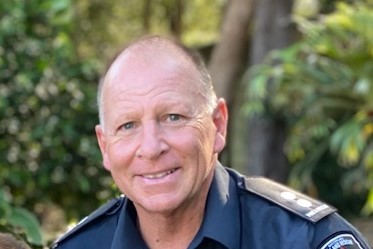
Robert Frey, station officer at Noosa Heads Fire Station, has been awarded the Australian Fire Service Medal (AFSM), the highest honour an Australian firefighter can receive, for distinguished service to the profession.
Mr Frey, who has devoted more than 31 years to Queensland Fire and Rescue, said he was “floored” by the recognition.
“Receiving this award is humbling,” the 60-year-old told Sunshine Coast News.
“But really, it reflects all the people I’ve worked with, learned from and continue to learn from. That’s what makes this job so special. The honour is theirs as much as it is mine.
“It’s a community-based role, and it’s a privilege to work alongside such great people. I’ve always loved and respected the job.”
Mr Frey began his service in 1992 as an auxiliary firefighter and became a permanent firefighter in 1994. He was promoted to station officer at Noosa Heads in 2001 and has spent most of his career on the Sunshine Coast.
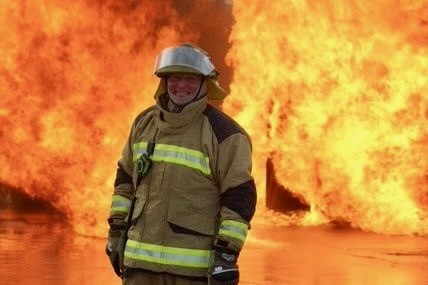
“I’ve been very lucky to work with so many good people who all have the same team focus I’ve had,” he said.
“Firefighters all over the world need to have a certain set of skills, but they also need to be good people – you need a good sense of humour, a good heart and a commitment to your team.”
While fires remain a core part of the job, Mr Frey said modern firefighters spend much of their time on rescues and emergency response.
“Seventy per cent of our work now is road crash rescue, floods, mountain rescues and all sorts of other emergencies,” he said.
“You need to be prepared for anything, not just fires. There’s a huge variety in the job, and keeping up with new technology and rescue techniques is a big part of it.”
Throughout his career, Mr Frey has taken leadership roles in major deployments, including the Black Saturday bushfires (2009), Narrabri (2012), Hazelwood Mine fire (2014), Cradle Mountain (2018), Tamworth bushfires (2019) and Swan Hill floods (2022).
Alongside frontline duties, Mr Frey has served as a lead instructor at the Queensland Fire and Rescue Tactical Training Unit for more than 21 years.
“I’ve been lucky enough to teach recruits how to deal with complex firefighting and rescue situations and share the skills and knowledge I’ve learned over the years,” he said.
“That’s been really rewarding. The skills you pass on can save lives, and knowing that gives me a lot of satisfaction.”
Despite his age, Mr Frey remains operational and still responds to call-outs.
“I’m still on the truck, where the rubber meets the road,” he said.
“I still get a kick when the bells go off. Even after all these years, there’s nothing like arriving at a scene and knowing you’re there to help someone at their most vulnerable.”
Scroll down to SUBSCRIBE for our FREE news feed, direct to your inbox daily.
He has also represented Queensland and Australia internationally. In 2010, he was selected for the Tour of Duty Run across the United States, running from Los Angeles to New York to commemorate emergency service workers who lost their lives in the September 11 attacks. The following year, he represented Queensland Fire and Rescue at a joint sitting of the US Congress.
“That experience really changed my life,” he said.
“It instilled the brotherhood and sisterhood of firefighting for me. You see what it means to be part of a global community of firefighters who are there for each other and the people they serve.”
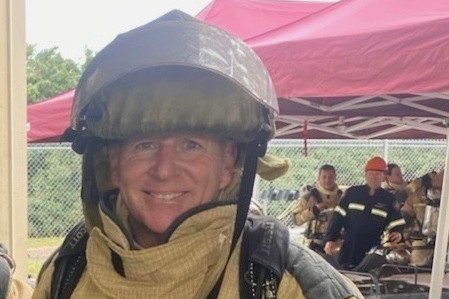
For Mr Frey, the smaller moments are just as meaningful as the large-scale deployments. “The satisfaction when someone survives a car crash, flood or fire because of your training – that’s incredibly rewarding,” he said.
“There’s no greater feeling than helping people when they’re at their most vulnerable. Every job, big or small, has an impact.”
He paid tribute to his family, acknowledging the sacrifices made by his wife Donna and sons Jack and Mackenzie over decades of shift work.
“The life of a firefighter is a seven-day-a-week, 24-hour-a-day commitment,” he said.
“Every firefighter’s family deserves recognition for what they give up. You need support at home to be able to give your all to the community.”
Mr Frey said part of what keeps him motivated is the culture of the fire service itself.
“Being a firefighter is not just a job, it’s a community, it’s a family,” he said.
“The people you work with become like brothers and sisters. My goal has always been to make sure firefighters are safe and happy at work, because that’s the best way to serve the community.”
He said the work of firefighters has evolved dramatically over the years.
“Cars now have hydrogen, electric and complex fuel systems,” he explained.
“Lithium-ion batteries can go into thermal runaway. We deal with all of that and more, on top of floods, rescues and fires. You have to constantly train and stay ahead of the technology, because lives depend on it.”