
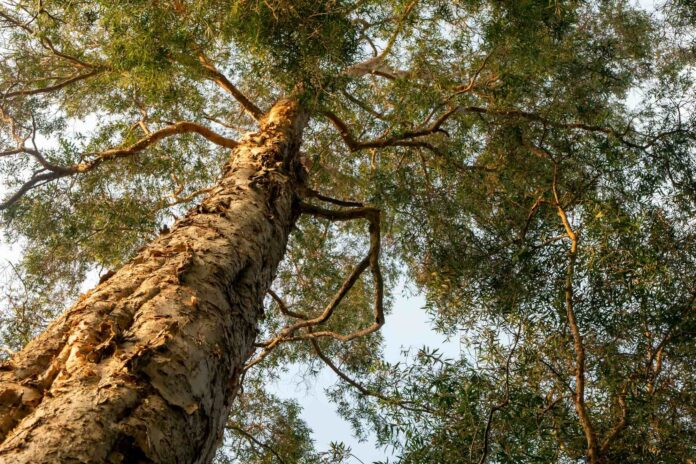
Hidden inside the bark wrapped snugly around tree trunks, an abundance of microscopic life has been discovered.
These tiny living things, only visible under a microscope, have a healthy appetite for gases, including methane – a potent driver of global warming.
The Australian researchers who discovered the gas-scrubbing bark microbes say trees could have an even bigger role in combating climate change than first thought.
One of the paper’s lead authors, Bob Leung, from Monash University’s Biomedicine Discovery Institute, said microbes have been known to exist in soil for many years, but tree bark had long been overlooked as a potential habitat.
“It is one of the really early findings that gas-consuming microbes are occurring in such a high abundance in plants,” he said.
Help us deliver more by registering for our FREE daily news feed. All it requires is your email at the bottom of this article.
That means vastly more microbes guzzling climate-warming gases worldwide, with the global surface area of bark enough to cover all seven continents, were it to be flattened out.
Trees are already instrumental in the fight against global warming caused by burning fossil fuels and the release of excess greenhouse gases into the atmosphere.
Plants absorb atmospheric carbon dioxide, the most abundant greenhouse gas, through photosynthesis – although the carbon-absorbing capabilities of forests have been somewhat undermined by the climate change-fuelled heat and drought killing more trees.
The bark microbe discovery by Monash University and Southern Cross University confirms trees have another weapon in the fight against climate pollution – scrubbing the air of methane, hydrogen and carbon monoxide.
Methane is a particularly potent contributor to global warming and scientists consider both hydrogen and carbon monoxide as “indirect” greenhouse gases that work to prolong the life span of methane.
Luke Jeffrey from Southern Cross University’s Faculty of Science and Engineering, another of the lead authors on the paper published in Science, said the scale of bark microbe gas removal was staggering.
“This microbial activity across this massive ‘bark continent’ is potentially removing millions of tonnes of climate-active gases every year,” he said.
Related story: Few forests spared from tree losses
The study of 80 different Australian species across five years suggests wetland trees host microbes in greater numbers, potentially due to the higher moisture availability.
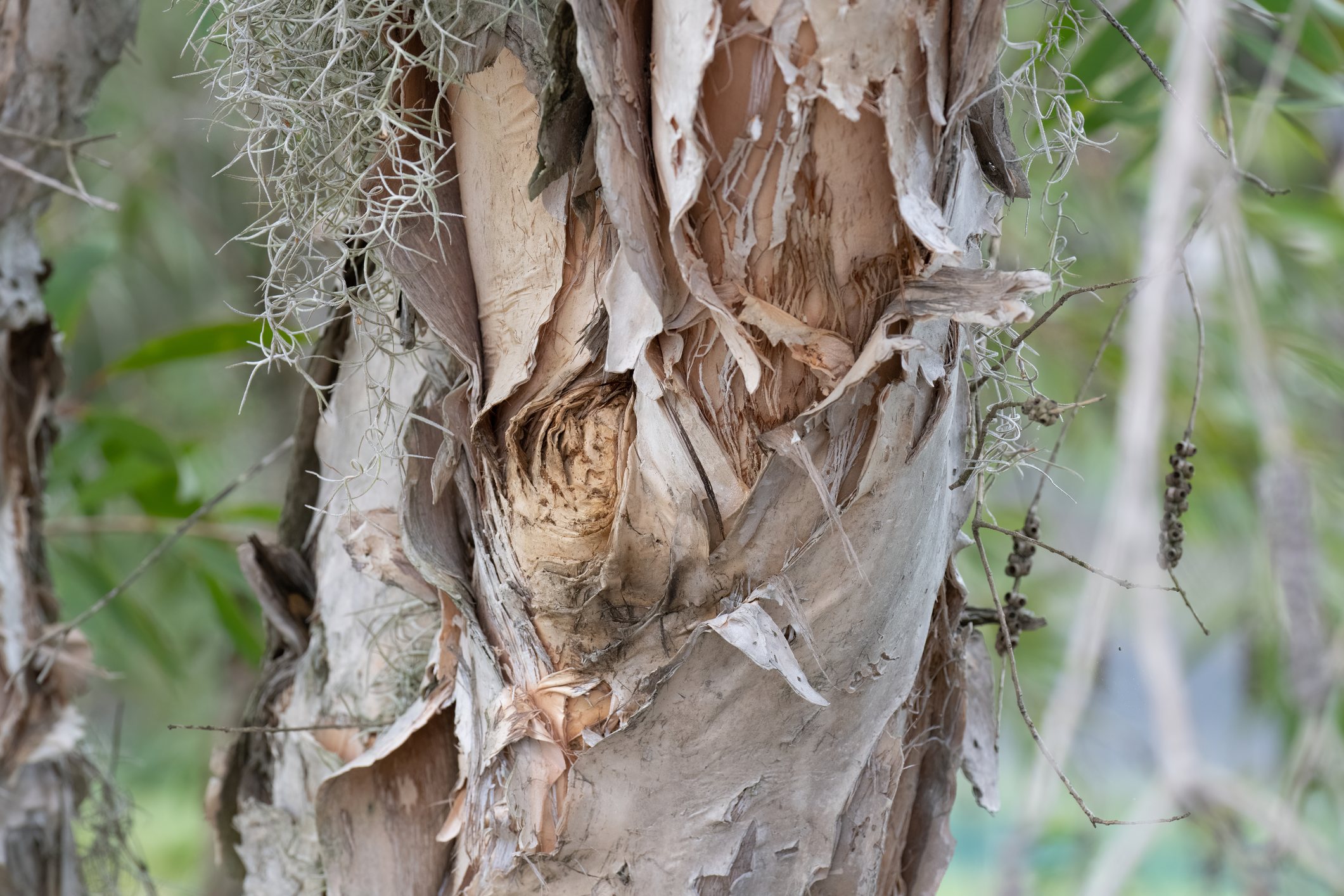
Melaleuca, commonly known as the paperbark tree, was among the species identified as particularly rich in microbes.
Further research into the gas-absorbing potential of different species could help inform conservation priorities, as well as reforestation and urban greening projects.
“It’s about how we can use trees, the right trees and the right microbes, to achieve the biggest climate benefits for us,” Dr Leung said.