
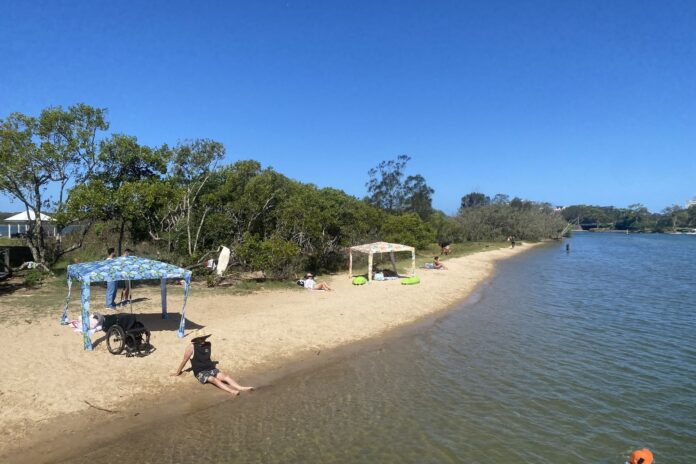
A renowned Sunshine Coast island is likely to be swamped by water in coming decades, prompting the local council to consider removing facilities including an iconic bridge and a prominent building.
Chambers Island — a haven for sailing, rowing, fishing, swimming and family picnics — is expected to be overwhelmed by the impacts of climate change.
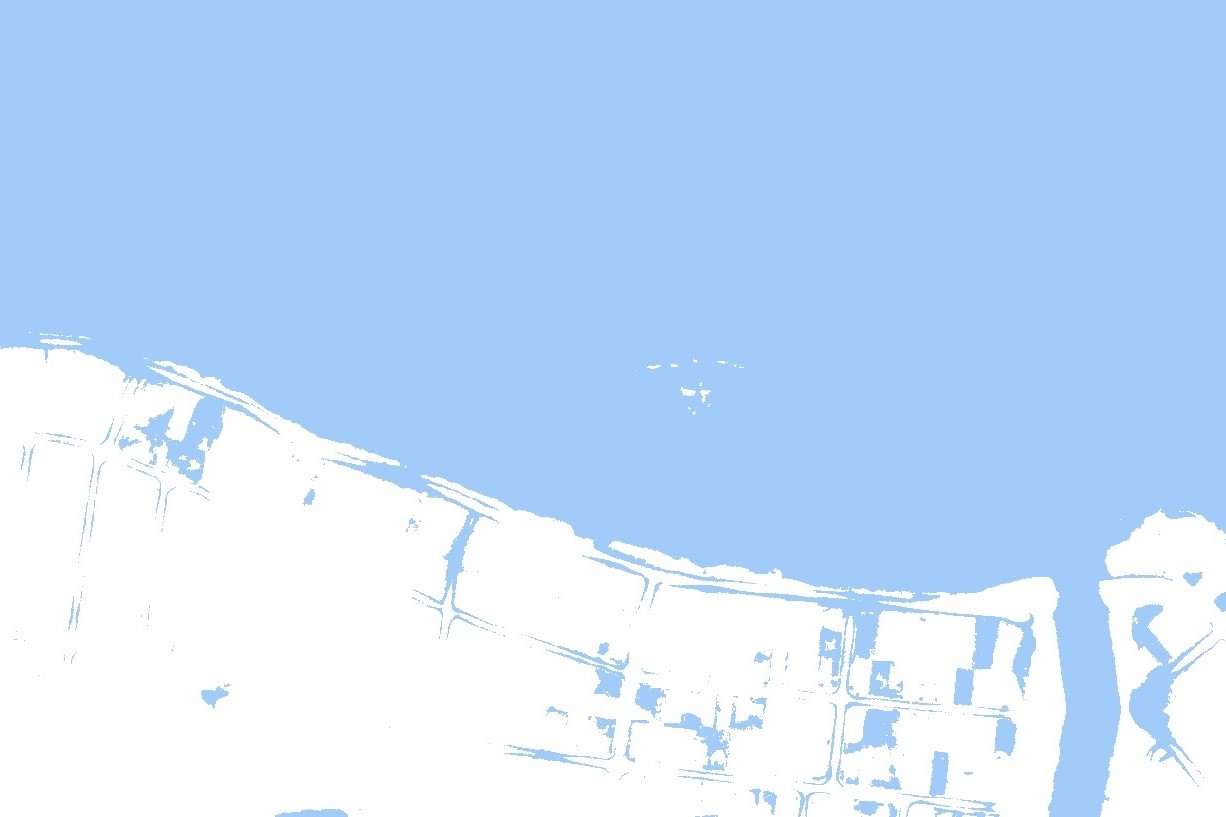
Hazard mapping shows large parts of the Maroochy River island should be swallowed by the tide by 2041, likely ending direct public access. Almost the entire island should go underwater by 2070, before it disappears completely.
A Sunshine Coast Council spokesperson confirmed that a ‘transition’ phase could be implemented.
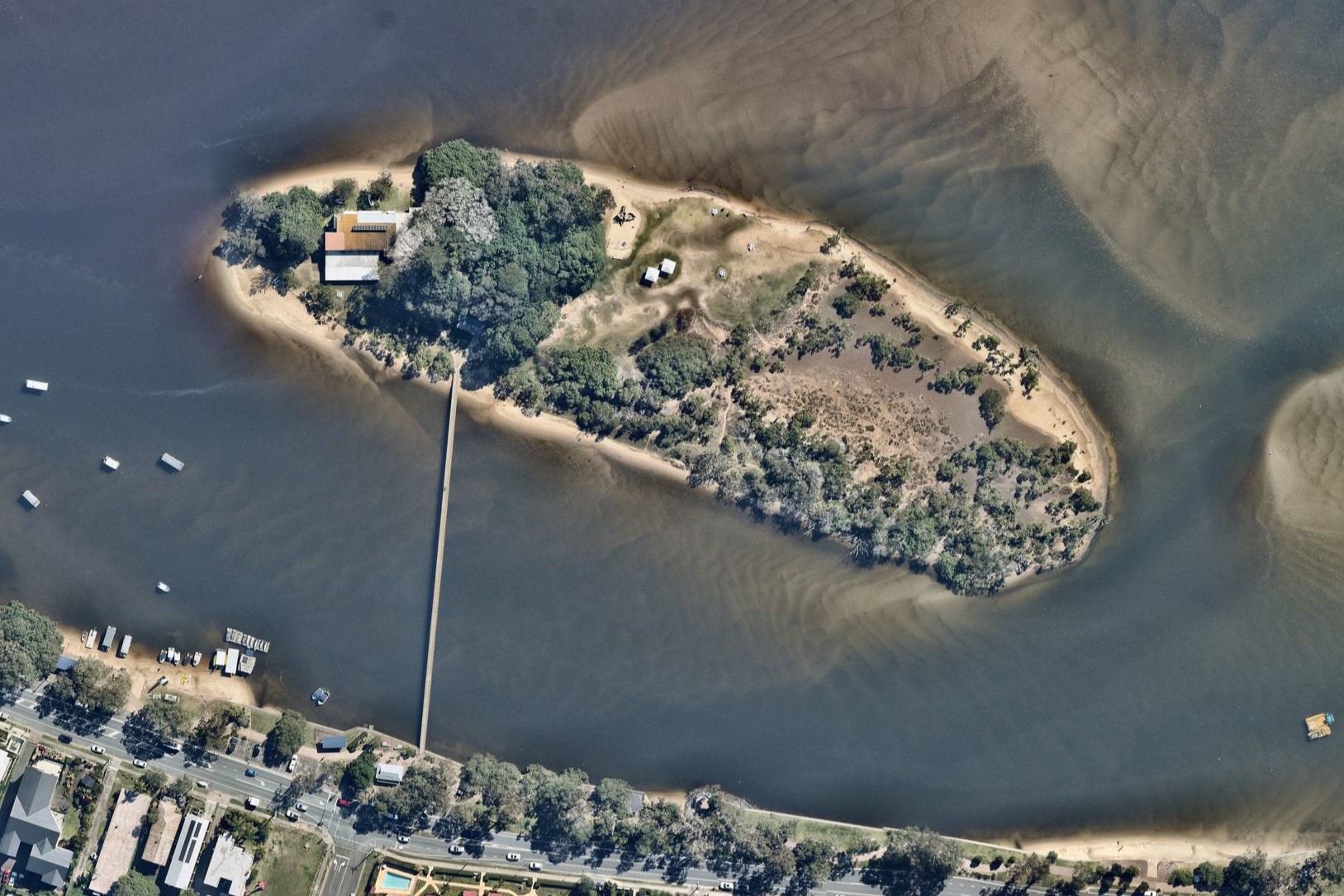
That could consist of the removal of facilities including a 135m pedestrian bridge that connects the island and mainland, a three-storey sailing clubhouse, a playground, picnic furniture and a toilet block.
Want more free local news? Follow Sunshine Coast News on Facebook, LinkedIn and Instagram, and sign up for our FREE daily news email.

“Council’s Coastal Hazard Adaptation Strategy recognises the implementation of a ‘transition’ adaptation option involving the removal of ‘hard’ assets and services from erosion and inundation prone areas from around 2041, or at the end of the asset’s useful life, or when service or safety standards cannot be maintained, or when erosion or inundation risks are imminent, and removal is required to avoid realisation of the risks,” the spokesperson said.
“Council has started a Maroochydore Coastal Hazard Adaptation Precinct Planning process, which will include Chambers Island.”
Significant works were completed at the island, including to the bridge in 2020, to “extend the life of existing assets as much as possible”.
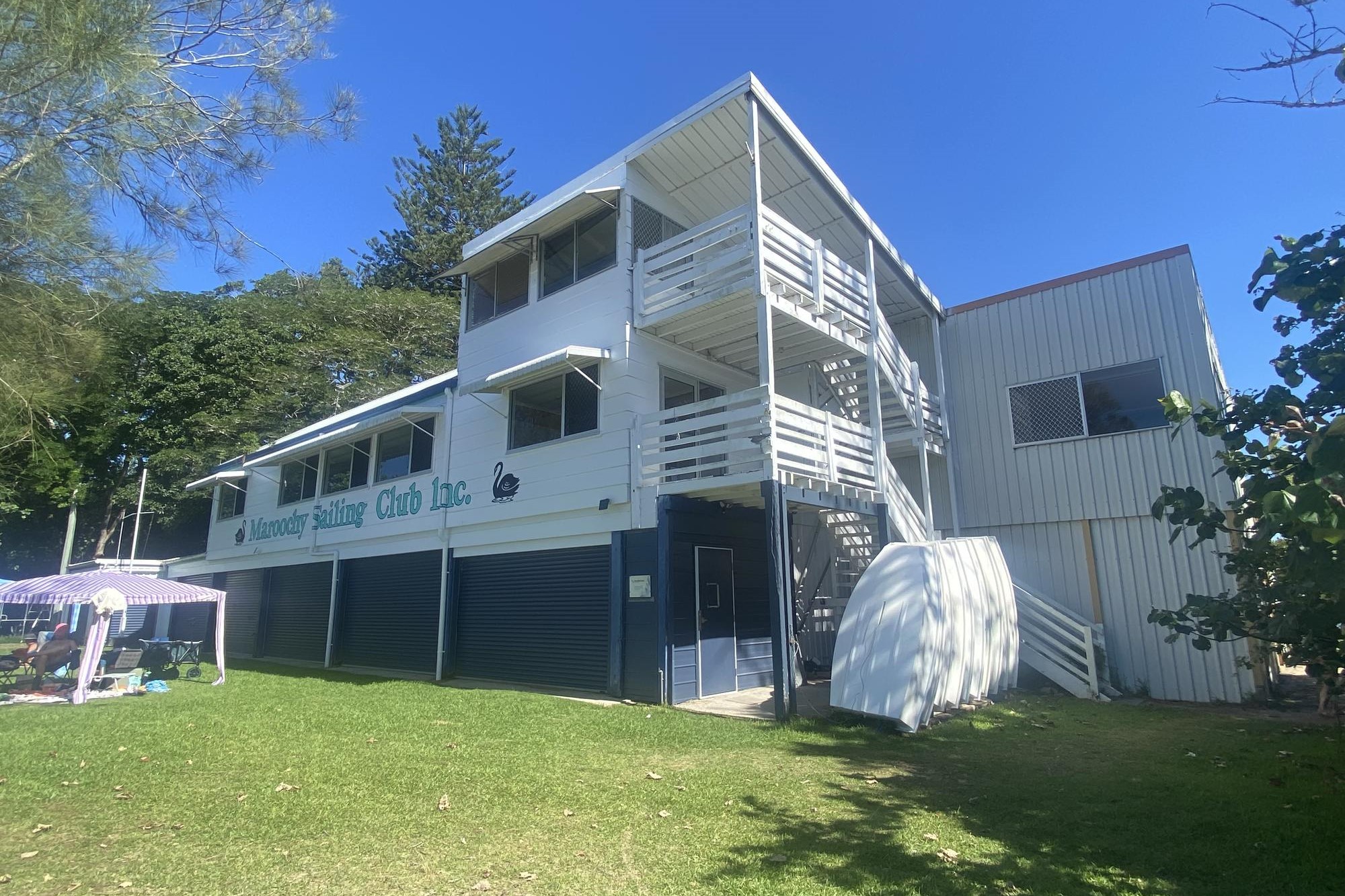
Council documents revealed the ‘transition’ phase could include the removal of the Maroochy Sailing Club building that was established in the mid-1960s.
“The short-term plan is to undertake interim structural remediation works to the club facilities (and) the medium-term plan is to investigate the viability of relocating the club from Chambers Island,” the spokesperson said.
“There will be ongoing investigations as to where the sailing club could be relocated. However, this has not yet been confirmed.
“Relocation is likely required due to increased frequency of building inundation.
The building is also used by the Sunshine Coast Rowing Club, which also has a base at Bli Bli.
Chambers Island, which is owned by the state government and managed by the council, is currently subject to inundation from high tides, storm tides and river flooding.
But those impacts are set to become more significant in years to come.
The spokesperson said the local council had previously undertaken minor nourishment works to “temporarily stabilise the shoreline in response to ‘nuisance’ erosion”. But that won’t be done again.
“Costs are disproportionately high for these works due to access constraints.”
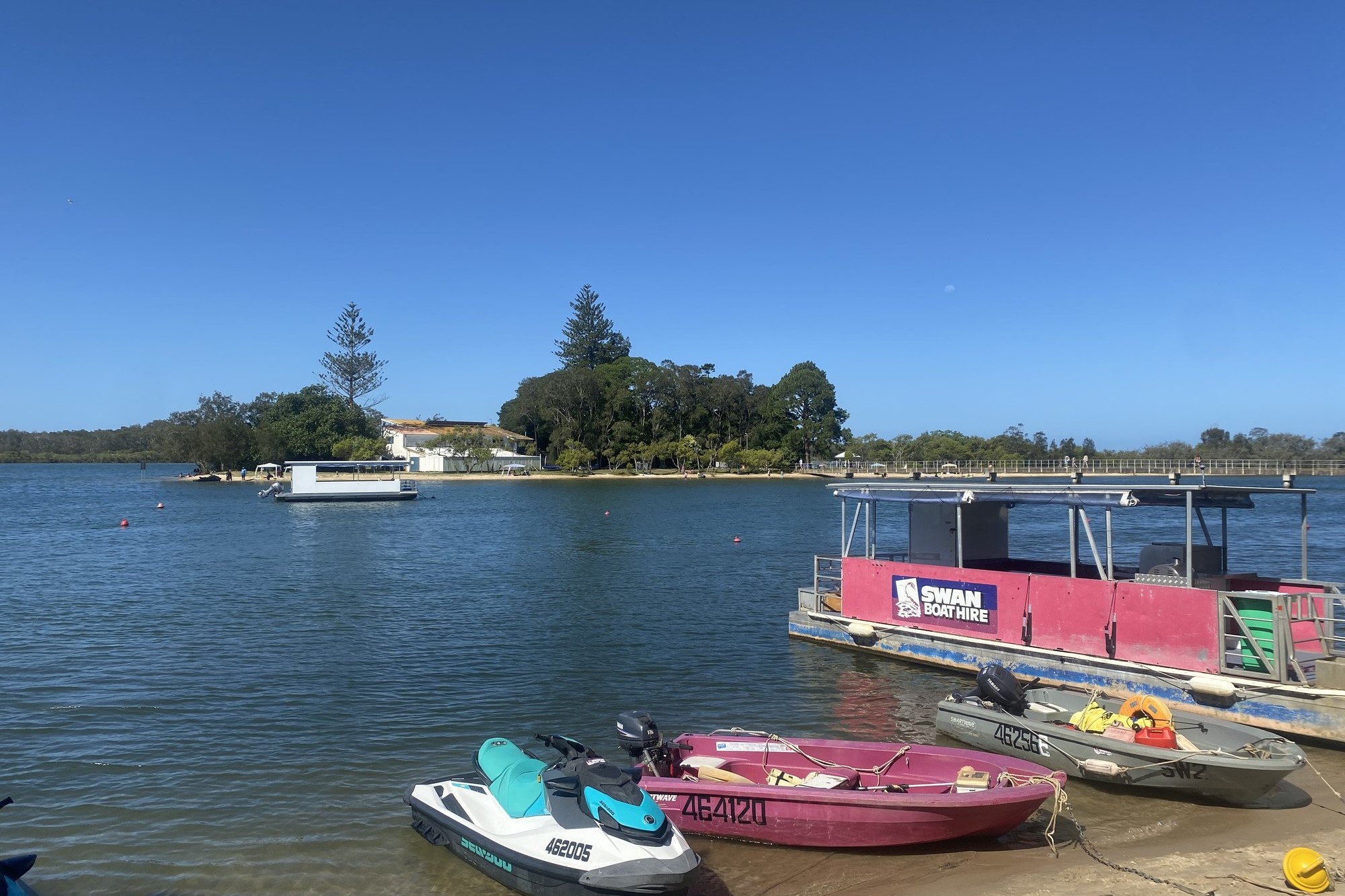
“A barge is required to get machinery to the island to shape beaches as the footbridge cannot support heavy machinery.”
“The permit for that activity has expired and it’s unlikely the works will be renewed.
“Such nourishment works do not provide protection to the land-based assets from flooding, future sea level rise or erosion events.”
Sunshine Coast News asked the council if the island could be closed or restricted to the public in years to come but did not receive a direct response, other than the council’s recognition of the ‘transition’ option involving the removal of assets and services. That indicates that people may no longer be able to access what’s left of the island via the bridge from around 2041 or “at the end of the assets’ useful life”.

The aerial imagery in this story is from Australian location intelligence company Nearmap. The company provides government organisations, architectural, construction and engineering firms, and other companies, with easy, instant access to high-resolution aerial imagery, city-scale 3D content, artificial intelligence data sets, and geospatial tools to assist with urban planning, monitoring and development projects in Australia, New Zealand and North America.