
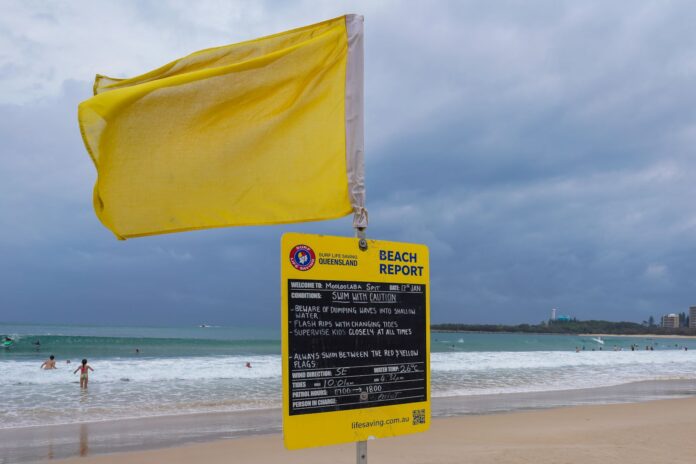
Australia’s beaches continue to pose fatal risks to overseas-born people, with a study suggesting many struggle to understand warnings presented on signs.
A Monash University study found beach-related terminology and even the colour of warning signs were regularly misinterpreted by international visitors.
The stark research comes as the summer peak drowning period approaches, with some cultural representative bodies questioning if enough has been to teach beach safety.
About a third of Australia’s 357 drowning deaths in 2024/25 were people born overseas.
Monash University drowning prevention researcher Masaki Shibata, who is also a surf lifesaver, said instructions such as “swim between the flags” were open to misinterpretation.
Want more free local news? Follow Sunshine Coast News on Facebook, LinkedIn and Instagram, and sign up for our FREE daily news email.
Other terms such as “shore dump”, “rip current” and “submerged object” also do not always translate well.
“To make the terms more universal, first we have to revise English … shore is location, dump is action, and a lot of people don’t know what is dumping you or what’s being dumped,” he said.
“Can we just simply say ‘crushing waves’ instead, for example, and instead of ‘swim between the flags’, can we just say ‘stay between the flags’.”
Dr Shibata’s previous work has found ‘swim between the flags’ can be misunderstood as an area for swimmers, prompting some people to venture into the sea outside.

“Some people thought that they should be outside of flags because they can’t swim,” he said.
High-risk signs such as “beach closed” or “do not swim” should be in red, rather than yellow, the study found, to ensure the seriousness of the message gets through.
Understand signage was crucial, Dr Shibata said, given many were tempted to simply follow what others are doing.
Related story: Lifeguard services boosted at northern beaches
Ninety per cent said they would not go in the water if they saw a sign reading “dangerous current”, but half of them indicated they would go in if they saw others swimming, he said.
Amar Singh, from Sikh organisation Turbans 4 Australia, has argued for education campaigns and other initiatives to improve water safety among migrant communities.
But he said peak bodies had made minimal inroads in recent times.
“Sadly, people seem to only hear or learn about water safety when it’s too late,” he said.
“We’re doing a lot of triage after the fact, rather than going out to community beforehand and going ‘hey, this is actually something that really can take your loved ones away.'”
Mr Singh suggested a water safety briefing should be part of the visa application process.