
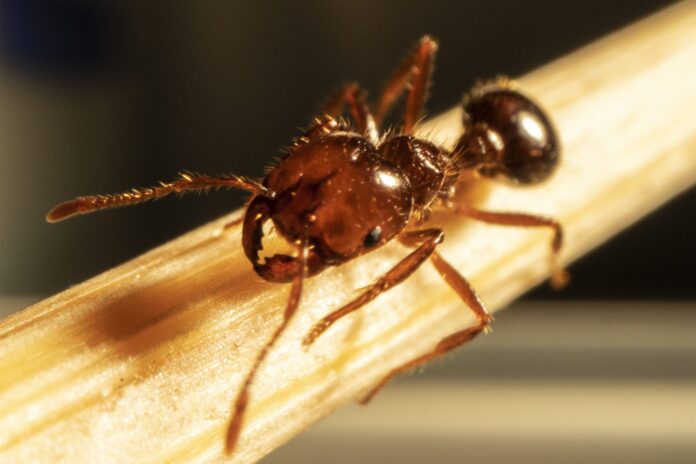
The battle against fire ants is stepping up on the Sunshine Coast, with authorities assuring residents the bait being used on properties is safe.
Eradication activities, including aerial treatments, are being conducted in several towns and suburbs in response to outlier detections in the region.
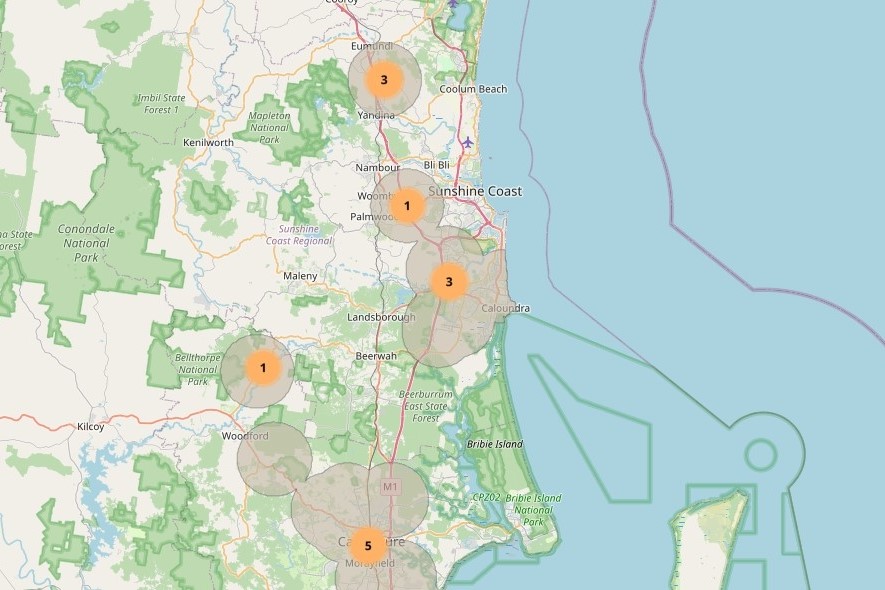
A National Fire Ant Eradication Program (NFAEP) spokesperson detailed the extent of a concerted campaign at Nirimba and Baringa, where fire ants have been detected twice.
“The eradication plan includes four treatment rounds between October and June, covering around 2000ha.”
Treatment will also be continued at Currimundi, Forest Glen, North Arm and Palmview, after detections last year and this year.
Related story: Another new detection of fire ants on Coast
“Once treatment is complete, we will carry out clearance surveillance to ensure all fire ants have been eradicated,” the spokesperson said.
Fire ant biosecurity zones have also been established at affected areas, to limit the movement of equipment and materials that could spread fire ants.
“To support the implementation of these zones, we delivered ongoing community engagement and compliance checks to trace sources and prevent further spread,” the spokesperson said.
The spokesperson said that eradication treatment is being applied via aircraft to properties over 5ha, and applied via utility terrain vehicles and handheld treatment spreaders to smaller properties.
“The program is continuing eradication treatment using drones on the Sunshine Coast, while helicopters target other priority areas. Helicopters will return to the Sunshine Coast in the coming weeks,” they said.
The NFAEP is authorised to access all properties for eradication activities under the Biosecurity Act 2014.
Several people around the state’s south-east have expressed concerns about the treatment and property access.
A critical social media post by Alex Pentelow, on a local Facebook group, was met with mixed opinions.
He was “disgusted” that NFAEP teams could legally access properties and suggested they were using harmful “poison”.
Nina Marie claims she lost eight chickens within seven days of her property being treated, while Kirra Gorrie said she had been bitten by fire ants but the treatment was an “exaggerated response” that was not worth harming “pets, wildlife and contaminating our country”.
However, Chris Rose said the NFAEP treated his property twice and his free-range chickens, dogs, cows and native wildlife were “all good” while Clay Stewart said his place was also treated twice, it only took 15 minutes and there was “no effect” on wildlife. He said too many locals were “scaremongering”.
Cheree Parker said it was “crucial” to control fire ants.
“They harm livestock and wildlife if left unchecked and can deliver a nasty sting to landowners.”
The NFAEP spokesperson moved to assure locals that the treatment is safe to use.
“Fire ant eradication treatment is a granular product, not a spray,” they said.
“It consists of small pieces of corn grit soaked in soybean oil containing a low concentration of an insect growth regulator (IGR) – either pyriproxyfen or S-methoprene. It is safe for people, animals and the environment.”
Want more free local news? Follow Sunshine Coast News on Facebook, LinkedIn and Instagram, and sign up for our FREE daily news email.
The NFAEP website states that staff can legally enter properties without the owner’s consent but “we prefer to work with you find a convenient time to do our work”.
The NFAEP states that teams only focus on outdoor areas where fire ants may be present, and penalties could be applied if they are refused or prevented from doing their work.
The spokesperson detailed how authorities communicate with locals regarding aerial treatment.
“We work with property owners and tenants to tailor safe and effective aerial treatment plans. Pre-treatment visits gather key details including contact information, livestock, and potential hazards.”
“Property owners and tenants are notified of aerial treatment dates by phone or text message at least 48 hours in advance.
“We endeavour to address any concerns from property owners and tenants and work with them to ensure the safe and effective treatment of their property.
“Aerial treatment is as vital as ground operations. Community support is essential to eradicate fire ants and protect our way of life.”
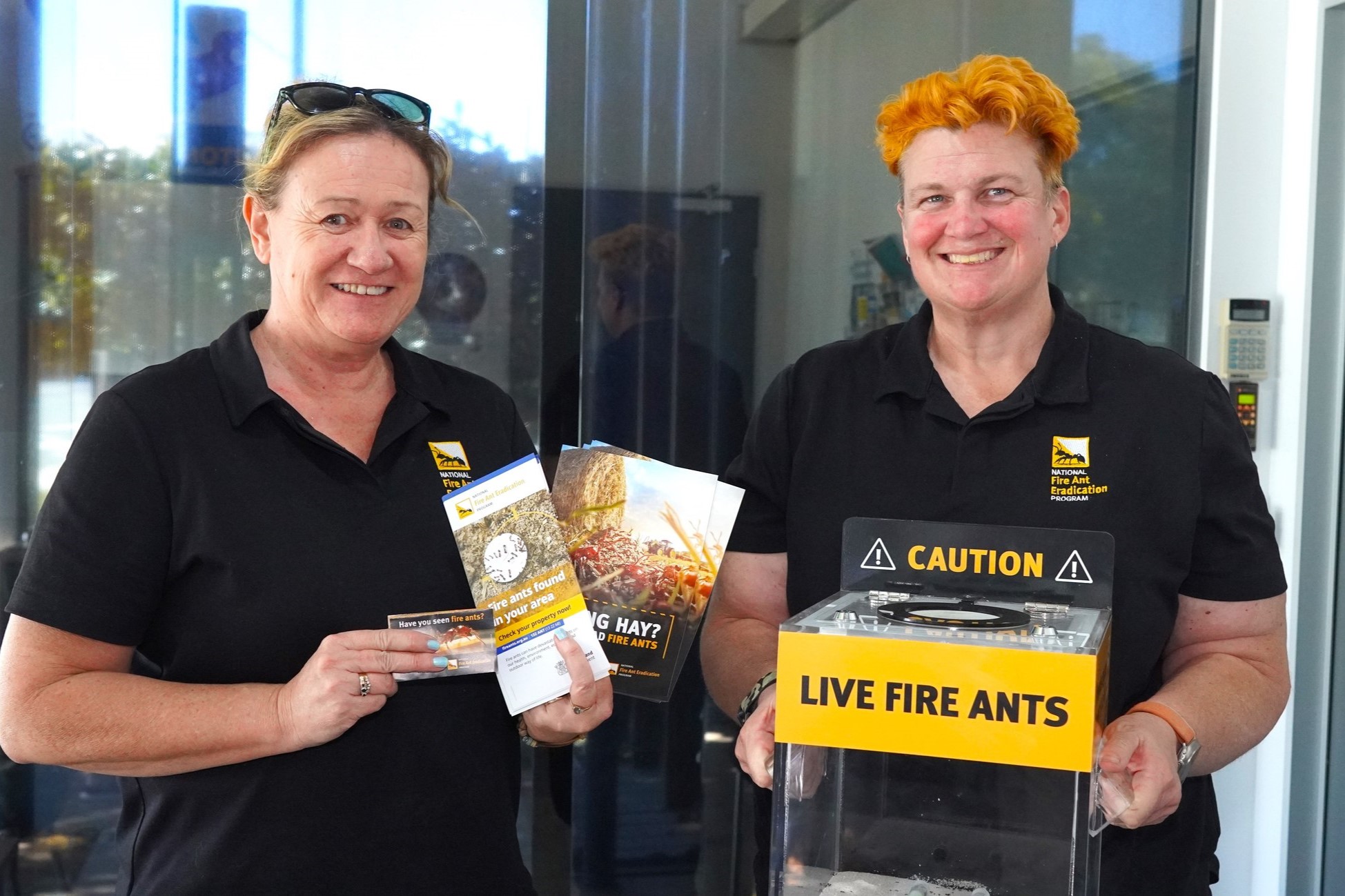
The spokesperson said the NFAEP was informing residents and engaging with them, and that the only way to end the fire ant threat was to work together.
“We communicate with local communities and businesses about upcoming eradication activities through on-the-ground engagements, letterbox drops, flyers, social media, newsletters and via our website.”
“Eradicating fire ants requires a whole-of-community approach. We need everyone to: check their properties and local area for fire ants; report their findings online or by calling 132 ANT (13 22 68) – suspect ant reports should be made within 24 hours; complete a property information form and allow our teams property access to conduct eradication activities; take steps to prevent the spread of this invasive pest.”
Sunshine Coast News asked the NFAEP what areas are being treated by air, how many affected property owners have complained about treatment and what the penalties are for refusing treatment, but did not receive a direct response.
The NFAEP, which is supported by federal and state governments, states that fire ants can damage crops, plants, irrigation systems, electrical equipment and machinery; attack livestock and birds; interfere with pest management practices; feed on fauna and displace native species; eat and damage seeds; sting people and pets; and take over parks and gardens.
Sunshine Coast Council recently presented a motion at the Queensland Local Government Conference AGM, for enhanced federal funding for local biosecurity efforts against fire ants. It was supported by other councils.
See more on the NFAEP website.