
Flooding has depressed the value of more than two-thirds of Australian homes that sit in the firing line, new analysis finds.
A standard three-bedder at risk of deluge is worth roughly $75,500 less than a comparable property free from the threat of inundation.
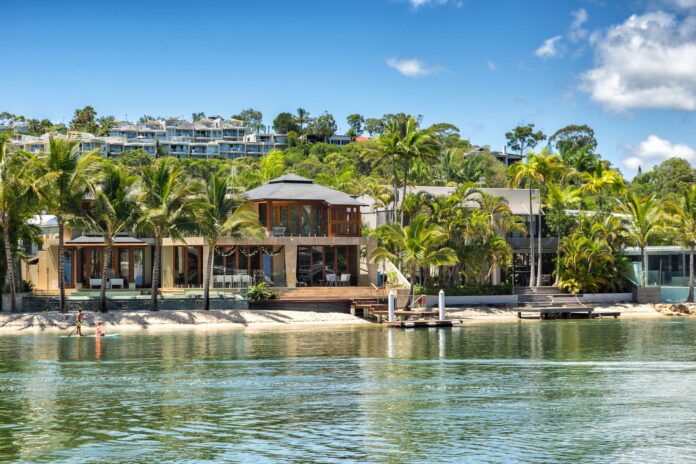
But in some locations, waterfront views trumped other considerations and flood-vulnerable homes were more expensive, including in Noosa on the Sunshine Coast.
The fresh analysis of home prices and flood risks confirms as many as 70 per cent of vulnerable homes elsewhere around the nation were priced at a discount.
The report from real estate data firm PropTrack and environmental not-for-profit Climate Council challenges existing research suggesting flood-hit property markets bounce back quickly after a disaster.
By separating vulnerable homes from the flood-risk free in a “market first” dataset, researchers were able to find at-risk properties did recover but from a lower base.
Help us deliver more news by registering for our FREE daily news feed. All it requires is your email at the bottom of this article.
Homes out of reach of floodwaters also usually rose in value faster that at-risk properties.
The result is the gap widening over time between at-risk homes and resilient ones, PropTrack senior economist and report co-author Eleanor Creagh explained.
“It’s that long-run growth penalty that compounds year after year, and can come to a significant amount,” she told AAP.
A standard three-bed, two-bathroom house in a flood-risk region can be expected to sell for $75,500 less than a comparable home not in the path of potential flood waters.
Viewed nationally, the housing stock is worth $42.2 billion less than if flood risk did not exist.
The east coast and tropics have always been prone to flooding but climate change has been fuelling increasingly heavy downpours, with the warmer atmosphere capable of holding more moisture and energy to fuel storms.
Floods are now Australia’s most damaging weather event.
In 2025, floods hit North Queensland in February and the mid-north and Hunter regions of NSW in May, with ex-Tropical Cyclone Alfred also wreaking havoc in March.
Queensland and NSW host the bulk of at-risk properties and the lion’s share of valuation markdowns.
The biggest price discounts are typically observed in places recently struck by disaster.
High-value or prestigious markets are generally more resilient to flood-related discounting but not immune, with penalties observed in places such as Queensland’s Mermaid Beach.
While Ms Creagh said the research was proof the market was already pricing in flood risk, there were still regions where it was under-weighted in buyer valuations.
“The $42.2 million, in the context of the value of the entire residential housing stock, it’s around point 0.4 per cent,” she said.
“Although it sounds like a big sticker number – and it certainly is in the suburbs that are most affected – if you think about the entire value of the residential dwelling stock, it isn’t so large.”