

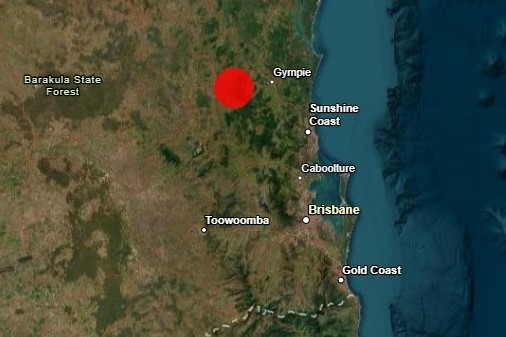
Thousands of people have felt the shake of one of the strongest earthquakes to hit Australia, including on the Sunshine Coast, amid warnings of aftershocks.
Almost 15,000 people have reported sensing the tremor, which struck near the Queensland town of Kilkivan, about 170km northwest of Brisbane on Saturday morning.
Geoscience Australia registered the 5.6 magnitude quake at a depth of 10km near the Wrattens National Park about 9.50am.
The strongest earthquake to strike the state’s mainland in five decades is the third and strongest detected in Australia in recent days.
“I don’t think anyone expected to wake up to that today in Queensland,” Premier David Crisafulli said.
Geoscience Australia seismologist Michelle Salmon said the only stronger recent earthquake was an offshore temblor in 2016 near Bowen in the state’s north.
“This is the largest earthquake we’ve had onshore in Queensland for 50 years,” she said on Saturday.
“We can certainly expect more aftershocks from this event.”
The agency had received almost 15,000 “felt reports” by 1.30pm.
The tremor was felt from Rockhampton on the central Queensland coast as far south as Sydney.
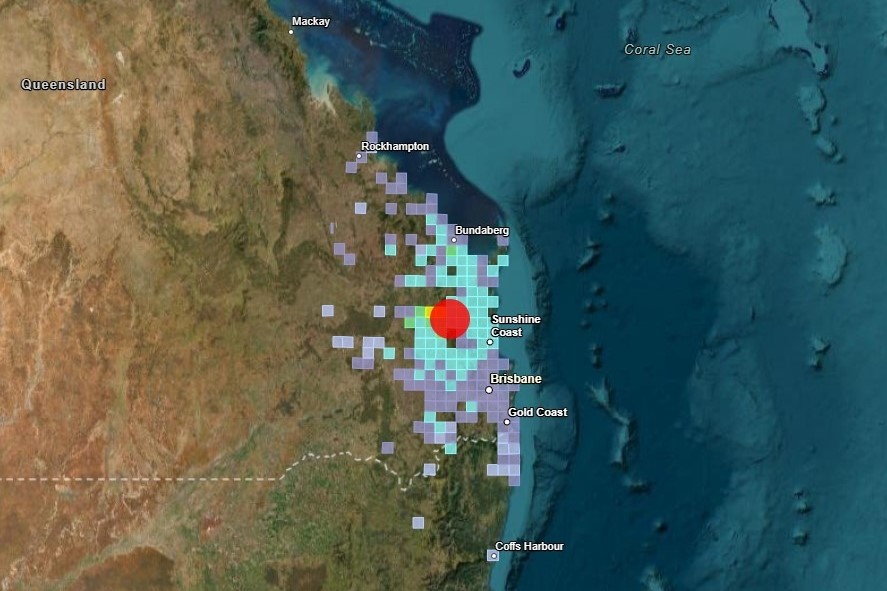
Mark Barton and others at Peregian Beach on Queensland’s Sunshine Coast felt the quake about 85km away.
“We thought initially there might be some construction work gone wrong,” he said.
“Then the vibrations got quite strong and stronger.
“The windows were rattling and the whole house was shaking, not violently but quite noticeably.”
The vibrations went on for about a minute, bringing neighbours out into the street.
“It caused people to be a bit scared,” Mr Barton said.
The Joint Australian Tsunami Warning Centre advised there was no tsunami threat.
More than 13,000 customers near the epicentre lost power following the quake, network operator Ergon Energy said.
The disturbance triggered protection equipment at substations in nearby Murgon and further away at Burrum Heads, north of Hervey Bay.
Power outages from the quake had been rectified by 1.30pm.
Geoscience Australia stations as far as 1000km away in Canberra registered the earthquake.
Want more free local news? Follow Sunshine Coast News on Facebook, LinkedIn and Instagram, and sign up for our FREE daily news email.
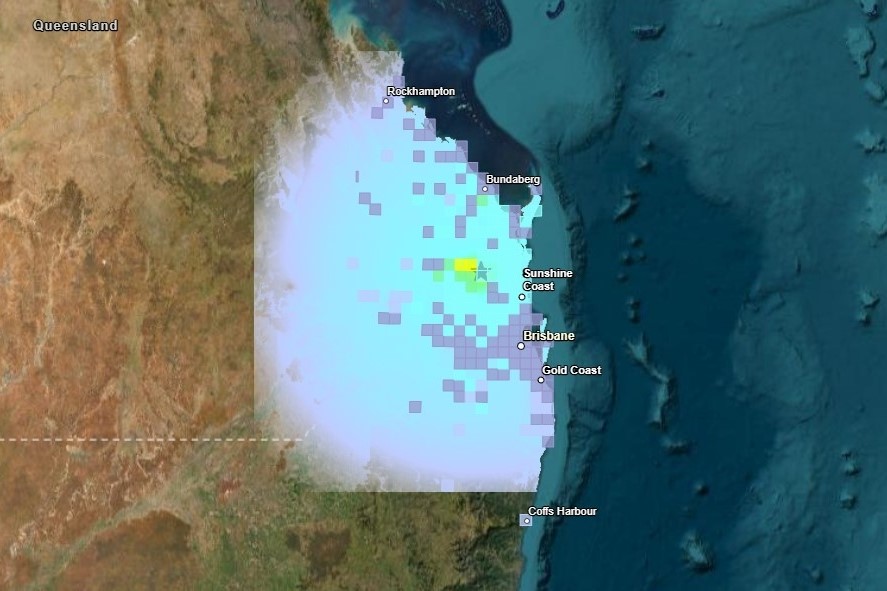
Hundreds of Sunshine Coast residents took to social media post-quake.
“The house was moving,” Ange Davies said. “I thought it was a low flying jet.”
“I was outside and the concrete felt like a wave under my feet,” Tash Anstiss said.
“Walls and house shook, furniture moved,” Rach Booth said.
“Our two-storey bulding in Caloundra shook for about 15 seconds,” Ros Marks said.
“I was working in a coffee van and went to go yell at some kids because I thought they were shaking it,” Mia Warland said.
“Shook our home (at Golden Beach), lasted about 10 seconds,” Patricia Vaughan said.
Earthquakes of more than magnitude five occur every one to two years, with an average of 100 quakes at magnitude three or lower recorded each year in Australia, according to the agency.
A 3.2 magnitude earthquake was recorded on Victoria’s Mornington Peninsula on Wednesday, following a 3.6 magnitude earthquake recorded west of Kingscote on South Australia’s Kangaroo Island on Tuesday.
The nation’s largest recorded earthquake hit Tennant Creek in the Northern Territory in 1988 according to Geoscience Australia.
The 6.6 magnitude earthquake damaged a major gas pipeline.
A 6.5 magnitude earthquake was felt over much of southern WA in 1968 after striking Meckering, east of Perth.
The 5.6 magnitude earthquake which killed 13 people in Newcastle in 1989 was Australia’s deadliest quake.



