

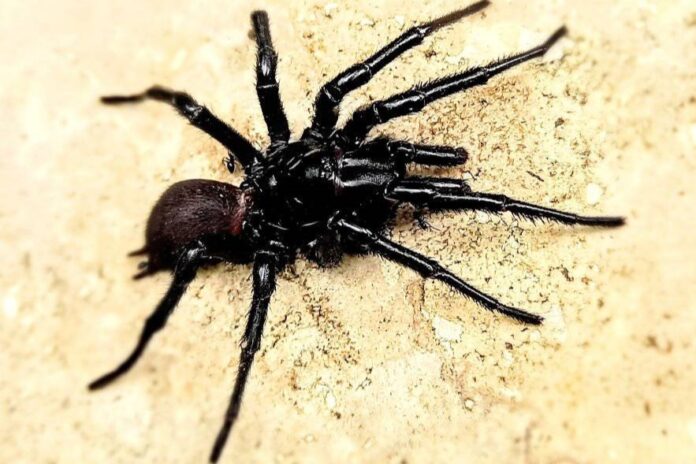
Forget the redback on the toilet seat, it’s the funnel-webs in the pool that Lara Emerson has to watch out for.
Ms Emerson has lost count of how many of the deadly spiders she has fished out of the water since she put a pool in at her home at Reesville, near Maleny.
She found a large funnel-web in her pool skimmer box just over a week ago, a lesson to all pool owners not to clear the leaves that build up in there by hand.
A few days later, she pulled out two more.
The former ranger has made it her business to learn about the creatures that share her property, and has a theory about why the funnel-webs end up in the pool.
“They come up out of the rainforest. They are attracted to the pool for a reason,” she said.
“They might splash in the water because they’re looking for the shining eye of the female.
“You know how you go out with a torch at night and you get the night shine of animals’ eyes? The female funnel-webs get the same.”
Ms Emerson said the spiders could survive underwater for a couple of days, possibly taking an air bubble down with them or using air bubbles caught on the hairs on their legs.
“They fall in the pool so we always clean the leaves out of the pool before we get in to make sure there’s none in there,” she said.
Ms Emerson said there was a misconception that spiders were only found in southern states and people needed to be aware that they were actually found in Queensland.
She said the Range, with its cooler, damper climate and rainforest areas, was their perfect habitat.
“I’m sure half of Maleny residents would have them in their yards and just never see them,” she said.
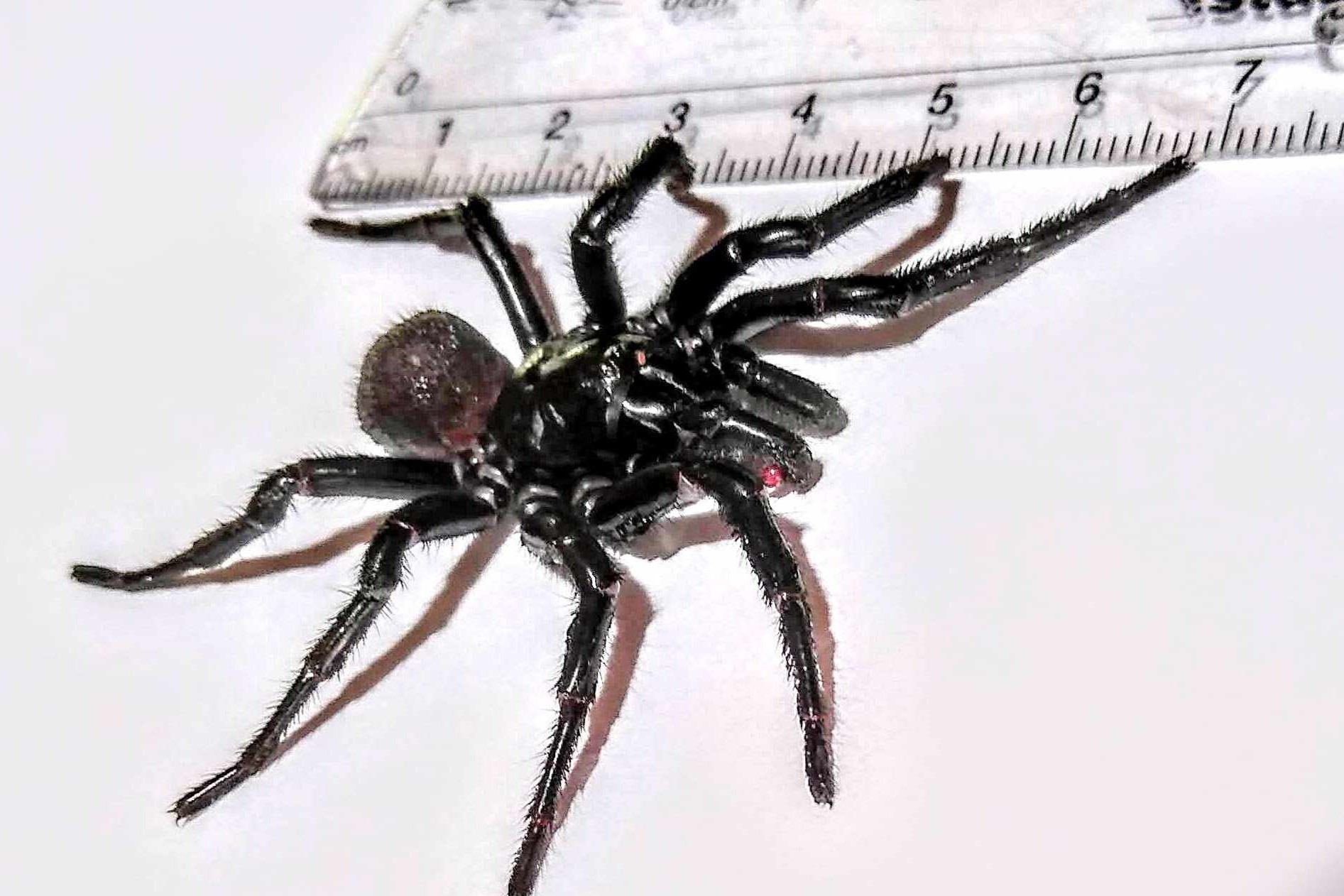
Ms Emerson has been in communication with spider experts for some time about the funnel-webs on her property, which backs on to Obi Obi Creek.
“They found heaps down near the creek. I have three species here,” she said.
The biggest of the funnel-webs, Hadronyche formidabilis, makes its home there, as does Hadronyche infensa and Hadronyche raveni. There are also trapdoor spiders and mouse spiders.
Ms Emerson said the funnel-webs were so plentiful that she could usually expect to find one after a couple of days’ rain at this time of year.
She does not go near the creek but is comfortable with her property being a thriving habitat for the spiders.
She has even made a bridge, using a paddleboard, so the funnel-webs, and any other creatures, can get out of the pool, and sets them free afterwards rather than stomping on them.
“Why would I want to do that? I want people to do the exact opposite and learn to live with them,” she said.
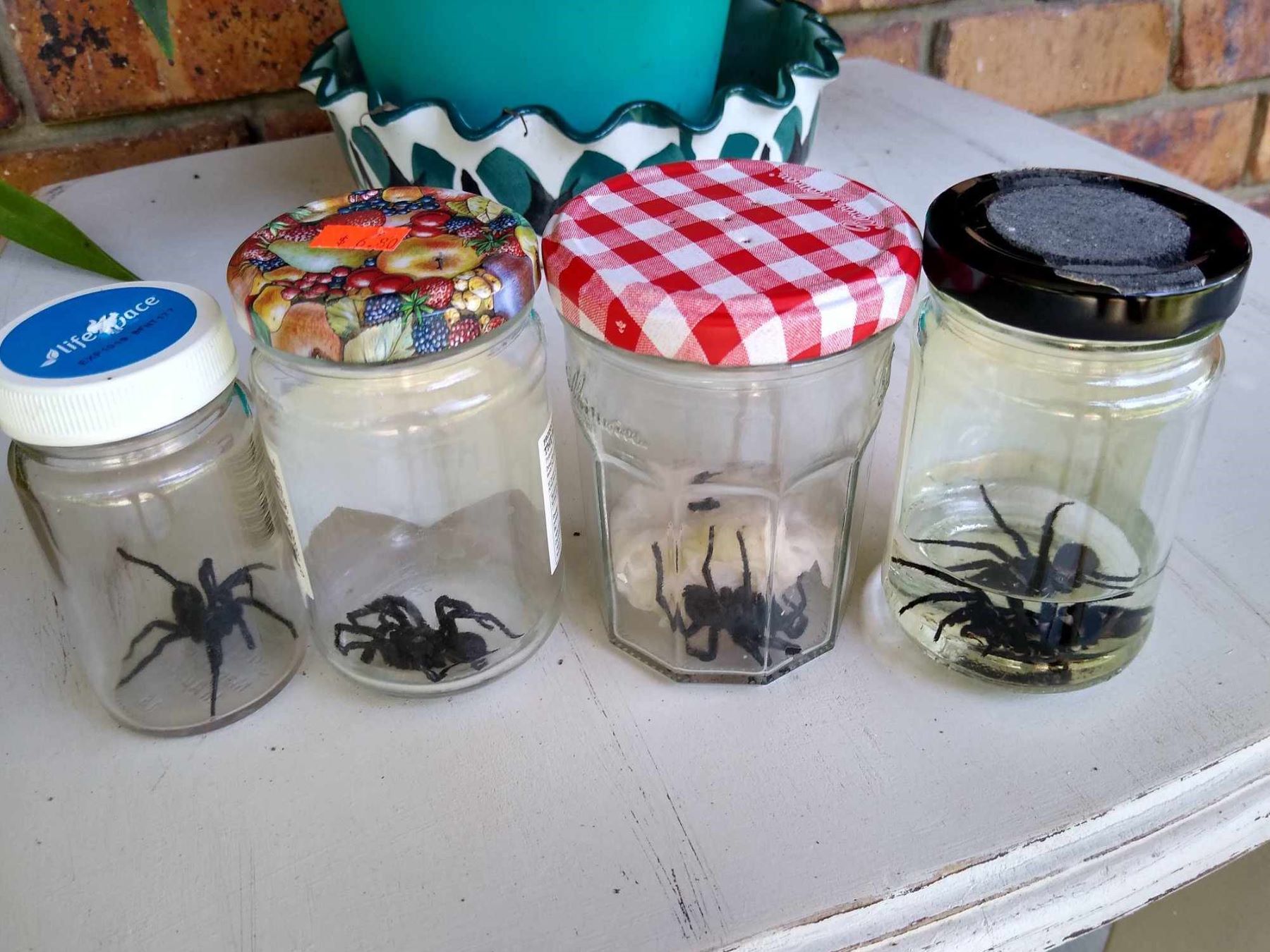
She said she simply made a point of being “really careful” about the funnel-webs.
“Do I watch where I’m going? Yes. I don’t walk around barefoot outside on a full moon and we don’t jump in the water without checking,” she said.
“The house is all screened and in the 20 years of having them in the pool, I’ve never found them in the house.”
She urged people on the Range, particularly those with pools, to take care, and pointed out that funnel-web nests were not always on the ground but even in trees.
She pointed out that although funnel-web venom could kill people, there had been no recorded deaths from funnel-web bites since the introduction of an antivenom in 1981.
Thirteen deaths from funnel-web bites were reported in Australia prior to the availability of anti-venom.
Sunshine Coast News understands that funnel-web bites have occurred on the Range and at North Arm in the past but there have been no recent cases, although no figures were readily available from Queensland Health.
A Queensland Health spokesperson said Range patients presenting to Maleny Soldiers Memorial Hospital with a suspected funnel-web spider bite would be immediately transferred to the Sunshine Coast University Hospital for care, including antivenom, if required.
The spokesperson said severe funnel-web spider envenomation in Queensland was rare and SCUH was well-equipped to support patients presenting with suspected bites.,
Want more free local news? Follow Sunshine Coast News on Facebook, LinkedIn and Instagram, and sign up for our FREE daily news email.



