
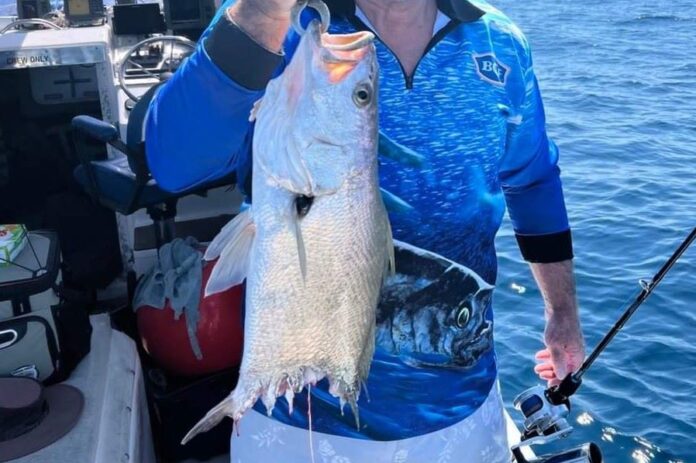
A charter boat operator says he avoids some of the best fishing spots off the Sunshine Coast because the sharks will get more of the fish that are caught than his passengers.
Robert Smith, who operates Smithy’s Fishing Charters, said shark depredation – where a shark takes the catch before it has been landed – made it unviable to chase mackerel at the Nine Mile and Twelve Mile reefs off Caloundra in summer.
“You certainly don’t go there in summer. I’d say 90 per cent of catches get taken by a shark,” he said.
Researchers from the Department of Agriculture and Fisheries are now leading a project to look at ways to reduce shark depredation.
The three-phase project includes a national online survey and stakeholder workshops in Queensland, the Northern Territory, Western Australia and New South Wales.
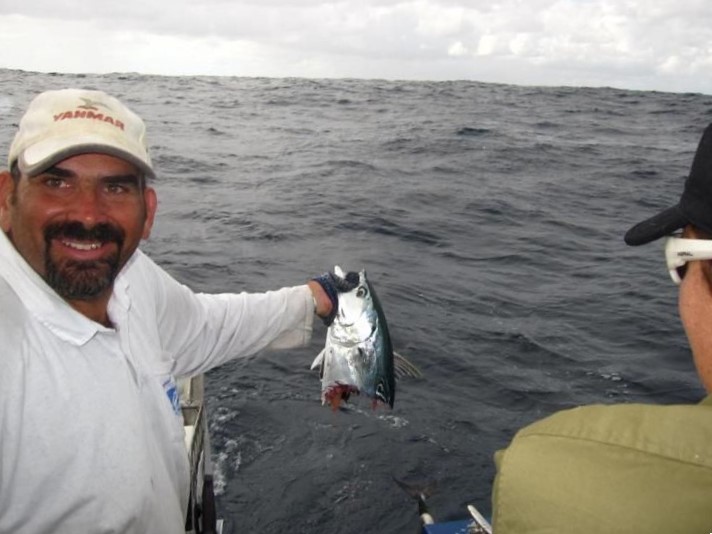
Mr Smith was unsure if it would make any difference given the number of sharks in waters and the number of catches lost.
Related story: Boaties recount encounter with ‘monster’ great white
“It’s such a big problem. It’s run away on them and it can’t be reined in,” he said.
A representative from another charter boat business supported Mr Smith’s view, saying there were “more and more” sharks on the local reefs every year.
Mr Smith noted that commercial fishing improvements had reduced bycatch, and that the recreational fishing limit was one shark, which could not be more than 1.5m.
He said that even though he tried to choose his fishing spots carefully, shark depredation could occur as often as 50 per cent of the time.
“On average once every two days, but that’s not to say I can’t have shark depredation four days a week, and then I don’t see them for two days,” he said.
He said depredation was not only disappointing for passengers hopeful of landing a big fish but it also had an impact on his business as well.
“For instance, for something like a half-day charter, because of time constraints, my preferred fishing spots might be a bit too far to travel,” he said.
“You can’t fish the Nine Mile or the Twelve Mile because you’d lose fish, so then I have to go somewhere else, which is more time and more diesel to get there.
“You’ve got to try and source fish for your customers to keep them happy but you try not to go too far.”
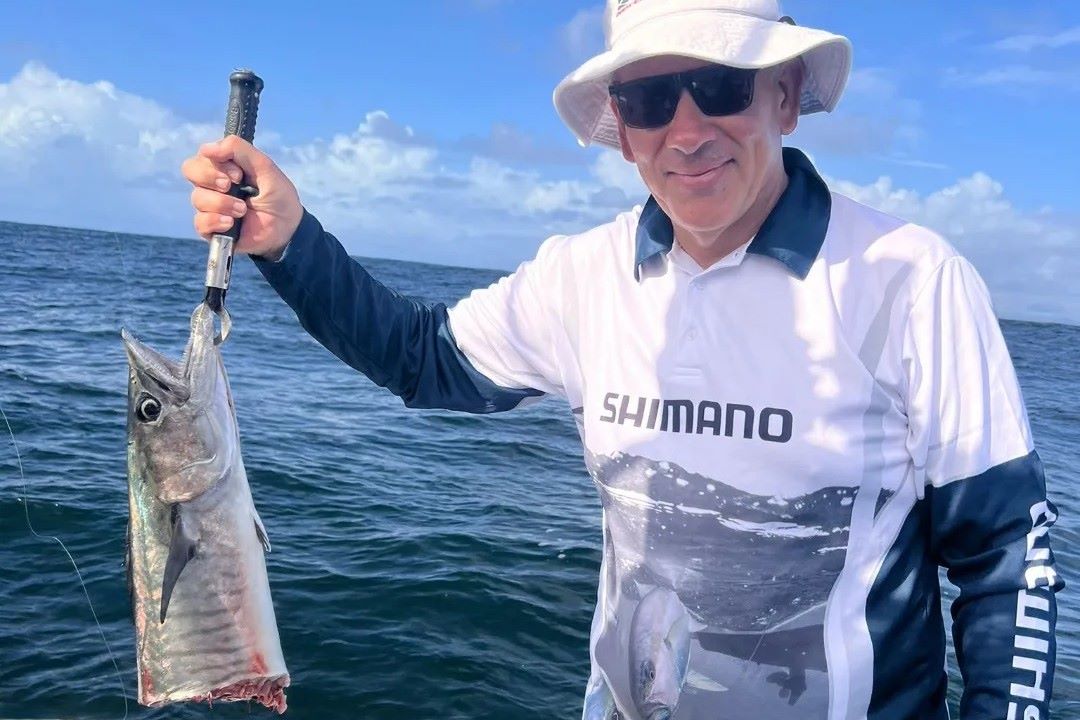
The only way Mr Smith could see to reduce shark depredation was if a high-priced export market opened up for sharks and they were commercially fished.
“It should have been solved 10 years ago before it got out of control,” he said.
Agricultural Industry Development and Fisheries Minister Mark Furner said the project would lead to better co-existence between fishers and sharks, while ensuring Queensland’s fisheries continued to thrive.
“We’ve listened to commercial, recreational and charter fishers who’ve nominated shark depredation as a major concern,” Mr Furner said.
“Nobody likes their catch being taken by a shark, so developing effective mitigation methods to reduce shark depredation is a ‘win-win’ for all.”
The DAF shark depredation project will run until 2026 and will involve research on mitigation measures, workshops in Queensland and interstate with stakeholders discussing the problem and potential solutions, and possible trials.
To participate in the workshops, email Jonathan.mitchell@daf.qld.gov.au.
Depradation data can be reported through the Queensland Fishing 2.0 app.
Like stories that inform, connect and celebrate the Sunshine Coast? So do we. Join an independent local news revolution by subscribing to our FREE daily news feed at the bottom of this article.