

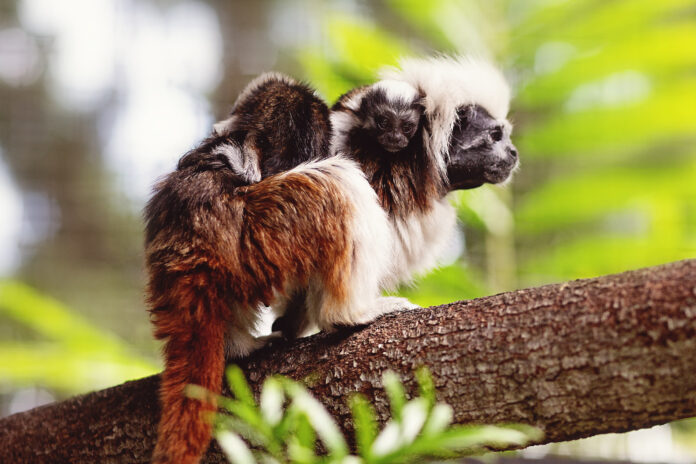
Zookeepers at Wildlife HQ are still smiling after the birth of two miniscule monkeys with mohawks.
Workers had a hunch that one cotton-top tamarin was on the way but were surprised by the arrival of a second.
Keeper Sue Tonga said the zoo community was “thrilled” to welcome them, particularly because the species is critically endangered.
The yet-to-be-named twins, of unknown sex, only weigh about 40 to 50 grams each and are the offspring of mother Peyton and father Pepe.
“They (the parents) have been a devoted pair,” Ms Tonga said.
“While previous attempts (to breed) were not successful, the anticipation grew as Peyton’s weight increased.
“This led our zookeepers to believe she might be expecting.
“The joy was doubled when she gave birth to two adorable babies.”
“It’s been quite a long time since we’ve had cotton-top babies, so it’s incredibly exciting to have had twins born.”
Peyton was born at Wildlife HQ about eight years ago, and Pepe was paired with her early last year. The parents are small as well, weighing about 500 to 600 grams.
Ms Tonga said the tamarins were favourites of staff and onloookers.
“Recognised for their distinctive crowns of white hair, or mohawks, these tiny monkeys are incredibly popular with our visitors,” she said.
She said the arrival of the twins was special, because the cotton-top tamarin population is decreasing.
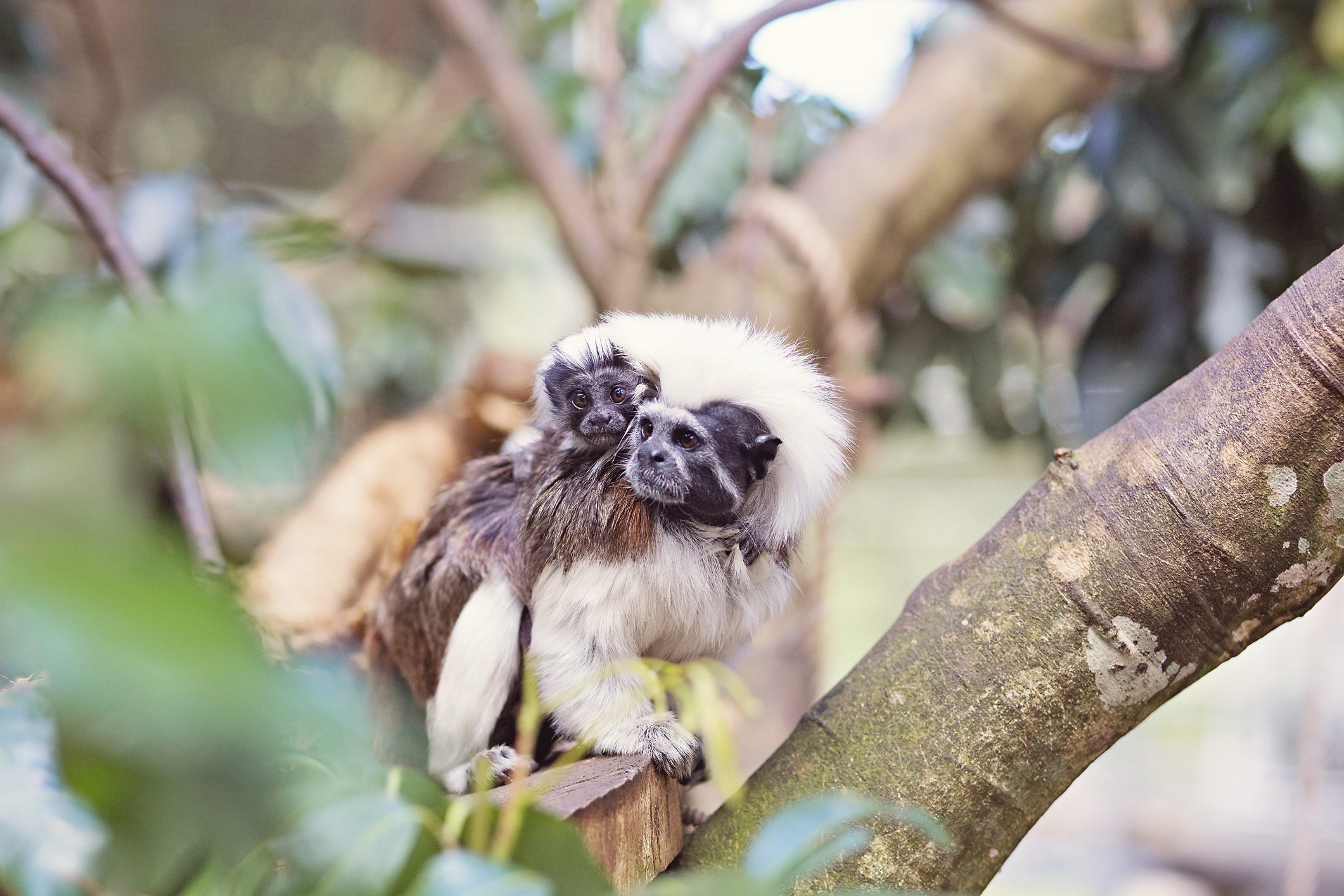
The International Union for Conservation of Nature estimated, in 2021, that there is only about 2000 of them in the wild.
“In their natural habitat, they face threats such as habitat loss and the illegal pet trade,” Ms Tonga said.
“They are only found in north-western Colombia and their tropical forest habitat is being cleared for agriculture and urban development.
“Sadly, they are also poached and sold as pets.
“Zoos like Wildlife HQ play a crucial role in the conservation of this species through international breeding programs and by raising awareness for the plight of the species.”
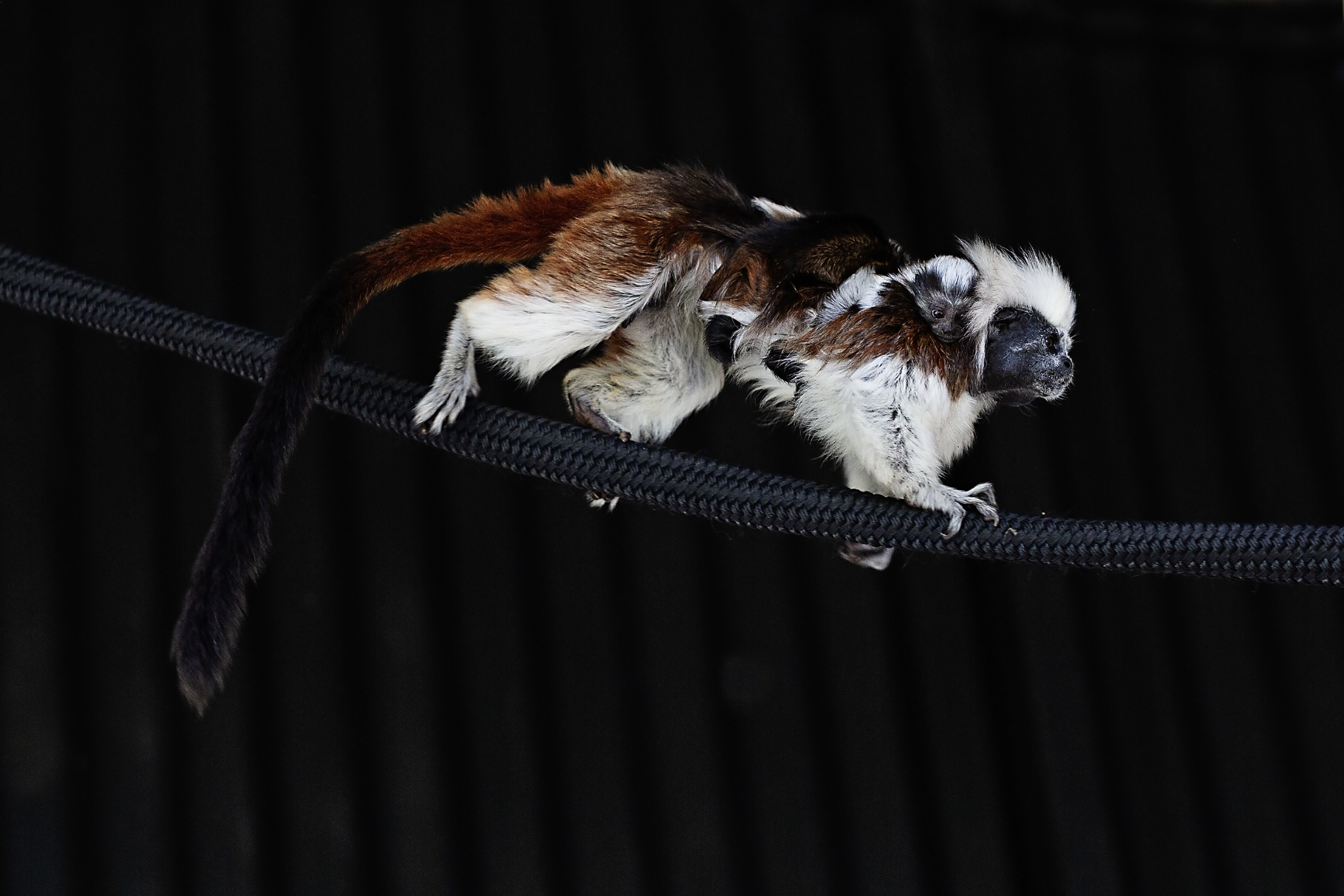
In their natural habitat, cotton-top tamarins live in family groups of about two to 10.
Ms Tonga said Peyton and Pepe could build a larger family.
“The female is a matriarch, while the father is primarily responsible for carrying the twins during the first month of their life,” she said.
“The matriarch has the ability to suppress her daughters’ hormones and the offspring of the dominant pair will help to raise babies born after them.”
She said cotton-top tamarins’ diet consists of fruit, nectar, tree sap and invertebrates, depending on the season.
“They have a life span of around 13 years, but live longer in zoos,” she said.
Scroll down to SUBSCRIBE for our FREE news feed, direct to your inbox daily.



