

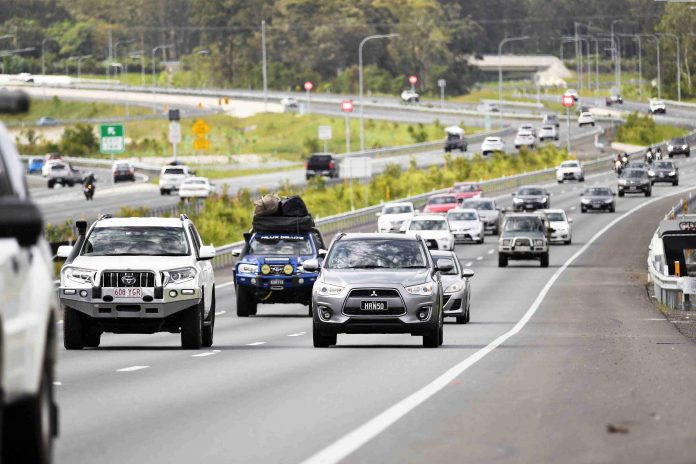
A Queensland transport expert has outlined priorities for the rapidly growing Sunshine Coast and says the region must be “reshaped” to make the most of new transit systems.
Griffith University Professor Matthew Burke, who specialises in transport modelling and policy, said the area needed a major shake-up to accommodate a predicted population explosion, from about 365,000 locals now to more than 500,000 residents by 2041.
“The Sunshine Coast’s transport system is okay for a car-based tourism city of around 300,000 people, he said. “But it’s no longer suitable for a city with a more mixed economy heading quickly towards half a million residents.”
Prof. Burke said two key systems were “missing”.
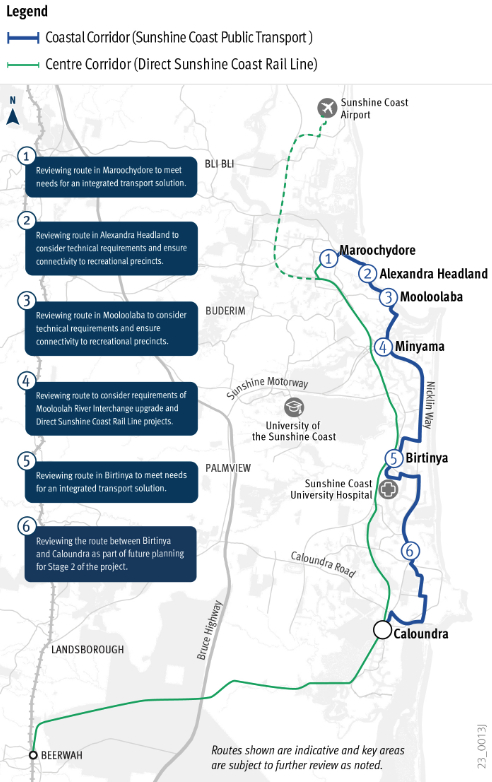
“A mid-tier transit system that can run from Maroochydore to Caloundra, linking up all the activities within the city, and an inter-city rail link from the coastal suburbs to Brisbane.”
“Both projects are now well-planned: it is only a question of getting the funding and bringing them into life.
“Only with these systems can we really expect Sunshine Coast residents to own less cars and use them less and prevent the coming congestion problems that will soon besiege the road network.
“It’s only public transport investment that will give us any chance of avoiding the congestion issues of the near future.”
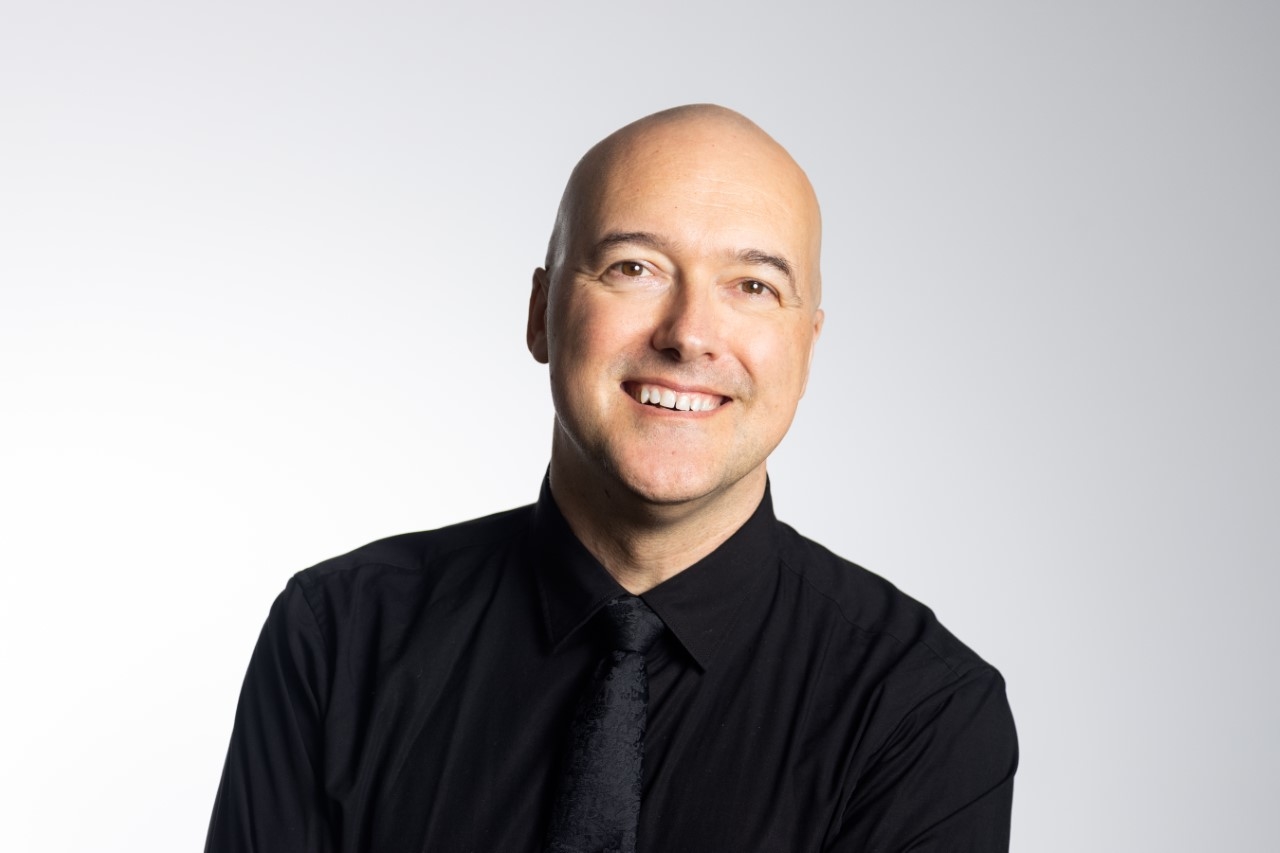
Prof. Burke said the projects needed funding as soon as possible.
“There’s a public transport investment backlog on the Sunshine Coast unlike that of any other Australian city,” he said.
“You only have to look at the Redcliffe peninsular, with one-third the population … that got its railway link to Brisbane at least 15 years ahead of the Sunshine Coast.
“Or the Gold Coast that now enjoys Australia’s best light rail line.”
The state and federal governments have committed various levels of funding towards the Direct Rail Sunshine Coast, Mooloolah River Interchange Upgrade, Kawana Motorway and the Sunshine Coast Public Transport. Preliminary works have started on the interchange, while property acquisitions are in process for the projects.
Prof. Burke said those four projects were sorely required, but two of them were priorities.
“The Kawana Motorway will be needed whilst new urban growth stays so car-dependent, and to service all the new two, three, and four-car housing we keep building.”
“But it’s the Direct Rail to Brisbane and the mid-tier Sunshine Coast Public Transport project from Caloundra to Maroochydore that are most pressing.
“Best bang for buck for the city’s own economy is building the Sunshine Coast Public Transport Project. Most urban economists would tell you to build it first.”
Prof. Burke said the region would have to adapt and accommodate new transport methods, to make the most of them.
“We have to reshape the Sunshine Coast to receive these transit systems,” he said.
“That means clustering increased density around key transport stations on the new networks, so that everything is in sync from day one.
“Sites such as the university, to Caloundra, to the hospital at Kawana, to SunCentral at Maroochydore, and eventually to the airport.
“Developing all those ‘pearls along the string’ on the new transit lines is critical.
“What the broader Sunshine Coast community hasn’t worked out yet is that targeted development along the rail lines will actually reduce pressure for densification in most other parts of the city where we don’t really want or need it.”
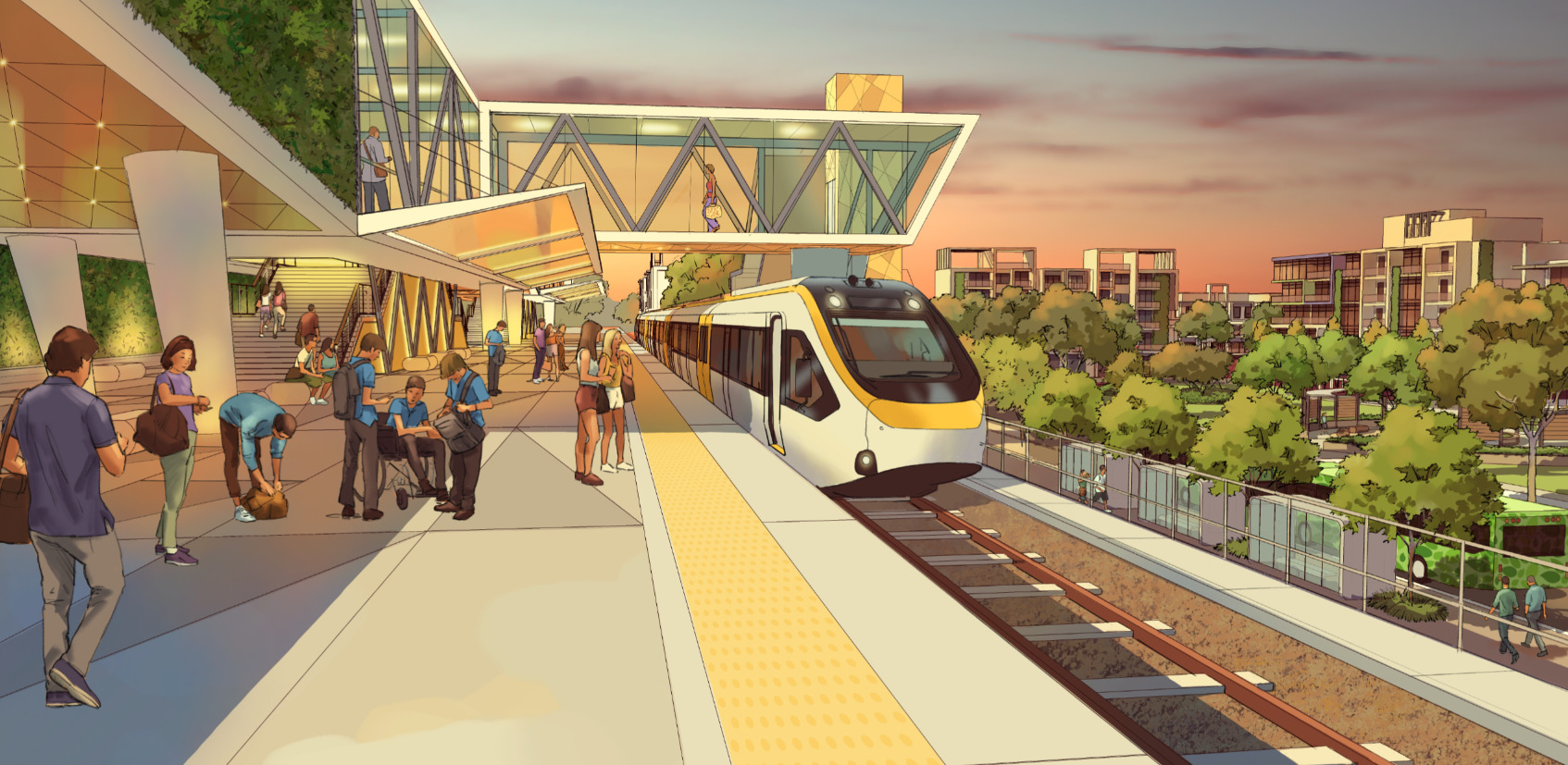
Prof. Burke said comprehensive transit infrastructure was crucial to the region.
“The transport network gives everyone access to the jobs, goods, and services they need in daily life, it gets tourists to their accommodation and the city’s many attractions, and it links businesses with their customers and labour force.
“Transport options and services give everyone their opportunities within the city and keep us connected.”
Prof. Burke is the Transport Academic Partnership Chair for the Queensland Department of Transport and Main Roads, and the Motor Accident and Insurance Commission. He is also the Transport Innovation and Research Hub Chair for the Brisbane City Council.
He was a speaker at the recent Importance of Transport to Regional Urban and Economic Growth Conference at Twin Waters.
Help keep independent and fair Sunshine Coast news coming by subscribing to our FREE daily news feed. All it requires is your name and email at the bottom of this article.



