
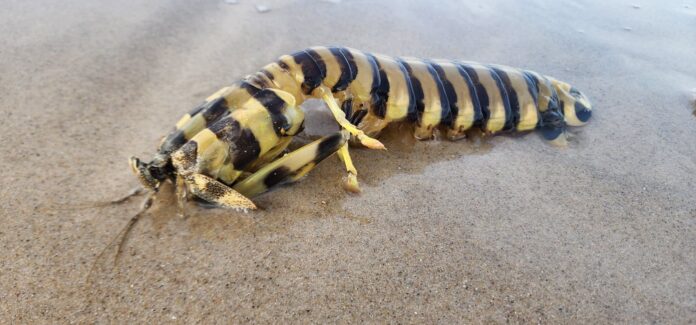
Imagine getting a little too close to this silent assassin of the crustacean world.
Distantly related to lobsters and crabs, it is one of the Earth’s most ancient animals, with an evolution going back 170 million years before the dawn of the dinosaurs.
This sea creature may prefer its own company and to live quietly in rocky crevices and coral reefs or burrowing into the seabed, but it can really pack a punch if hungry or threatened.
And it can give humans a painful gash if handled without care.
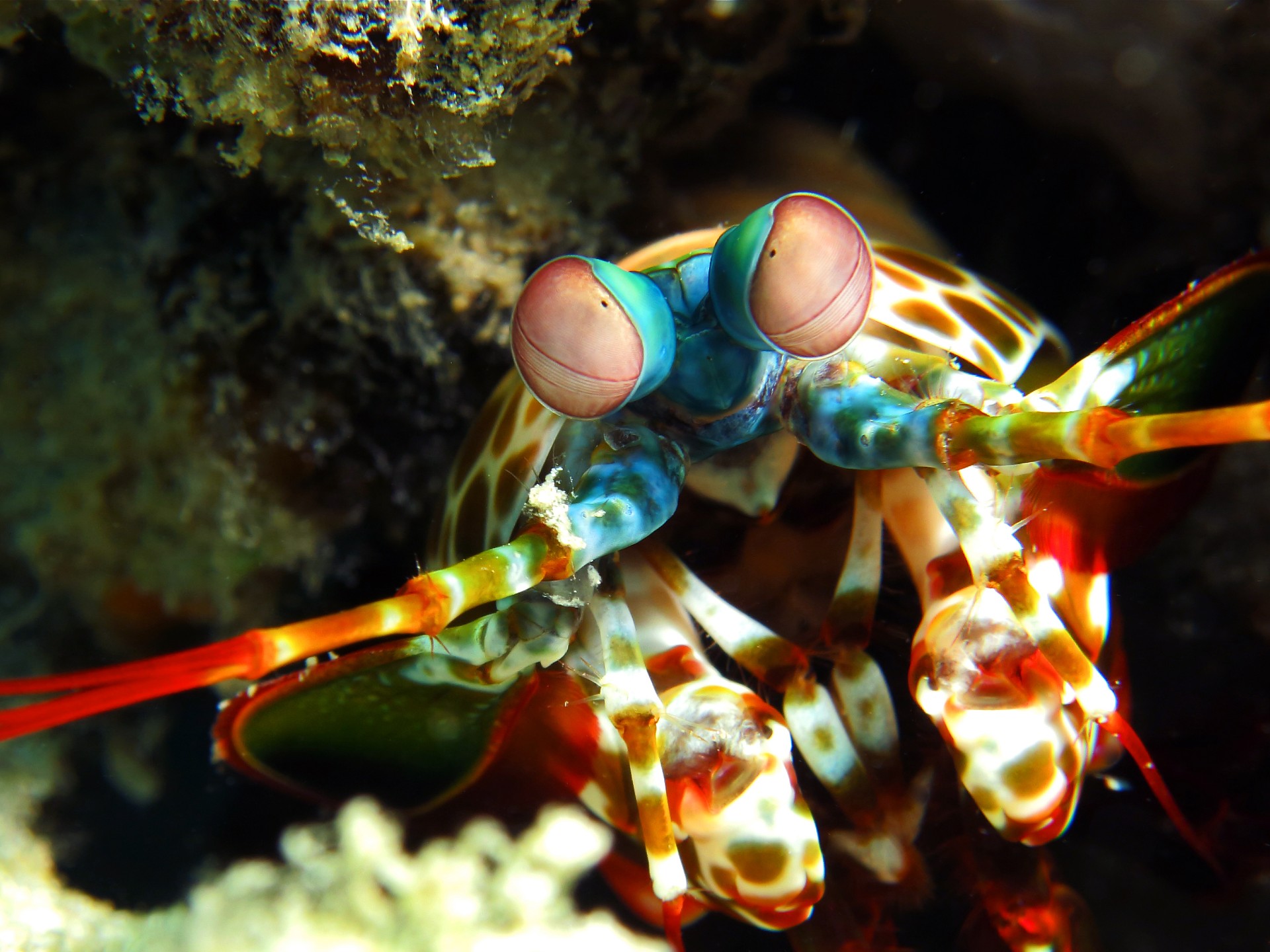
The tiger-striped variety is one of about 450 often vibrantly-coloured species of mantis shrimp, otherwise known as a stomatopod.
Neither a mantis nor a shrimp, the mantis shrimp is found in tropical and subtropical waters of the Indian and Pacific oceans between Eastern Africa and Hawaii.
They are hard-shelled crustaceans that are either ‘spearers’ or ‘smashers’, based on the types of claws they have and how they kill their prey or defend themselves.
Spearers spike prey with their sharp claws but smashers can punch at a velocity akin to a gunshot from a .22 calibre rifle – reportedly the strongest self-powered strike in the animal kingdom.
That equals speeds of 23m/sec – 50 times faster than the blink of an eye – and with a force about 100 times its weight.
Former Caloundra City councillor and building consultant-turned-artist Andrew Champion and his young grandson had a recent close encounter and luckily had the sense to keep their distance.
SUBSCRIBE here now for our FREE news feed, direct to your inbox daily!
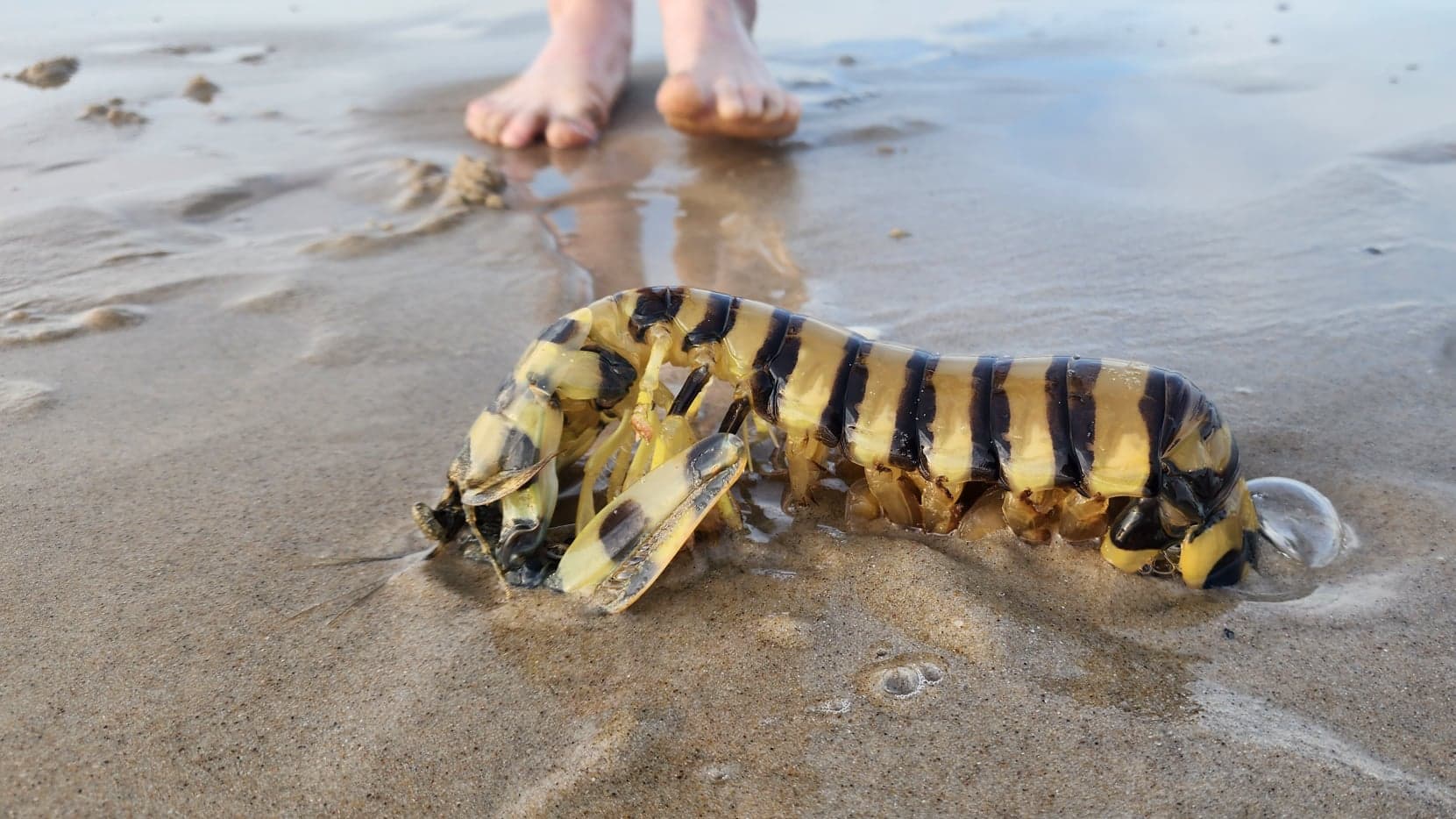
They had headed out before sunrise on Sunday morning and were gobsmacked to see this strange-looking striped ‘beast’ stranded on the sand at the southeast point of Happy Valley on the extreme low tide.
“My grandson loves collecting shells,” Mr Champion said.
“We were looking back towards the east where the channel between Happy Valley and North Bribie goes out to the ocean.
“We wandered down to the ocean entrance and I saw (what looked like) two or three things over on the edge of the waterline.
“Because the sun had just come up, they were silhouetted so I couldn’t see what they were.
“It was about 50m away, so I said to my grandson, ‘Go over and see what they are. They could be big shells that have washed up’.
“So, he went over there and he yelled out, ‘Gramps, gramps, it’s a big fish’.
“As soon as I saw it, I thought, ‘Oh, it’s like a big prawn or crustacean. I couldn’t remember the name of it so I took a photo using Google lens (app). And it came up as a mantis shrimp.”
Mr Champion said he could recall seeing the infamous mantis shrimp’s strike in slow motion on a wildlife documentary.
“I’ve seen six or eight of them before when I’ve been fishing,” he said.
“You catch them on your line sometimes.
“They’ve only been four inches – less than 10cm.
“This one looked massive. On the Facebook post I did, I said it was about 30cm but in hindsight, my foot is 30cm.
Help keep independent and fair Sunshine Coast news coming by subscribing to our free daily news feed. All it requires is your name and email. See SUBSCRIBE at the top of this article.
“It must have been fully grown and about 35cm. They grow to 38cm.
“The ones I’ve seen are pretty plain looking or a little bit pinky.
“They’re around but I don’t know if my grandson realises he’ll probably never see another one again.
“I’m 62 and I’ve never seen one that big. They’re pretty rare.”
Mr Champion said he had been concerned that a nearby osprey or other bird might harm the crustacean.
So, with the help of a couple walking by, they managed to lure it into a sandal and deposit it gently back into the water where it swam back out to sea.
Mantis shrimp facts (Source: factanimal.com)
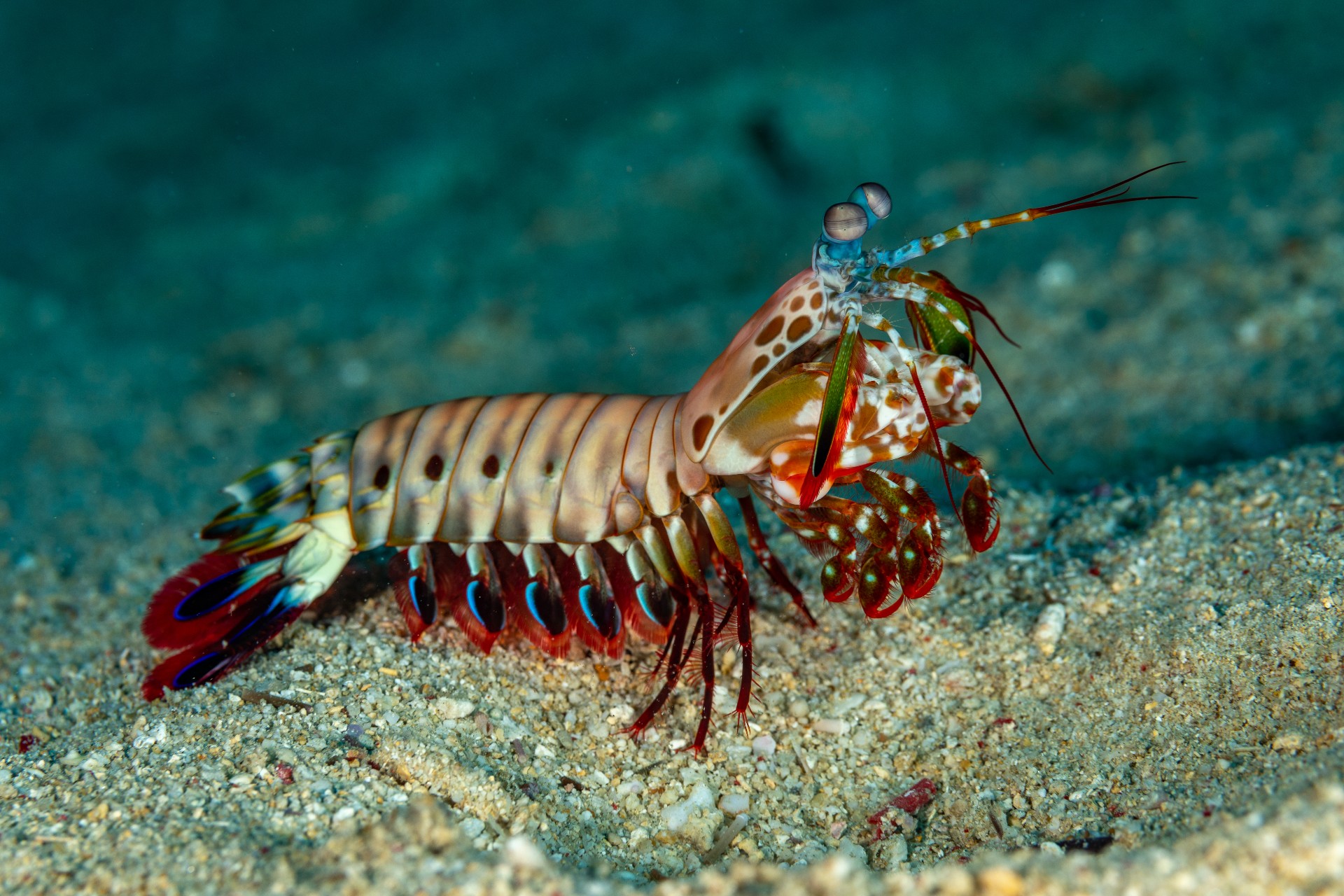
- All mantis shrimp species can be divided into ‘spearers’ or ‘smashers’, based on the types of claws they have and tactics they use to kill the prey.
- Smashers can punch at the same velocity as a gunshot from a .22 calibre rifle.
- Their punch is so fast it results in ‘cavitation’ bubbles. This is a super-heated bubble and small flash of light, which for split seconds also generates temperatures of 4400C (which is nearly as hot as the sun) in the surrounding water.
- They can crack and punch holes in aquarium glass.
- Their clubs have a special shock-absorbent core which stops them from breaking.
- They are not actually shrimp or mantis.
- Mantis shrimps get their name from their appearance. They have a second pair of prey-catching arms that are greatly enlarged, like mantises.
- Eyes of mantis shrimp are located on the long stalks that can move independently.
- They are thought to have the most complex eyes in the animal kingdom and have the most complex visual system ever discovered.
- The mantis shrimp has 12-16 different colour photoreceptors for colour analysis in their retinas –three times more than humans.
- Mantis shrimp would have the ability to detect cancer cells with their eyes.
- They are older than dinosaurs.
- Some mantis shrimp species are monogamous, remaining with the same partner for up to 20 years.
- Mantis shrimp are eaten in Japanese, Cantonese, Vietnamese, Mediterranean, Filipino and Hawaiian cuisines.
Do you have an opinion to share? Submit a Letter to the Editor with your name and suburb at Sunshine Coast News via: news@sunshinecoastnews.com.au