
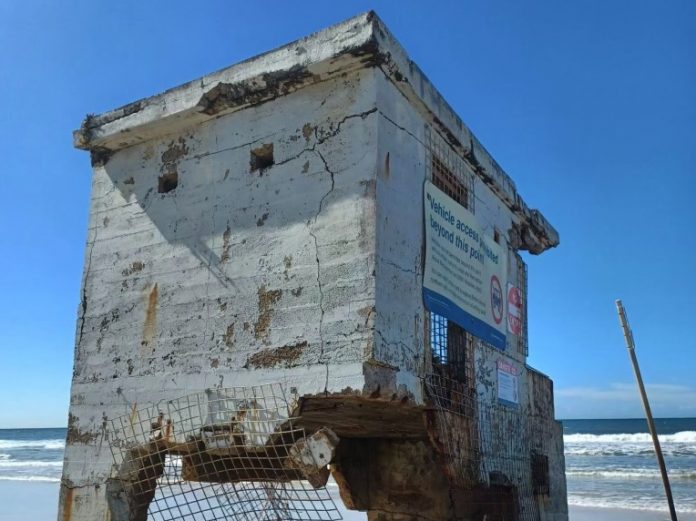
Two historic remnants on Bribie Island will be partially dismantled after recent wild weather caused more damage to them.
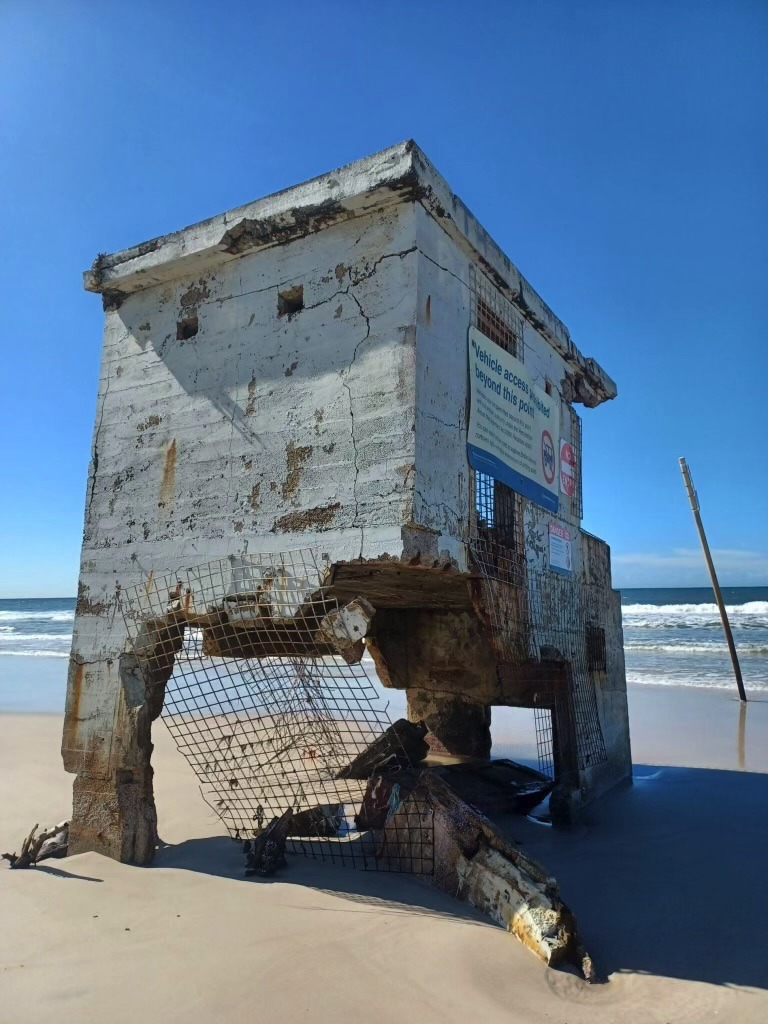
Parts of the Northern and Southern searchlight fortifications will be collapsed in the interest of public safety, following increased corrosion from severe weather.
The Department of Environment and Science made the difficult decision.
The northern searchlight emplacement was built in 1942 and is one of the main surviving concrete elements from Fort Bribie. It’s on the eastern side of the eroding island, 5km south of Happy Valley at Caloundra.
The two-storey structure was located behind the second row of dunes and used to illuminate targets for the fort’s guns.
But it’s now on the beach, battered by waves, wind and rain.
Queensland Parks and Wildlife Service Executive Director, Neil Cambourn, said the natural decay of the World War Two structures had led to a serious safety risk to members of the public.
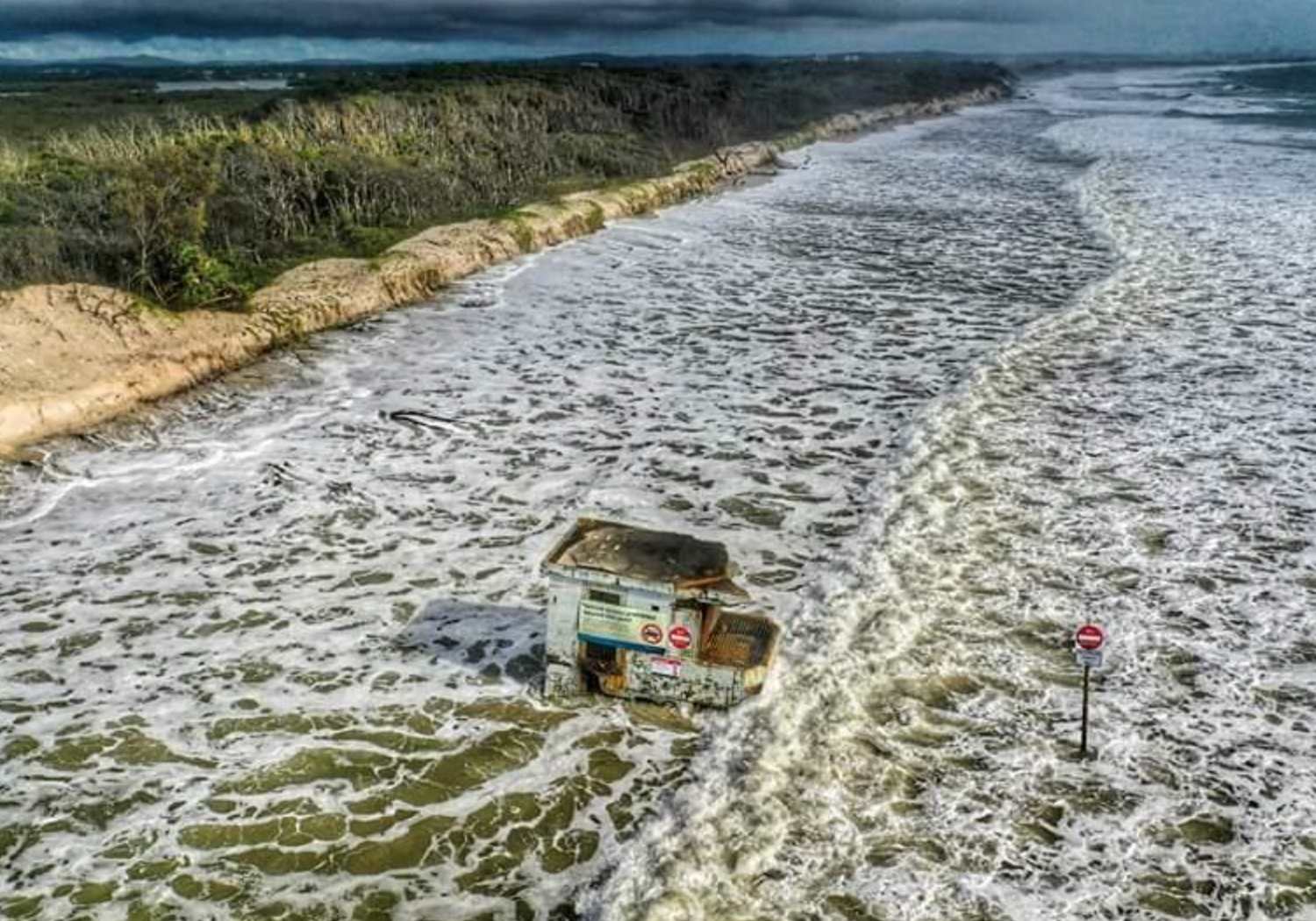
He said work was expected to start this week, weather depending, to bring the structures to a safe and stable state, which will then be left in-situ.
“The Department has been working to find a way to keep park visitors and staff safe while preserving as much of these historically-significant, structures as possible, which form part of the State heritage listed Second World War Fortifications on Bribie Island,” Mr Cambourn said.
“The Queensland Heritage Act 1992 allows for action to be taken in emergency situations which endanger peoples’ lives or health, as is the case here.
“These structures were built for a temporary purpose using concrete and steel reinforcing, which is expected to continue crumbling in Bribie Island’s highly erosive coastal environment.”
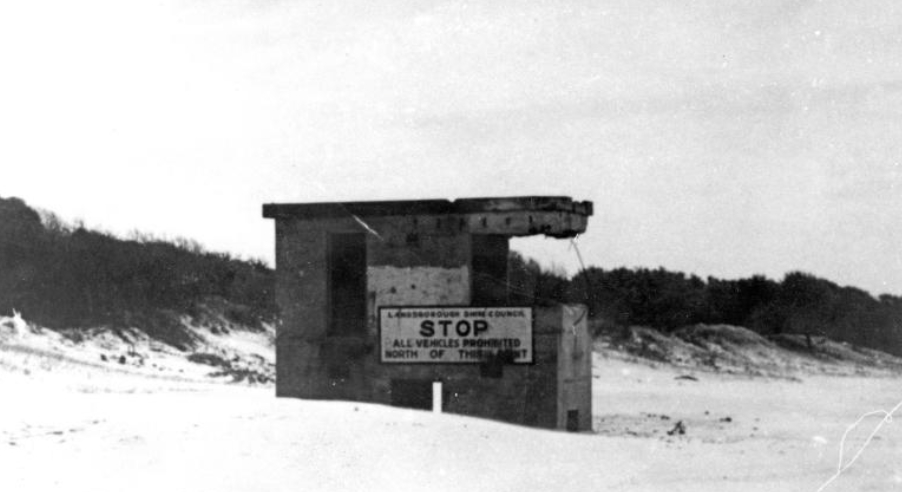
Mr Cambourn said the department had taken previous steps to protect the public around the searchlight forts, including the installation of fences, security panels and signs.
“DES continue to maintain the remaining structures but there is no way to prevent natural coastal processes from taking place,” he said.
“The Department is committed to ensuring Bribie Island National Park’s dynamic landscape and unique coastal biodiversity is protected and remains in its natural state and there are no plans to interfere with the natural coastal processes that are impacting the searchlight forts.”
DES was considering long-term options to further manage all fortification structures on the island. The other structures will not be impacted by the upcoming works to secure the searchlight sites.
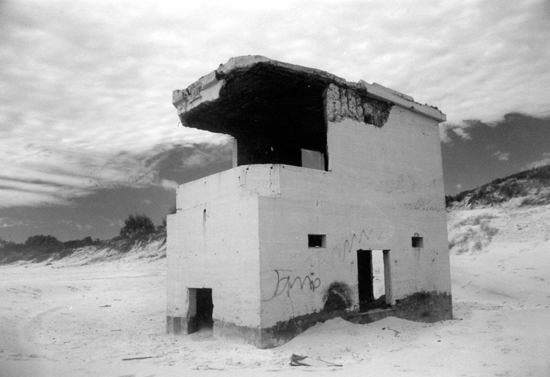
To ensure the history of these fortifications is not lost, a project to digitally capture their heritage, in a timeless interpretive memorial, was conducted.
Construction of Fort Bribie was between 1940 and 1940, to provide close defence of the North West Channel into Moreton Bay, when the region stood between hostile invaders and a Brisbane takeover.
It included camp huts, two gun emplacements, a battery observation post, command cost, observation post and two searchlights.
The wild weather has also seen an old navigational light tower devoured by erosion and it has uncovered wreckage on the island.
Most notably, it created a breakthrough of Bribie Island, which has changed the face of the Pumicestone Passage and its surrounds.
For more information on Fort Bribie visit the Queensland Government’s Story Map.