
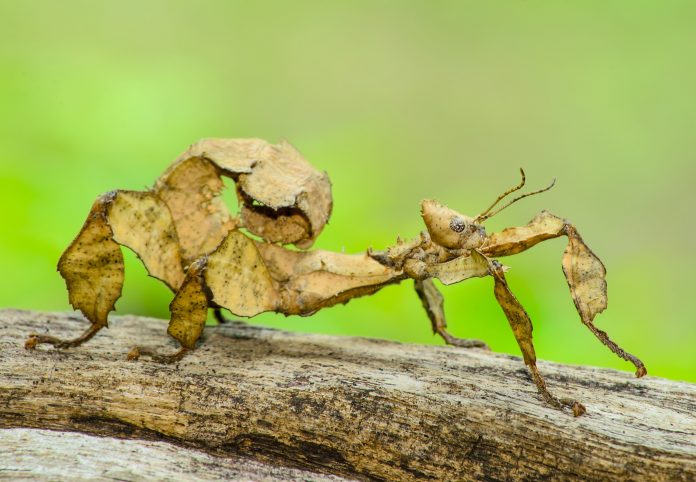
Sunshine Coast students are helping researchers identify insects amid hopes they could discover new species.
They have already been hard at work, finding caterpillars, grasshoppers, stink bugs, wasps, moths and more.
Seventeen Queensland schools, including Beerwah State High, are involved in the citizen science project, Insect Investigators.
It’s a national initiative, coordinated in Queensland by the University of the Sunshine Coast.
Research Fellow and insect ecologist Dr Andy Howe, of USC’s Forest Industries Research Centre, expected a swarm of surprising, and potentially rare, findings after the schools’ new insect traps went ‘live’ this month.
He recently toured the schools to launch the collaborative research, which aimed to identify insect species, including those unknown to science, in diverse habitats.
Led by the South Australian Museum, the project involves 50 regional and remote schools in Queensland, South Australia and Western Australia.
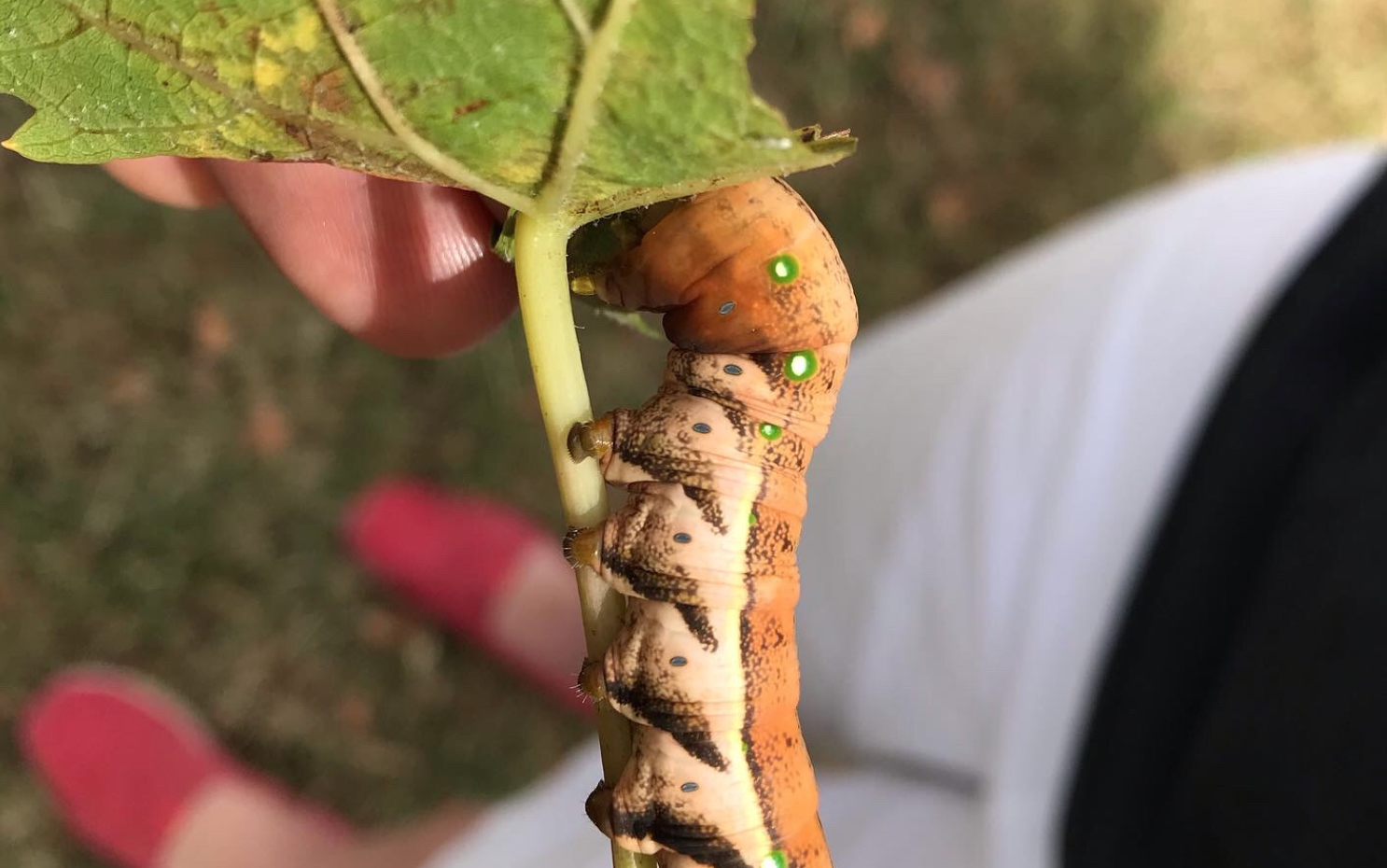
Dr Howe was impressed by the students’ enthusiasm.
“They’ve really hit the ground running,” he said.
“Students and teachers are so excited about the biodiversity in their own communities.
“We hope they make their own scientific discoveries from the insect world, and maybe get the chance of naming one.
“Only 30 per cent of insects in Australia have been formally and scientifically identified and we need citizen scientists to help us increase that number.
“That means hundreds of thousands of species don’t have a name and science doesn’t know how to identify them.”
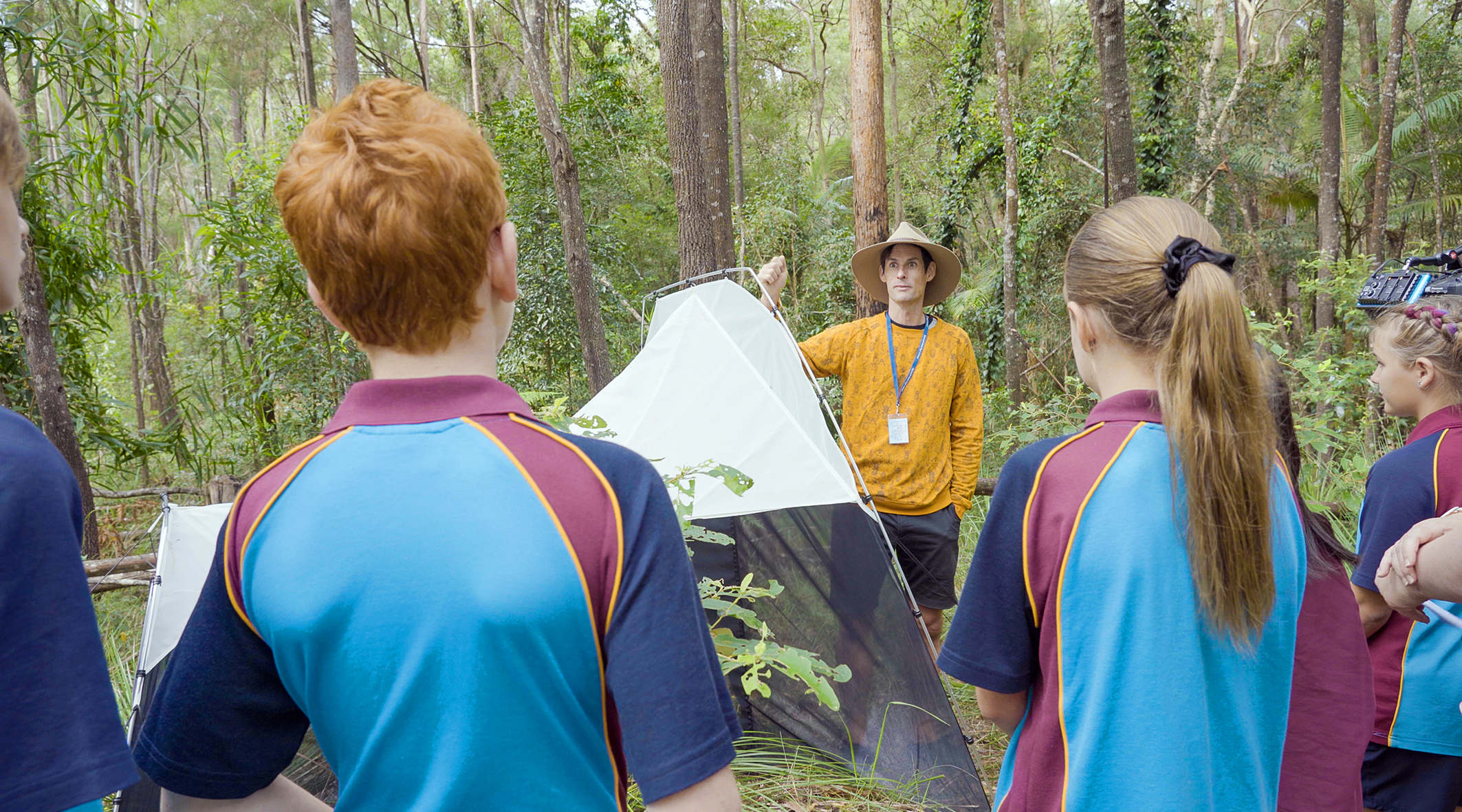
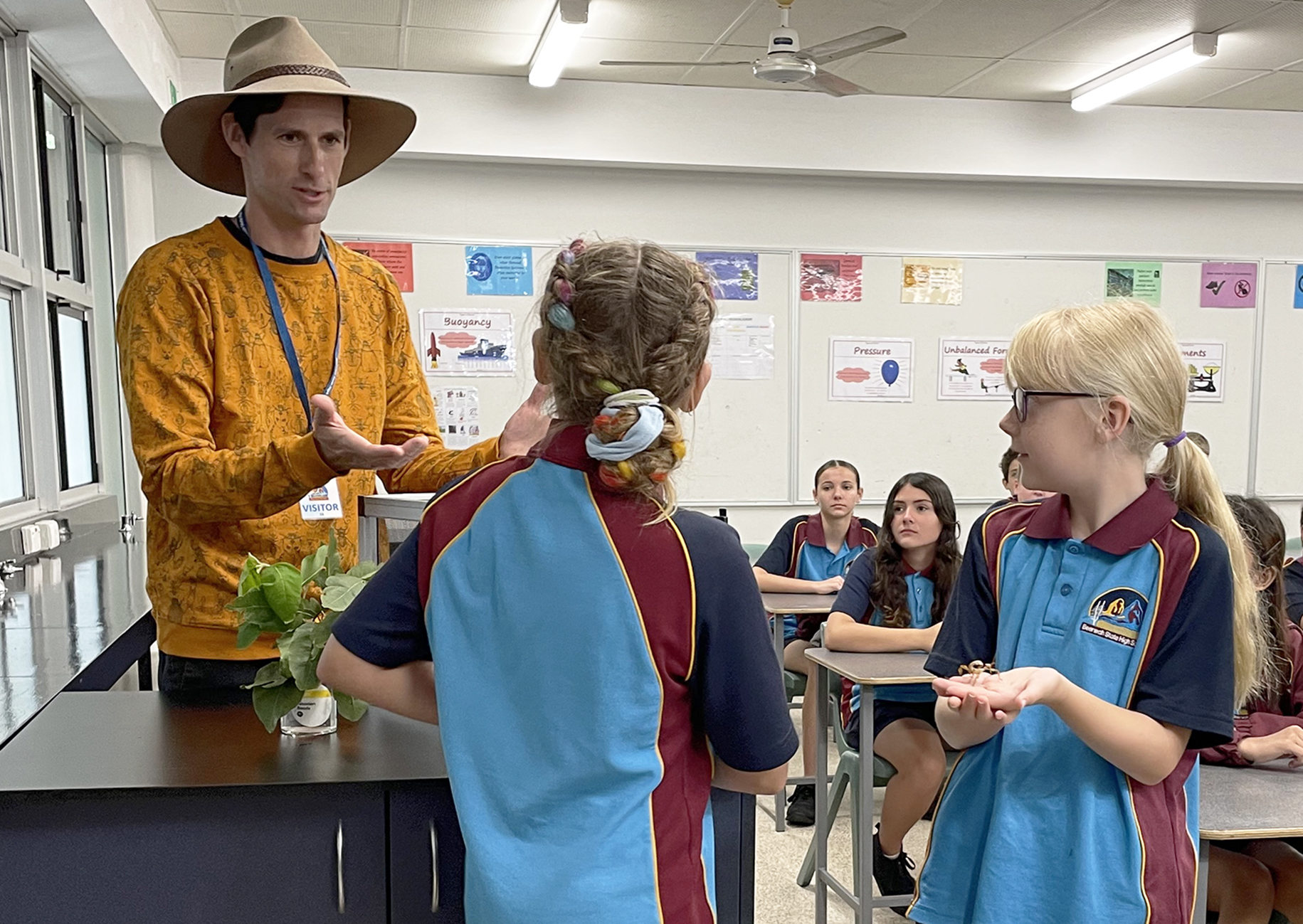
Dr Howe met with students at Beerwah State High School on Wednesday, March 16, to demonstrate how to catch insects and monitor the research traps.
He is an entomologist, whose PhD in 2016 examined an exotic ladybird in Denmark.
He said students enjoyed the information in his talks, which were designed to be entertaining and inspiring.
Dr Howe often mentioned the Atherton Tablelands horsefly, identified in 2012 and named after Beyonce.
“Something to do with its golden bottom and a song called Bootylicious”,” he said. (See The Conversation article by CSIRO about the Scaptia beyonceae).
He said schools were collecting the flying insects in a Malaise trap, which was a large, open-sided tent with a chamber containing preservative at the roof’s highest point, then sending the containers of “insect soup” to University of Adelaide project leader, Postdoctoral Fellow Dr Erinn Fagan-Jeffries.
“Almost 300 specimens per school will be selected and sent to Canada for DNA barcoding, contributing to a global biodiversity registry, before returning to taxonomists in Australia for processing, including the identification of any new species,” he said.
Help keep independent and fair Sunshine Coast news and opinion coming by subscribing to our free daily news feed. All it requires is your name and email. See SUBSCRIBE at the top of this article.
Schools would be involved in the taxonomic process this year, working with the primary data collected from their own environments.
The Queensland Museum’s Dr Christine Lambkin and Susan Wright are heavily involved and will retain all specimens collected in Queensland for future research and historical data.
Dr Howe, based at USC Sunshine Coast, said increasing Australia’s knowledge of its insect species could have benefits ranging from better management of the environment and effects of climate change and natural disasters to controlling pests and developing new medicines.
The Insect Investigators project received grant funding from the Australian Department of Industry, Science, Energy and Resources through the Inspiring Australia – Science Engagement Programme: Citizen Science Grants Round 2.
Schools selected in Queensland: Back Plains State School, Beerwah State High School, Belgian Gardens State School, Blackall State School, Cameron Downs State School, Columba Catholic College, Gin Gin State High School, Glenden State School, Kogan State School, Mornington Island State School, Mount Molloy State School, Prospect Creek State School, Springsure State School, St Patrick’s Catholic School (Winton), Tamborine Mountain State School, Yeppoon State High School, Yeronga State School.