

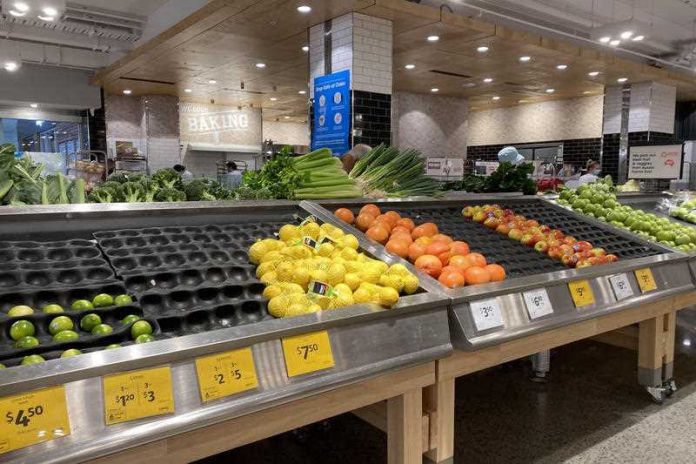
New guidelines being considered by National Cabinet should enable the return of fruit and vegetables to supermarket shelves within the week.
Supermarkets have been overwhelmed by panic-buying just as transport and logistics companies and suppliers are hit by large proportions of workers calling in sick or dealing with COVID-19 quarantine rules.
Australian Fresh Produce Alliance chief executive Michael Rogers had warned that fruit and vegetables could rot in the fields because of the supply chain issues and a shortage of workers due to COVID-19.
Guidelines issued by the Australian Health Protection Principal Committee have changed the definition of close contacts for those exposed to COVID-19 working in critical food and grocery production, manufacturing, logistics and distribution facilities.
“The measures that change requirements for close contacts which have been announced are very welcome because they put capacity back in the system, but it’s still going to be a very tight situation,” Mr Rogers said.
Local journalists supporting local people. Help keep independent and fair Sunshine Coast news coming by subscribing to our free daily news feed. All it requires is your name and email. See SUBSCRIBE at the top of this article
He said while the situation escalated “day by day” last week and there had been crop losses, the new guidelines will help ease the situation.
“The decision by Queensland, NSW and Victoria will put fruit and veg back on shelves in those states, the national guidelines go a long way to a nationally consistent approach,” Mr Rogers said.
“Other states won’t see disruption to supply in the same way as it’s been seen in Sydney.”
It is expected supermarket shelves will begin to fill over the next week.
“It will take a couple of days for the retail distribution centres to clear and for transport to improve,” Mr Rogers said.
The National Cabinet — comprising Scott Morrison and state and territory leaders — is set to discuss the guidelines on Thursday but the prime minister wants action before then.
Mr Morrison said governments were determined to minimise the impact of the Omicron strain of COVID-19 on the workforce.
Chief Medical Officer Paul Kelly said it was a “reasonable step” allowing a balance to be found between reducing transmission of the virus and keeping enough workers in place to shore up food and grocery supply chains.
Close contacts who test negative but are asymptomatic will be able to continue to work, but be monitored using rapid antigen tests.
The rules won’t apply to frontline retail workers such as supermarket checkout operators.
Other industries could soon follow suit, including aviation, with some premiers also seeking new rules to cover the hospitality and catering industries.



