
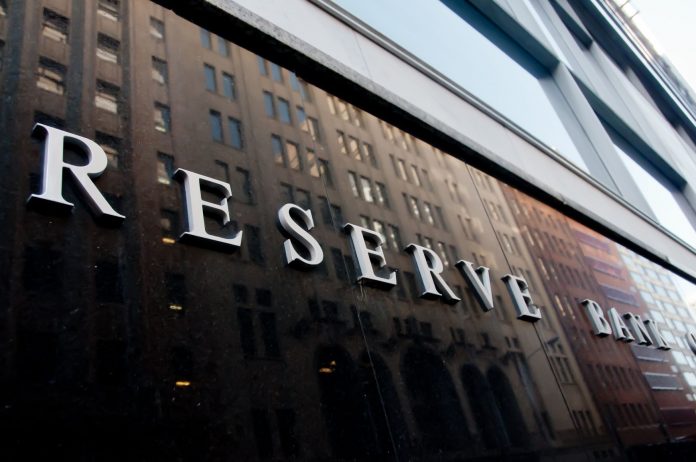
The Reserve Bank has left interest rates unchanged at a record low in its first board meeting of the year.
The central bank’s key cash rate has been 0.1 per cent since November last year.
“The economic recovery is well under way and has been stronger than was earlier expected,” Reserve Bank governor Philip Lowe said in his post-meeting statement on Tuesday.
But he reiterated the board would not increase the cash rate until actual inflation was sustainably within the two to three per cent target range.
The Reserve Bank’s three-yield bond target rate, that aims to keep short-term market interest rates low, and its term funding facility for banks, were also kept at 0.1 per cent.
EARLIER
Economists expected Australia’s continuing economic recovery from the coronavirus recession would be enough reason for no change.
ANZ Bank head of Australian economics David Plank was sure of the result.
“They won’t move the cash rate,” he said.
“That is not moving until inflation is above two per cent, and that’s years away.”
The central bank has repeatedly said it would not lift rates until inflation (currently 0.9 per cent) is within two to three per cent, and does not expect this until 2023.
Mr Plank was more interested in whether the RBA might revise its 2023 time frame.
Low interest rates have prompted enthusiastic take-up of home loans.
The Australian Bureau of Statistics on Monday said the value of new owner-occupier home loan commitments surged 8.7 per cent to $19.9 billion in December, 38.9 per cent higher than a year earlier.
The number of owner-occupier first home buyer loans rose 9.3 per cent, a 56.6 per cent rise since December 2019.
Meanwhile, Mr Plank tipped the Reserve Bank would extend its quantitative easing measures.
The bank has been buying more bonds and offering a term funding facility to banks, making it cheaper for them to borrow and stimulate the economy.
Mr Plank further explained: “The intent of quantitative easing is to make sure our interest rates don’t stand out relative to other countries.”
Attractive interest rates could stoke demand for the Aussie dollar which could lead the dollar’s value to surge, and hurt the fortunes of traders such as exporters.
The RBA will have plenty of chances to outline its views on the economy this week.
Governor Philip Lowe will speak at the National Press Club on Wednesday and will be quizzed by federal politicians on Friday.
The bank will also publish its quarterly statement on monetary policy on Friday, which includes its economic forecasts.