
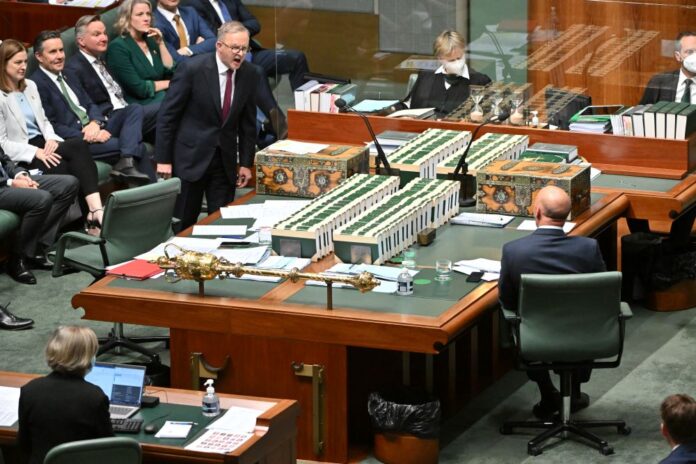
Workers and bosses are split on what impact newly-passed industrial relations reforms will have after the lower house ticked them off on Friday morning.
Unions are thrilled Labor’s Secure Jobs, Better Pay bill was rubber-stamped by the government-controlled chamber with a 78-42 vote, declaring them a “significant step towards fixing our broken bargaining system”.
But it’s a different story for business, with Australian Chamber of Commerce and Industry chief executive Andrew McKellar insistent the laws would do nothing to help businesses grow or pay higher wages.
“These laws only make our workplace system more litigious and more complex, sending Australian workers and businesses backwards,” he said.
“A number of concerning provisions remain that will have significant impacts on workers and businesses … chief among these is the operation of the single interest bargaining stream, which will drag employers into expensive and arduous bargaining negotiations that favour unions at all costs.”
SUBSCRIBE here now for our FREE news feed, direct to your inbox daily!
ACTU president Michele O’Neil praised the government’s “courage” to stare down the attacks from business.
“Millions of working people will be on a more even footing in negotiations with their employers, and able to take advantage of a new, modern system which is fit for purpose in our economy,” she said.
“It has taken courage to stand up for workers and the Australian economy against the extremely aggressive scare campaign being run by big business.”
Employment Minister Tony Burke said passing the laws signalled the day parliament decided to get wages moving.
“After a decade of deliberate wage suppression under the Liberals and Nationals, Australian workers need a pay rise and these new laws will deliver,” he said.
The laws simplify bargaining, put an end to exploitative job ads promoting work for less than the legal minimum, and stop pay secrecy clauses.
They will also put gender pay equity into the Fair Work Act.
The government plans to deliver a second round of workplace reforms next year to close loopholes undermining job security and wage growth.
Opposition Leader Peter Dutton said the laws were a “return on the down payment by the union movement” and not about workers. Independent MPs Kylea Tink and Allegra Spender voted against the bill, the latter taking issue with the multi-employer bargaining provisions.
The coalition has argued they will force undue costs on small businesses that don’t want new work agreements and can’t afford them.
Small businesses with fewer than 20 employees will be excluded from single-interest multi-enterprise bargaining while those with fewer than 50 will have extra safeguards if they want to opt out of multi-employer bargaining.
Ms Spender failed in a push for it to be an opt-in model at first which could be reviewed in a year.
“I hope for the sake of the country that (multi-employer bargaining) makes the difference in terms of wages … but I will be holding the government to account in terms of making sure this works for businesses,” she said.
Labor also abolished the Australian Building and Construction Commission, which it said had become politicised and ineffective.
Do you have an opinion to share? Submit a Letter to the Editor with your name and suburb at Sunshine Coast News via: news@sunshinecoastnews.com.au