
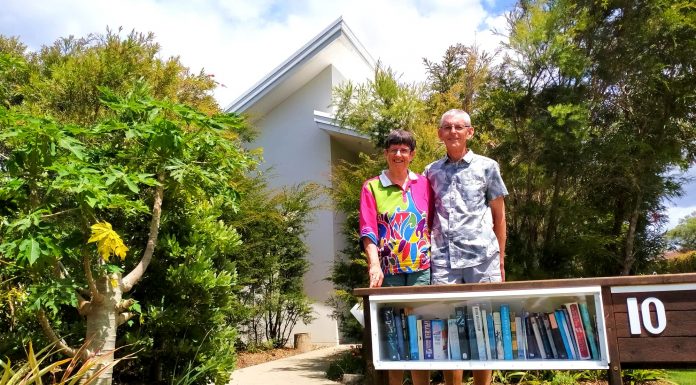
Allan and Lenore McKay are leading a green revolution in suburbia, living off the grid and paying no utilities bills.
The Golden Beach couple are disconnected entirely from mains power and water, saving thousands of dollars in electricity and water bills.
The average Queensland household pays about $1400 a year for power and $300 for water consumption but the McKays pay almost zero (their water bill is about $3 per quarter).
Their green urban lifestyle proves you don’t need to be a hinterland hippy to help save the world.
As climate change activists like Sir David Attenborough call on countries to embrace solar, the retirees are one step ahead.
The McKays (below) designed and built their open-plan urban house five years ago to utilise the sun’s seasonal tracking and prevailing winds for heating and cooling at different times of year.
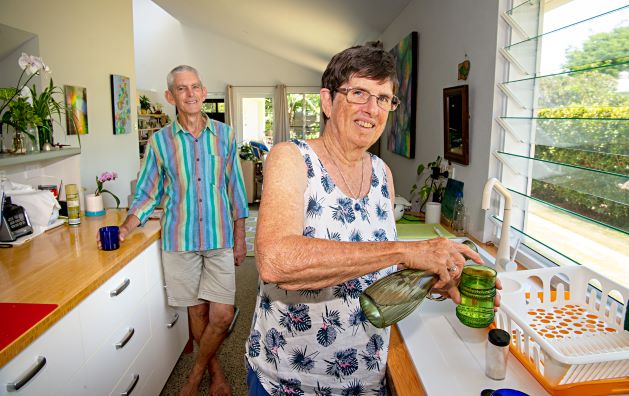
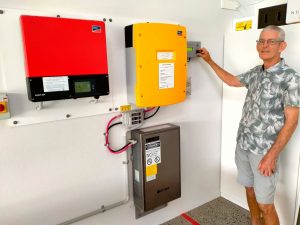
Their very small solar system of 3.6kW supplies all the energy they need to enjoy the same mod-cons as everyone else – a fridge, induction cookstove, TV and computers.
(An average solar system size in Australia is 5kW to 6kW.)
But they have made lifestyle changes to limit their power use and do not have fans, air-conditioning or heating.
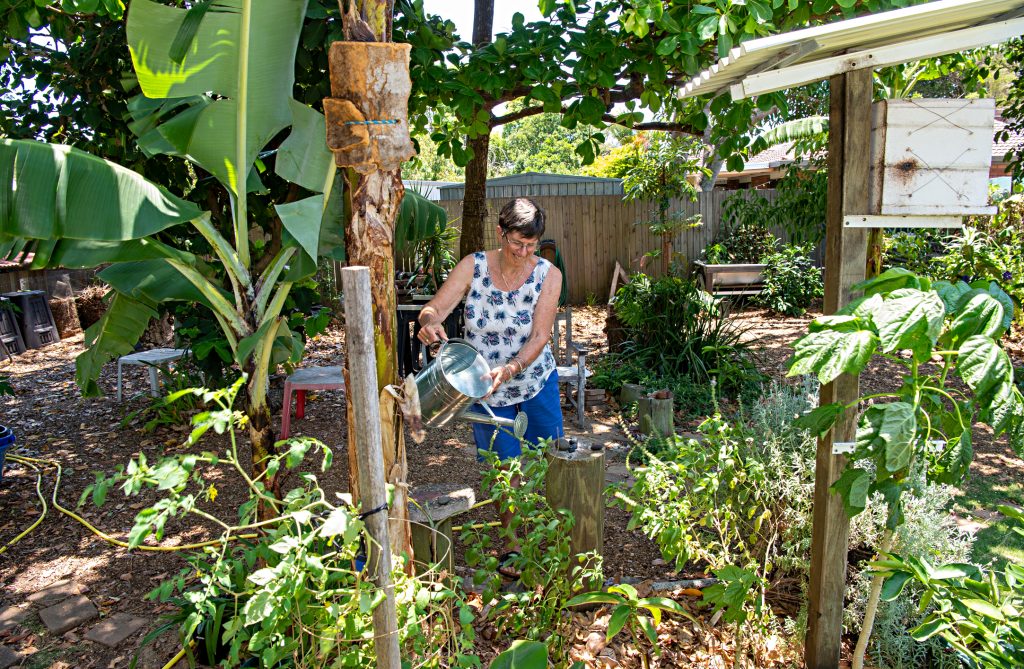
Four huge water tanks in the backyard, with filtration and UV sterilisers, store 20,000L and keep the house and yard well stocked and watered.
“I have enjoyed being at the cutting edge of what is happening; it’s really quite exciting,” said Mr McKay.
Adds Mrs McKay: “I find it really satisfying just doing your bit and not to have coal pumped through at the other end.”
Every detail, from the width of eaves and windowsills to the angle of roofs, was carefully considered to make the most of nature’s resources.
Built by Mitch Butler at Coastland Builders, the house features rendered reinforced concrete block walls.
Like this story? Get more just like it direct to your inbox by subscribing to our free daily news feed: Go to SUBSCRIBE at top of this article to register
The polished concrete floor warms up in winter as the sun streams through the carefully angled louvres and is cool in summer.
Light and sea breezes enter through high louvres and bounce off walls at different times of year to heat or cool.
Mr McKay said building a “green” house was “terribly easy to do”. The biggest problem was finding a builder who understood your vision.
He said their off-grid solar system cost $17,000 but it was well on its way to paying itself off.
The energy efficient house cost about $350,000 to build. It was the first house in Australia to install an LG Chem lithium ion battery imported from South Korea.
He also led the way using fibre-reinforced polymer structural beams which are lighter and stronger than wood or steel and normally used in marine construction.
However, The Sunworks co-owner Mike Trust warned that going off-grid was significantly more expensive than installing basic solar panels.
Mr Trust said more people were showing an interest in disconnecting from mains power but baulked when they learnt of the price.
“A standard 6.6 kW solar system costs about $5000 but to go off-the-grid with a similar set up would cost about $25,000, mainly because of the battery,” he said.
“It’s hard for people in suburbia especially if you are used to having an unlimited supply of electricity.
“It’s more of a lifestyle choice. Every single appliance you use starts to add up and it’s tricky if you’re used to making a cup of tea while cooking dinner and watching TV.”
Mr Trust said while battery technology was improving, it was still the most expensive part of living off-the-grid.
“It’s going to be a while before it is the norm,” he said.
However, Mr McKay said he and Lenore had proven the lifestyle was easily achievable with some planning and foresight.
For those interested in making the change, Mr McKay advised that the first steps should be to get educated and find the right people to help build your home.
- The McKay’s house won first place in the HIA Regional and Queensland GreenSmart Energy Efficiency Awards, 2015
Do you have a sustainability story? Email: news@sunshinecoastnews.com.au