
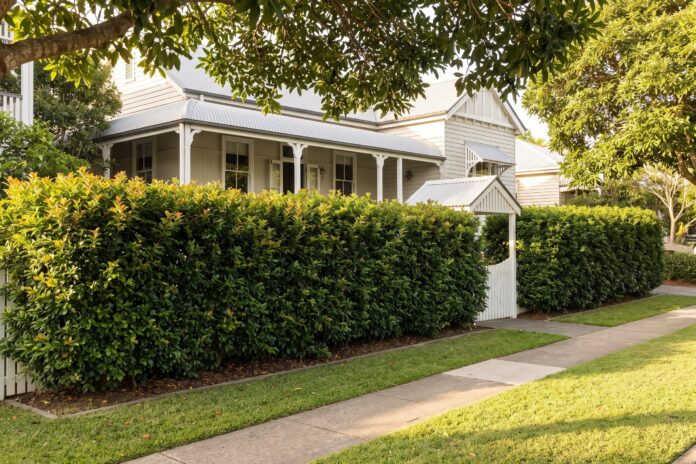
A Sunshine Coast garden has to take a particular kind of summer: weeks of humidity, afternoon storms that drop a month of rain in an hour, salt wind on the coast and heavy clay in the hinterland.
Plants chosen from a southern gardening book do not fare well here; whereas plants chosen for the conditions barely notice these adverse conditions.
After a year of sending plants to Queensland gardens, 10,721 of them across 1,575 orders, Nursery Near Me has a clear picture of what works and the Sunshine Coast is where the pattern shows most clearly.
Hedging plants led the Queensland list by a wide margin, and one plant, the psyllid-resistant lilly pilly accounted for more than one-fifth of the state’s total.
This native species is what most new hedges here are built from. It holds a dense screen from the ground up, shrugs off the psyllid which disfigures older lilly pillies, and takes the humidity and storms in its stride.
Plant it 60cm apart, water deeply twice a week through the first summer, and by this time next year it’s a screen.
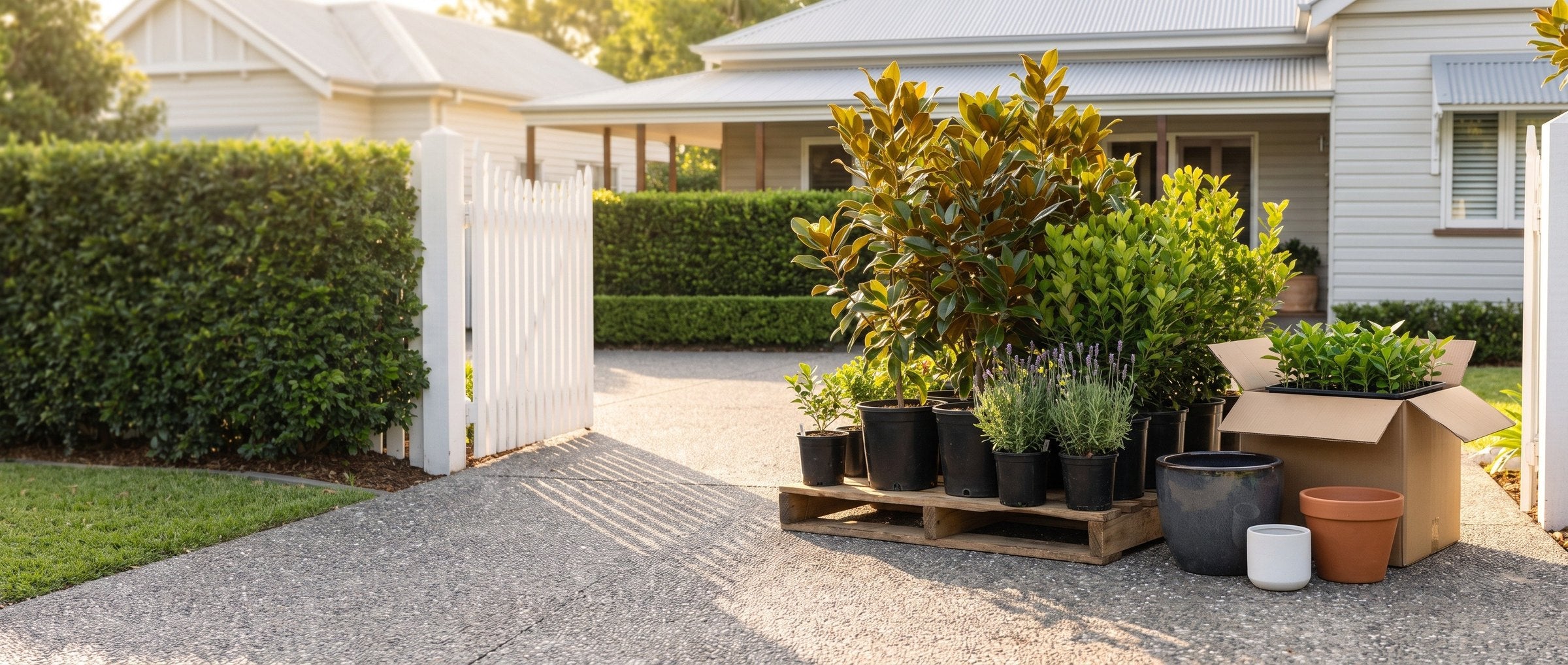
A narrow upright lilly pilly is the choice where the bed is less than one-metre wide, and the faster ‘Express’ lilly pilly where the fence has to disappear this year rather than next.
The hedging and screening range is sorted by height, so a two-metre boundary and a six-metre two-storey screen are a click apart.
Wind is a factor when choosing plants for a Coast garden. Coastal rosemary clips into a grey green hedge and does not care about salt.
Lomandra and dianella knit a bed together and need nothing once they are in. Pigface and the native violet cover the ground. Frangipani, the plant of every beach house, wants only drainage and sun.
The range of plants for coastal areas is filtered for exactly this, and every plant on it has been through at least one coastal summer, according to the nursery.
Hinterland gardens want trees, and the right tree makes a house 10 degrees Celsius cooler by February.
Tuckeroo and water gum are the local council choices for good reason: non-invasive roots, evergreen and tough.
A Poinciana or a Jacaranda gives the big summer canopy where there is room, and a Blueberry Ash fits where there is not.
Plant trees in a hole twice the width of the pot, stake advanced sizes for the first year, and mulch 75mm deep with the mulch kept off the trunk.
Low maintenance was the most requested type of plant in every state last year. Nothing does more for it here than mulch and deep watering.
Shallow sprinklers grow shallow roots and shallow roots cook in January. Water by hand, deeply, early in the morning, and let the soil dry in between.
The other rule is timing. April was the busiest planting month according to the nursery, ahead of spring.
The reason is simple: a plant that goes in during autumn has a whole cool season to put roots down before its first summer.
Spring planting works, and we are in the middle of it now, but it means watering through the heat. If a hedge can wait until March, it would be optimal to plant it then.
Nursery Near Me delivers to every suburb on the Sunshine Coast from Caloundra to Noosa and the hinterland. That literally puts a nursery within a few hours of a resident’s garden for most of its Queensland plant range.
Isaac Olson is a director of Nursery Near Me, an Australian online nursery that delivers hedging, natives and advanced trees from grower to door across Australian mainland states.