

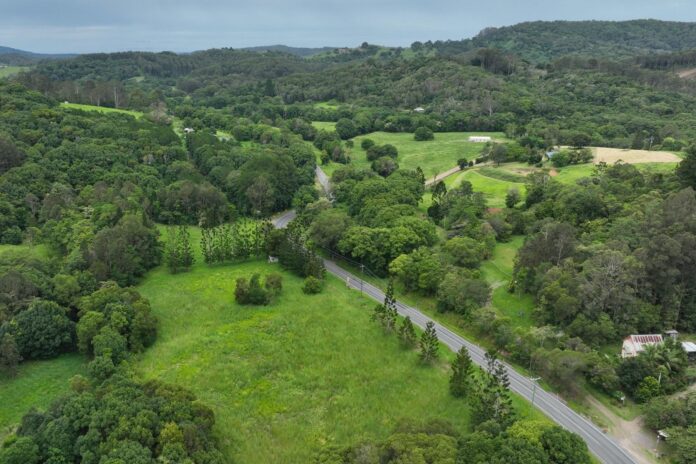
An upgrade to an “important link” between towns is progressing, with the design completed for one key stretch of the route while another is assessed by the federal government over environmental matters.
The Kin Kin Road project includes rehabilitating and widening priority sections of the corridor, which is also known as Pomona-Kin Kin Road, to improve safety, enhance ride quality and reduce long-term maintenance costs. The road is the main haul route for the Kin Kin Quarry.
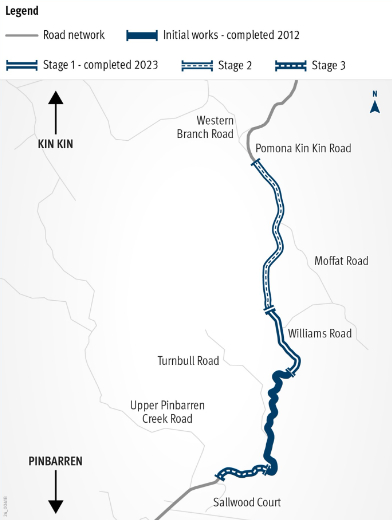
Stage 1 (between Turnbull Road and Williams Road) was finished in 2023, while the design for Stage 3 (between Sallwood Court and Turnbull Road).
Design is continuing for Stage 2 (between Williams Road and Western Branch Road), which is being assessed by the Australian government because of listed threatened species and communities.
The Department of Transport and Main Roads North Coast regional director Melanie Dei Rossi said the project would significantly benefit motorists.
“Kin Kin Road is an important link for the Pomona, Kin Kin and Pinbarren communities and visitors to the Noosa Hinterland,” she said via a media release.
“With the design for Stage 3 now complete, we are looking forward to commencing construction to improve safety, ride quality and connectivity on this section of Kin Kin Road.
“Stage 2 will continue to move forward and we are committed to working closely with stakeholders to meet the necessary environmental requirements.
“We understand how important the condition of this road is to the local community.
“The Kin Kin Road widening project is a vital investment in the region’s road network, enhancing road safety and supporting the needs of the growing community.
“We are determined to deliver this project in a way that sensitively balances necessary infrastructure improvements with environmental responsibility.”
The project’s web page acknowledged that Stage 3 had the green light to proceed next year, subject to the outcome of the tender process, but plans for Stage 2 required scrutiny.
“Stage 2 has been deemed a controlled action under the EPBC (Environment Protection and Biodiversity Conservation) Act and is undergoing further assessment.”
Scroll down to SUBSCRIBE for our FREE news feed, direct to your inbox daily.
The referral outlined the state of that stretch of road and the need for an upgrade.
“Since the commencement of quarry operations in 2013, TMR has received ongoing community feedback regarding safety concerns with the increase in heavy vehicles using the link and the consequent degradation of Kin Kin Road,” it stated.
“The existing cross section of Kin Kin Road features a narrow formation with limited shoulders. Residents have reported quarry trucks crossing the road centreline into oncoming traffic on curves, as traffic lanes are narrow and there is no existing curve widening. Without shoulders available to drivers, there is limited opportunity to create safe separation from heavy vehicles.
“The increase in heavy vehicles has also significantly degraded the condition of the pavement. The existing pavement is at the end of its design life and requires intervention.”
The scope of the work would include widening, steep embankment works, the installation of culverts, table drains, safety barriers and pavement rehabilitation.
The referred plans for Stage 2 stated that the project would be likely to have a significant impact on Matters of National Environmental Significance (MNES).
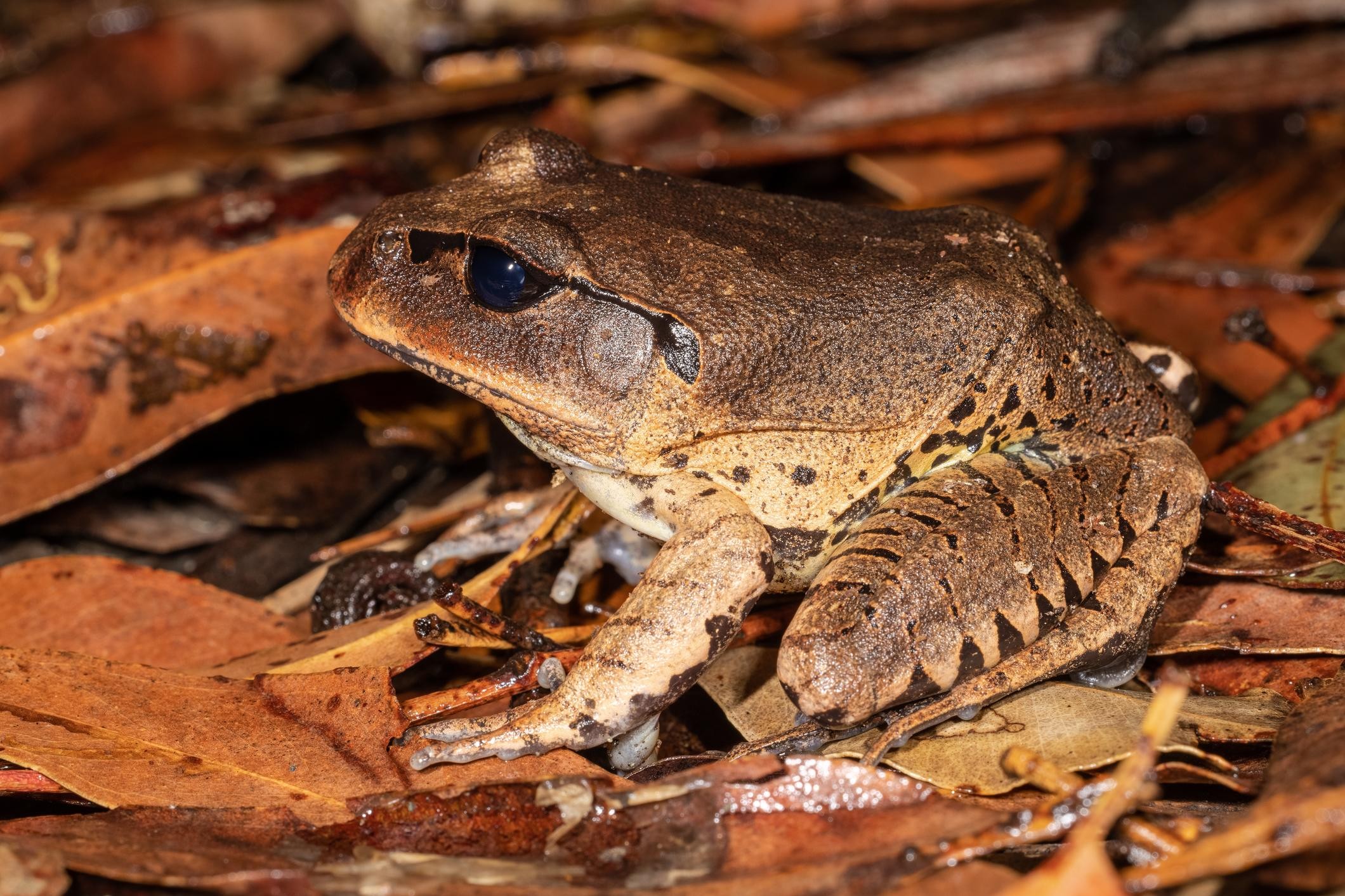
It stated that the project could impact 0.15ha of lowland rainforest of subtropical Australia Threatened Ecologocal Community (TEC), almost 470 Xanthostemon oppositifolius (southern penda) and 1.65ha of habitat for southern penda, and 0.12ha of habitat for giant barred frog (Mixophyes iteratus).
The referral stated that a range of mitigation measures and offsets would likely be implemented.
Measures would include reducing vegetation clearing, establishing exclusion zones around threatened flora, modifying earthworks and drainage designs, and maintaining fauna movement and water flows where possible. Works would also be timed outside threatened species’ breeding seasons where practicable.
During construction, clearing would be supervised by fauna spotters and ecologists, with no-go zones, staged clearing, erosion and sediment controls, dust suppression, rehabilitation and restrictions around waterways. Threatened flora affected by the project would also be subject to offsets and propagation measures.
Offset measures would include collecting and propagating threatened plants at a 1:4 ratio and identifying suitable offset sites, with TMR working with Noosa Shire Council and major landholders. A preliminary offset strategy and later site management plan would set out how habitat would be improved, monitored and managed.



