
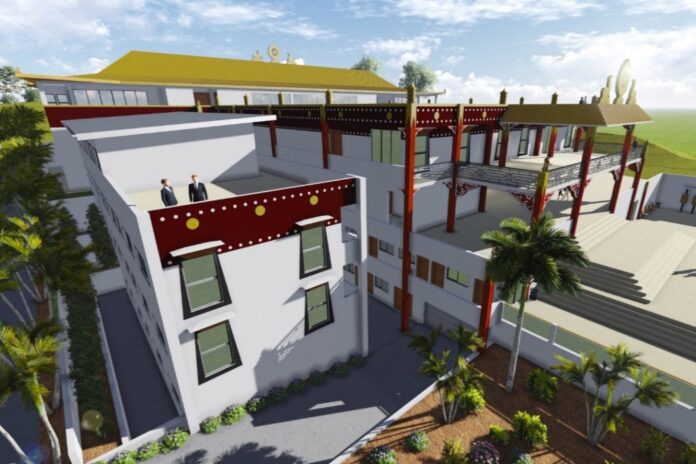
A major Buddhist centre has won approval for a significant expansion on the Sunshine Coast.
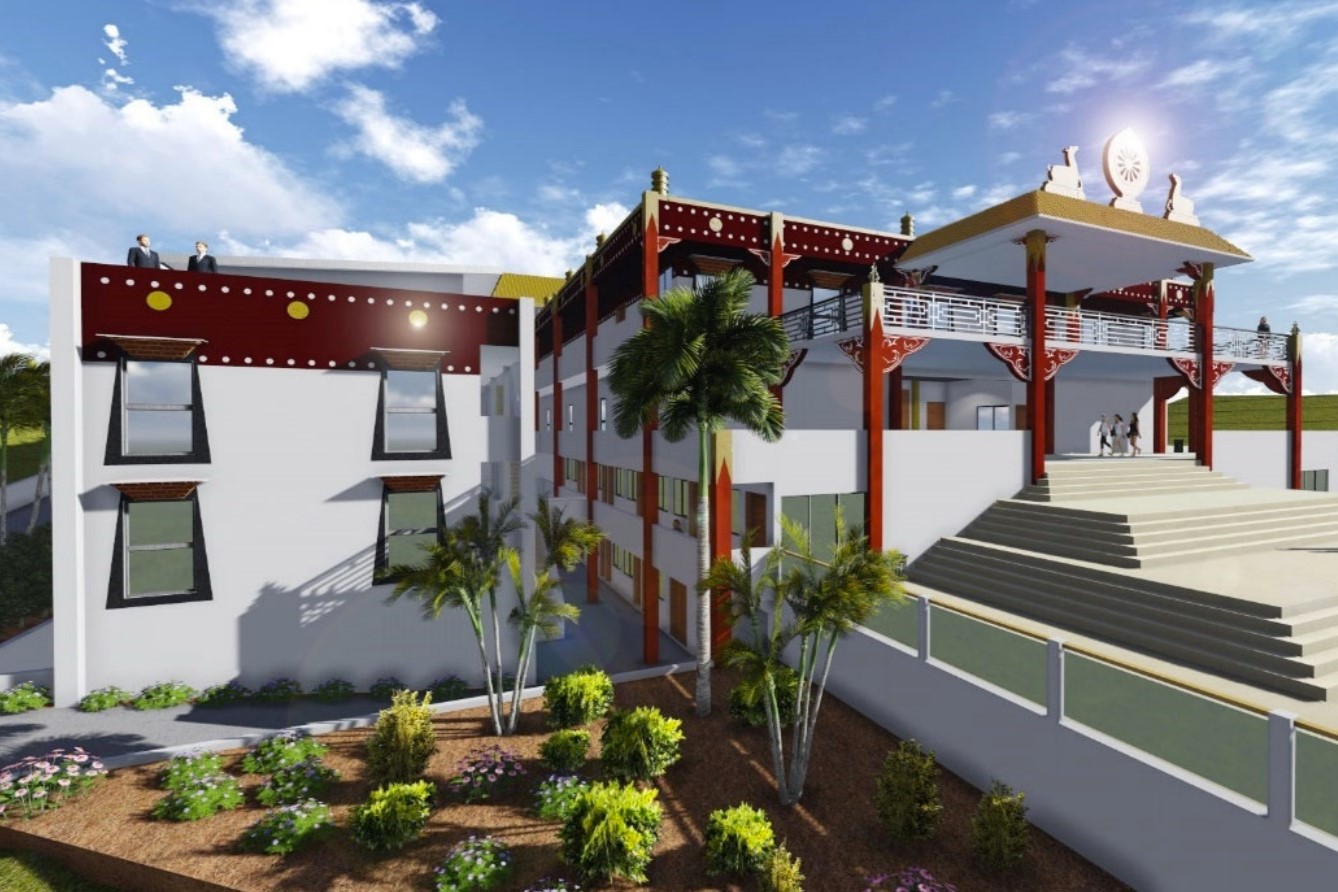
In Eudlo, the Chenrezig Institute has been issued a development permit for a new five-level gompa, 68 short-term accommodation rooms and two caretaker’s residences at 33 Johnsons Road.
Sunshine Coast Council decided on August 10 to approve the application, subject to conditions.
The approved plans show two basement levels beneath the ground-floor main hall, with further accommodation and function areas above.
The building has an overall height dimension of 12.87m, while a condition of approval requires it to remain no more than 8.5m above natural ground level at any point.
The accommodation is restricted to temporary stays of no more than three consecutive months and cannot be used as permanent accommodation. The kitchen and dining areas are also restricted to ‘gompa’ users and cannot be opened to the general public.
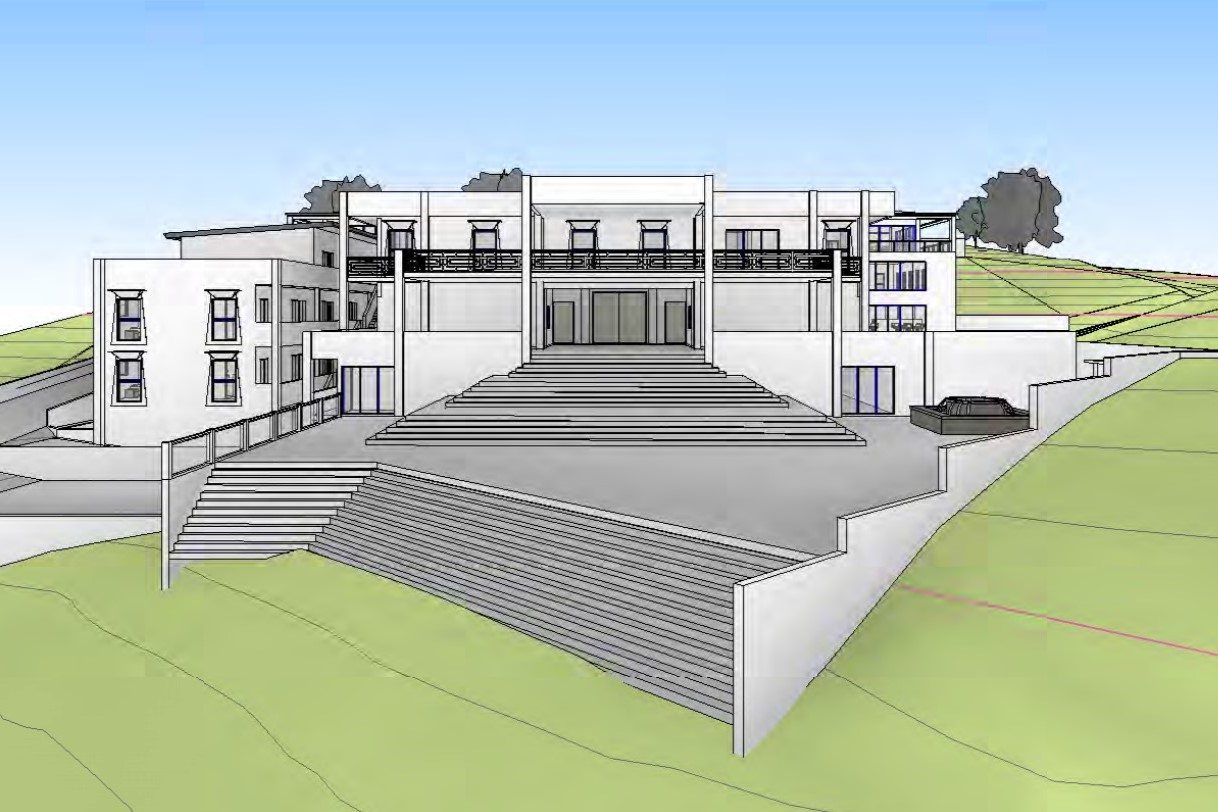
The plans include a main hall, accommodation blocks, prayer and store areas, offices, kitchens and dining areas, along with external decks, balconies, prayer wheels and feature water fountains. The approved area schedule lists a total area of 12,294.2sqm.
The approval follows a public notification period that attracted significant community interest.
A total of 184 submissions were received during the notification period between March 12 and April 1, with 169 deemed properly made. Of those, 133 supported the application, 35 opposed it and one was uncertain.
The development proposal was met with opposition from the Eudlo Hinterland Action Group, which formed as the application entered public notification.
The residents’ group said the project was not a small-scale or low-impact development and raised concerns about its size and intensity, traffic, waste, noise and light pollution, environmental impacts, bushfire risk and on-site parking.
Those concerns were also reflected in the formal submissions to the council. Opponents raised the condition and width of Johnsons Road and Upper Rambert Road, construction traffic, road safety, parking during larger events, the scale and character of the building, noise, bushfire evacuation, ecology, wastewater and infrastructure.
Council’s assessment reached different conclusions on a number of those issues.
On traffic and parking, council said an engineering assessment and site inspection found the surrounding road network was in good condition and capable of dealing with additional traffic from the proposed use, which was not expected to be significant. It also found sufficient parking was available on site for day-to-day use.
The approval requires at least 139 car parking spaces, including 137 visitor spaces and two spaces for the caretaker residences, as well as 10 motorcycle or scooter spaces.
It also requires sealed access driveways from Johnsons Road and Upper Rambert Road.
Johnsons Road must have a 150m section sealed approaching and entering the site, while Upper Rambert Road must have its cul-de-sac head and driveway access to the gompa sealed, subject to the relevant operational works approval.
Council also imposed a number of conditions aimed at managing construction and operational impacts. These include a construction management plan covering traffic, noise, dust, erosion and sediment control, drainage, road maintenance and construction times. Rock breaking and blasting are prohibited.
The council’s statement of reasons said its environmental management specialist considered the site sufficiently buffered from surrounding sensitive land uses to meet planning benchmarks for noise, odour, light, glare, dust and particulates, subject to conditions. A further noise report must address maximum noise levels and limits on patron numbers, along with physical and operational mitigation measures.
Want more free local news? Follow Sunshine Coast News on Facebook, LinkedIn and Instagram, and sign up for our FREE daily news email.
On visual impact, council acknowledged the development had a large footprint but said this was favourable from an environmental perspective compared with providing smaller buildings in more constrained and vegetated areas.
The Chenrezig Institute, founded in 1974, has described the proposed gompa as an expansion needed because its existing meditation hall has reached capacity and cannot accommodate larger teaching events and retreats simultaneously.
The institute is one of Australia’s largest Tibetan Buddhist centres and operates a range of Buddhist and secular teachings, wellbeing programs and retreats from its hinterland property.
The approval has a six-year currency period unless lawfully extended. A separate condition also provides that if the approved use has not been completed within 10 years of commencement, the uncompleted aspects of the approval will lapse.