
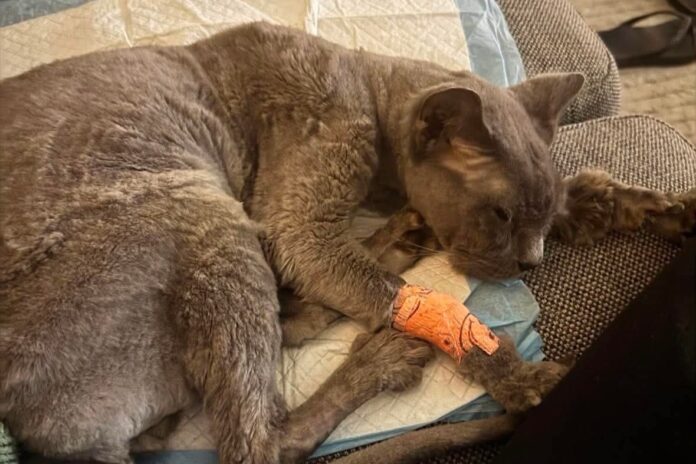
A Sunshine Coast cat’s battle with paralysis has emphasised the danger that ticks pose to pets, as new research shows where the tiny arachnids prefer to attach.
After disappearing for three days, Pumpkin returned home unable to stand, leaving his owners fearing the worst and rushing him to SASH (Small Animal Specialist Hospital) Sunshine Coast at Sippy Downs.
Emergency veterinarians discovered he was suffering from severe tick paralysis. He had a significantly reduced gag reflex and was struggling to breathe.
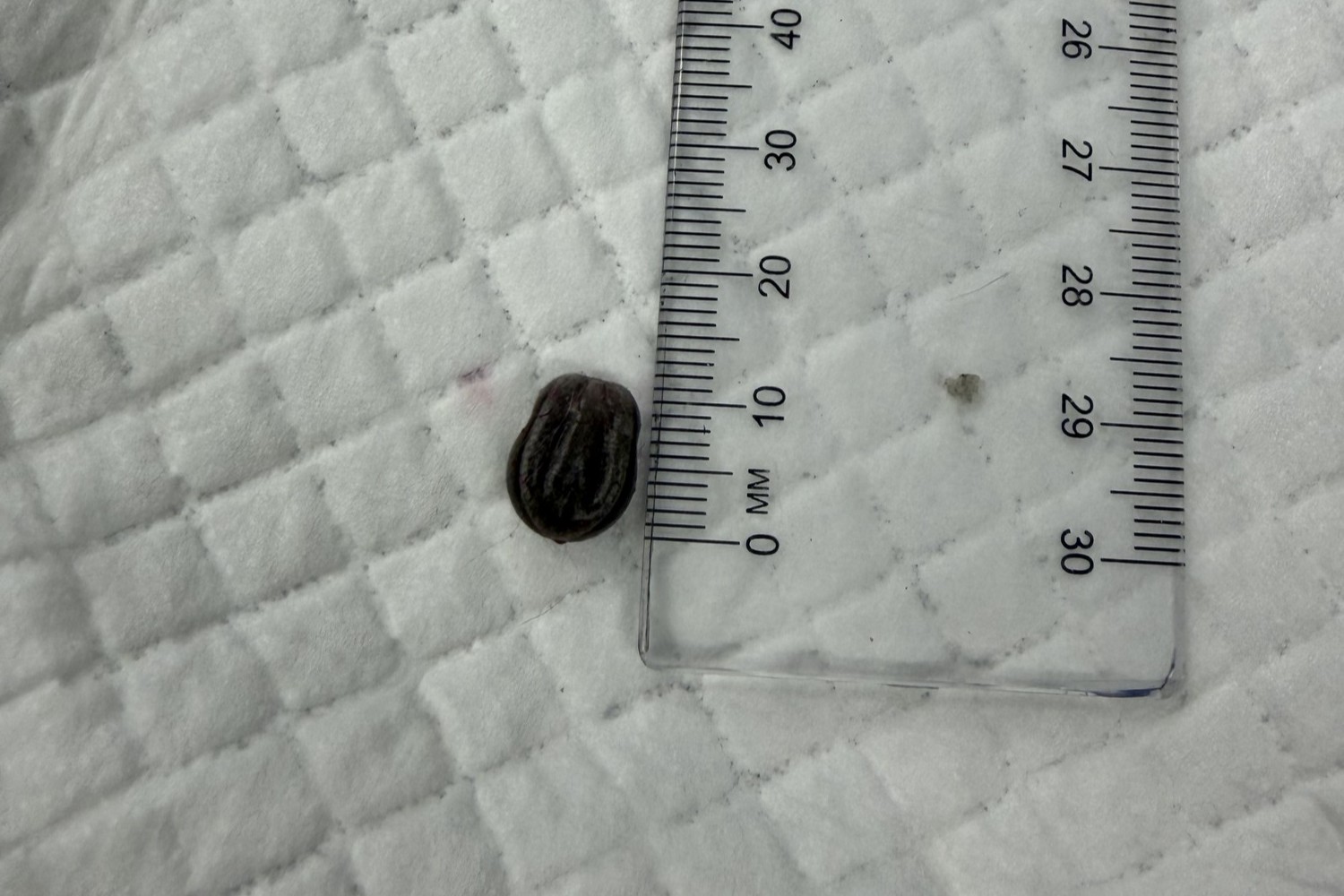
As Pumpkin’s treatment progressed, the veterinary team uncovered another surprise.
After clipping his fur, they discovered a large paralysis tick hidden at the base of his tail, an unusual attachment site for a paralysis tick. The vets also found a crater-like wound was also found on the right side of his neck, likely where another tick had previously attached.
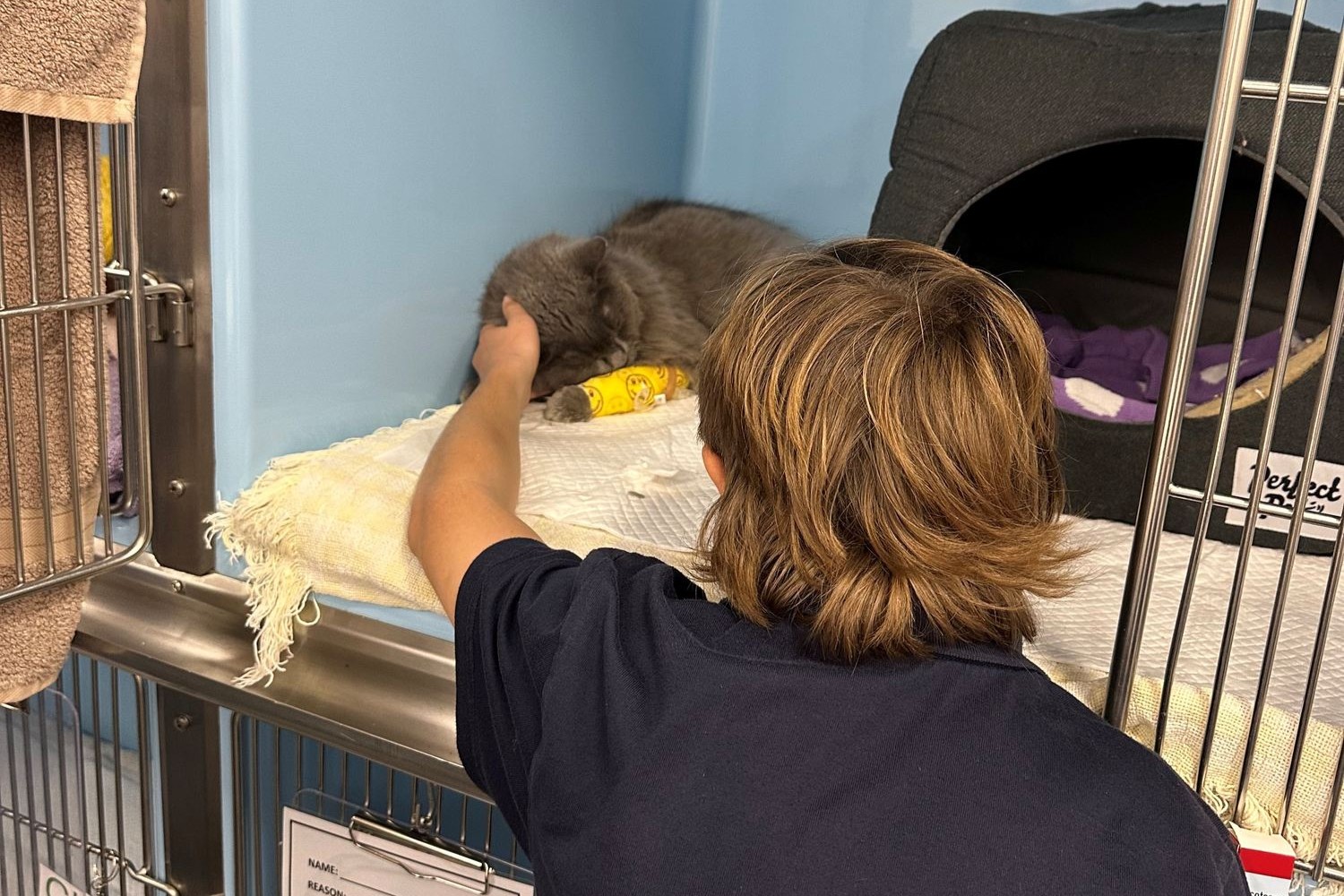
Pumpkin remained in hospital for four days, receiving intensive veterinary care before making a remarkable recovery.
Pumpkin’s owner Gary recounted the ordeal.
“We were in the middle of moving house and, because it was winter, we didn’t think we needed to keep up Pumpkin’s NexGard SPECTRA,” he said.
“We never imagined he could get a paralysis tick at that time of year.
“When Pumpkin came home after being missing for three days and couldn’t stand, we were so worried.
“Seeing how sick he became was a huge shock, and we’re incredibly grateful to the team at SASH for helping him pull through.
“My message to pet owners is, paralysis ticks don’t disappear in winter, it’s important to keep pets protected all year round.”
SASH Sunshine Coast veterinarian Dr Theresa Bülger said Pumpkin’s case was a reminder that ticks can attach almost anywhere on a pet’s body.
“Many people focus on checking around the head, neck and ears but Pumpkin’s paralysis tick was hidden on his tail,” she said.
“It’s a timely reminder that paralysis ticks can attach in unusual places, so pet owners need to check every part of their pet, especially if they’ve been outdoors.”
SASH, which is in eight locations around Australia, treated more than 780 dogs and cats for tick paralysis from May 2025 to April 2026.
On the Sunshine Coast, one of Australia’s highest-risk paralysis tick regions, ticks are already active well ahead of the usual spring peak.
Scroll down to SUBSCRIBE for our FREE news feed, direct to your inbox daily.
In the largest study of its kind, researchers analysed tick attachment sites from more than 10,000 tick paralysis cases from veterinary hospitals in Brisbane, the Gold Coast, the Sunshine Coast and Sydney’s northern beaches.
The study confirmed that people should focus on the head and front of the body first when tick searching.
Paralysis ticks were found on the head, neck or ears in 73 per cent of dogs and 63 per cent of cats.
The study also found significant difference between attachment sites in dogs and cats, with the most common attachment site being the head for dogs and the neck for cats.
Unusual attachment sites were also identified including the mouth (on the gums and tongue), nostrils, external ear canals and genitalia.