

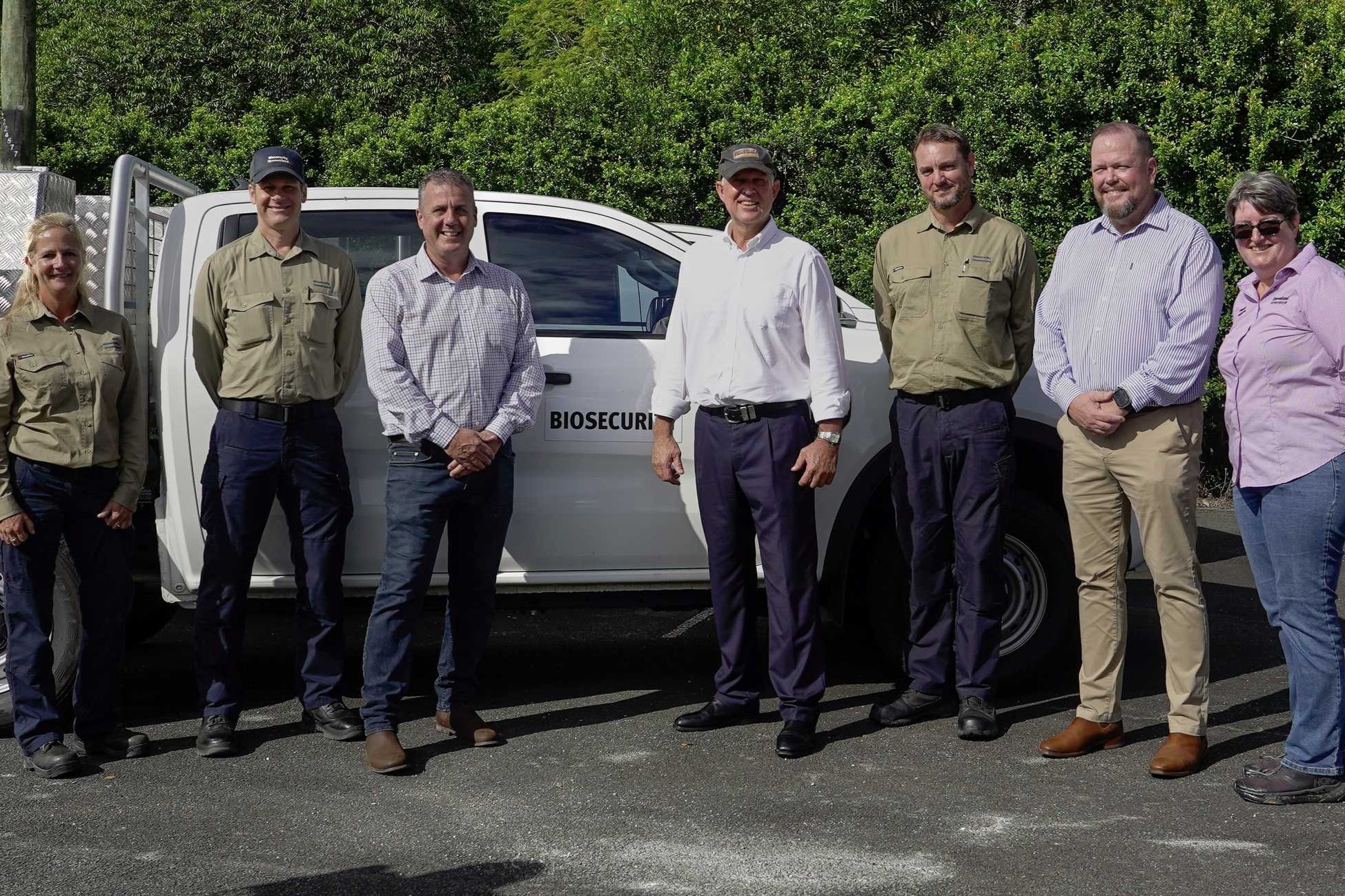
The state government has tasked five people to help combat invasive species on the Sunshine Coast.
The biosecurity officers have been appointed to identify and tackle plant and animal pests and diseases to better protect people, the economy and the environment.
They are among 40 officers to be stationed in 21 locations statewide, as part of a plan to grow the value of Queensland’s primary industries production.
Nicklin MP Marty Hunt welcomed the new staff members to the region.
“These biosecurity officers play an important role in our community, undertaking surveillance, compliance, enforcement, education and stakeholder engagement activities to ensure the Sunshine Coast is protected from animal and plant diseases and invasive pests and weeds,” he said.
Minister for Primary Industries Tony Perrett said new recruits were based in biosecurity hot spots around Queensland.
“Strong biosecurity measures underpin profitable primary production,” he said.
“When we improve our biosecurity, we also protect productivity which moves us closer to our goal of primary production output of $30 billion by 2030.
“Primary producers deserve to have confidence Queensland has the biosecurity capacity to protect and retain current national and international market access.
“We committed to boosting prevention and preparedness resources to combat increasing biosecurity risks and the Crisafulli Government is delivering on its promise with boots on the ground.”
According to Sunshine Coast Council’s website, the region has several invasive animals and plants.
Some of the animals include wild dogs, foxes, feral pigs, feral cats, rabbits, feral deer, Indian myna birds, feral pigeons, Tilapia and mosquito fish. Some of the many plants include cats claw creeper, lantana, rat’s tail grass, and prickly pears.
There are also ongoing efforts to contain and eradicate fire ants, which have entered the region in recent years.
Help keep independent and fair Sunshine Coast news coming by subscribing to our FREE daily news feed. All it requires is your email at the bottom of this article.