
A simple blood test could improve the lives of brain cancer patients and boost tragically low survival rates.
Australian scientists have developed a diagnostic device that reads tiny biological particles in a patient’s bloodstream to analyse how brain tumours are responding to medical treatment.
It will allow clinicians to more quickly assess and adjust a patient’s treatment with less impact on them than current methods using magnetic resonance imaging (MRI) scans, neuro-oncologist Mike Fay said.
“That’s likely to open more options for patients and allow people to have a better quality of life for a longer period of time,” Professor Fay said, who is director of the Mark Hughes Foundation Centre for Brain Cancer Research at the University of Newcastle.
About 2000 Australians are diagnosed annually with high-grade brain cancers, such as glioblastoma.
Scroll down to SUBSCRIBE for our FREE news feed, direct to your inbox daily.
Glioblastoma is considered to be particularly deadly because of its location in the brain.
It also grows aggressively and clinicians have a battle precisely monitoring whether medical treatment is working.
“It affects a lot of young people; 50 per cent of the patients are under 65,” Professor Fay said.
“A lot of them are never able to work again and that has a huge impact on their families.
“It’s an urgent problem.”
Brain cancer kills more Australians under 40 than any other cancer.
The average survival time for the most severe grade four tumour is 14 months and only a quarter of patients survive more than one year.
Only one-in-five people diagnosed with brain cancer will survive at least five years.
“It’s pretty dire,” Professor Fay said.
Brain cancer treatment often involves surgery, radiation and chemotherapy.
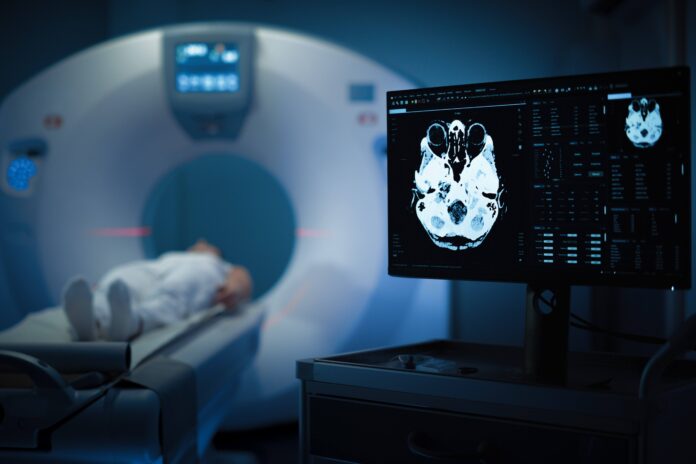
Patients currently have MRI scans every two or three months to monitor their disease progression during this process.
This can be stressful and a burden for them and their families, particularly those living in regional areas who have to travel hundreds of kilometres for scans.
But the “world-beating, incredibly clever” device, called a phenotype analyser chip, could change that by eliminating the need for regular scans.
It can also be employed earlier in a patient’s journey with the disease than an MRI scan to monitor treatment progress.
“These patients haven’t got long and you can miss the window where you could potentially change treatment,” Professor Fay said of traditional scans.
The University of Queensland developers from the Australian Institute for Bioengineering and Nanotechnology hope it will eventually be rolled out to doctors around the globe to enable quick analysis of treatments.
Still in the trial phase, the device could also help researchers more quickly assess the efficacy of new medical treatments for brain tumours as they’re being developed.
The analyser works by examining small samples of blood and capturing messenger cells known as extracellular vesicles that originate from tumour tissue.
These particles cross the blood-brain barrier and are filled with information about the disease.
The chip also has the potential to unlock therapies for neurological disorders such as Alzheimer’s, Parkinson’s, Motor Neurone Disease and depression.
The research was published in the journal Science Advances on January 31.