
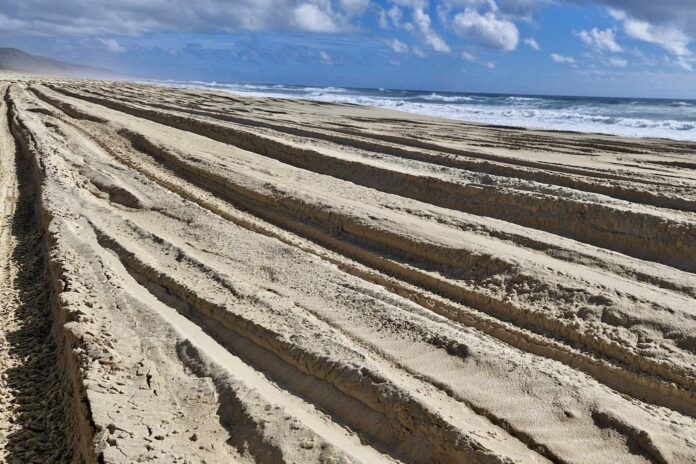
Drivers are being asked to show care on beaches after turtle hatchlings were reportedly found crushed in vehicle tracks.
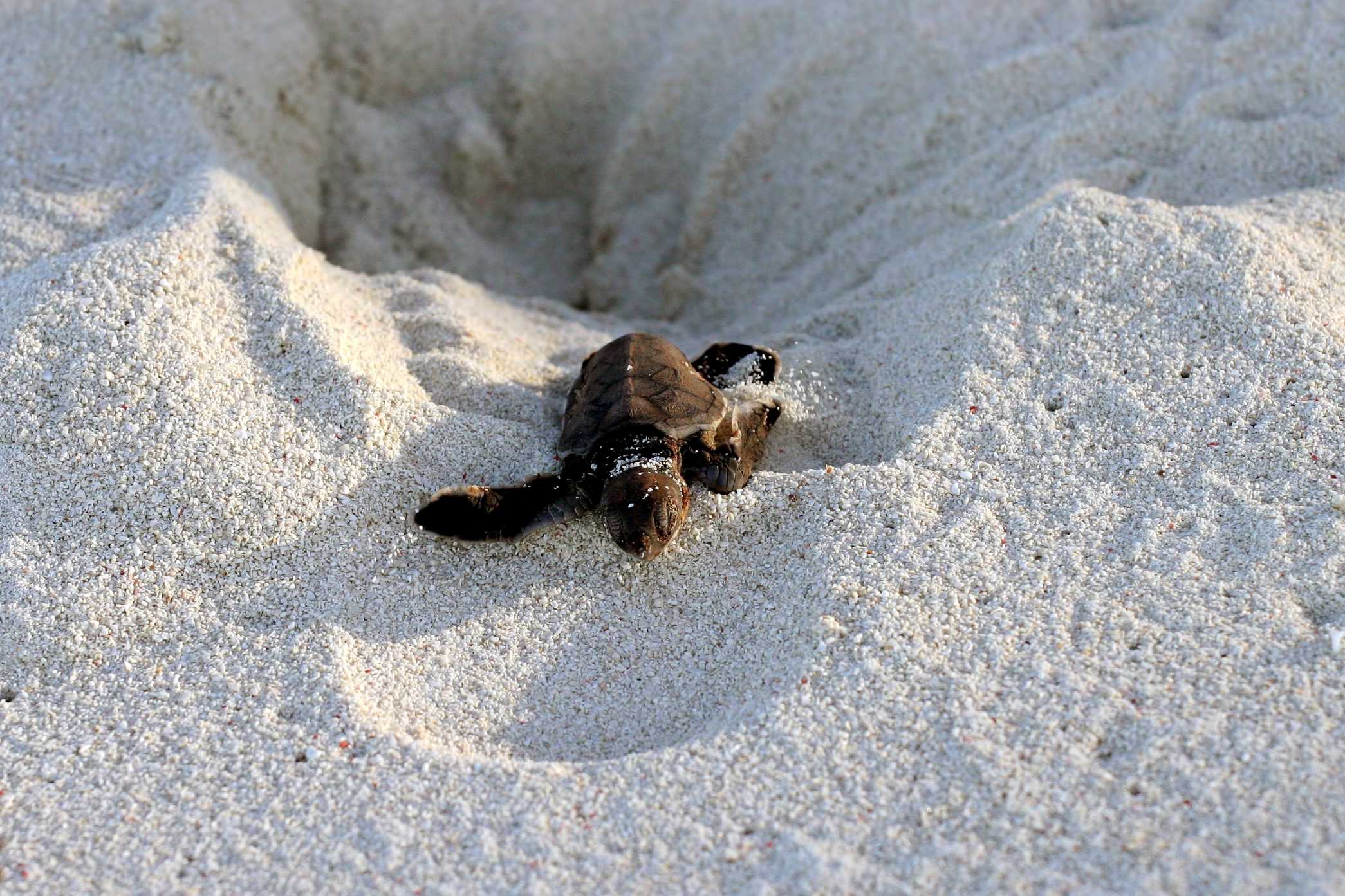
Loggerhead and green turtles are in their nesting season, which runs from November to March, laying their eggs just above the high-water mark in the fragile lower dune ecosystems.
The crushed hatchlings were reported by a family staying at Noosa North Shore.
“People who walk or drive through dunes risk crushing turtle nests and killing hatchlings before they have a chance to reach the ocean,” Noosa Council fauna management officer David O’Gorman said.
“Artificial lights from businesses, homes, cars and torches can disorient hatchlings, sending them away from the sea.
“When visitors ignore designated beach access points and create new tracks, they risk destroying nesting habitat. Marine debris can also trap and injure turtles.
“We also have the highest number of recorded nests on the Noosa North Shore this season, increasing the risks.”
Noosa mayor Frank Wilkie said hatchlings of the endangered loggerhead turtle faced an uphill challenge to survive without being crushed in the nest or on the beach by vehicles.
“While a nest can contain up to around 150 eggs, as few as only one in 1000 hatchlings are estimated to survive to reach maturity,” he said.
“This low survival rate is a natural part of their life cycle and human impacts like vehicle strike, which occurred on the North Shore recently, reduces survival rates even further.
“Our Destination Management Plan calls on all of us to care for Noosa’s natural assets and avoiding beach driving during turtle hatching season is a simple way to do that.”
Related story: Loggerhead’s movements help solve turtle mysteries
People are being asked to act responsibly on Noosa North Shore by not driving two hours either side of high tide; staying off dunes; not driving on the beach at night; and reducing artificial light around beaches.
“Every year turtles return to Noosa’s beaches to nest, but human activity impacts their chances of survival,” Mr O’Gorman said.
“Together, we can protect these incredible creatures and ensure they return to Noosa’s beaches for generations to come.”