
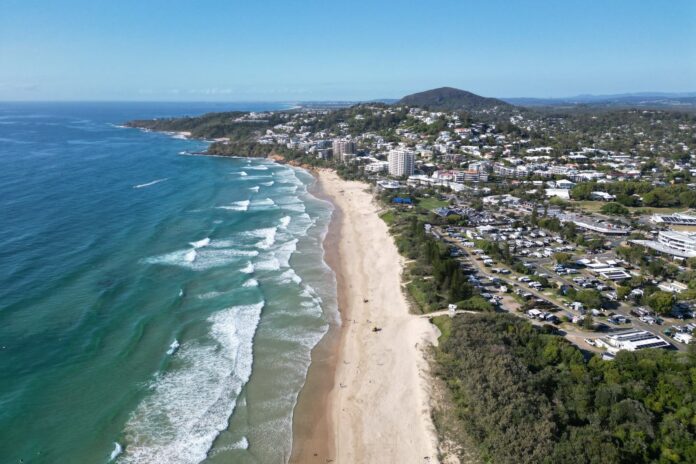
New statistics show the Sunshine Coast continues to be the top regional destination for relocating Australians.
The Sunshine Coast was the most popular regional place for movers for two years, before it was overtaken by Greater Geelong in the March quarter. It regained the lead spot in the June quarter and it retained it in the September quarter.
Regional Australia Institute CEO Liz Ritchie detailed some of the findings in the latest Regional Movers Index.
“We continue to see the usual regions experiencing the largest net internal migration in the year to September,” she said.
“The perennially popular top three spots: the Sunshine Coast with 8.8 per cent of total net internal migration to regions, Greater Geelong (7.7 per cent) and Lake Macquarie (4.1 per cent) all feature, with Fraser Coast (3.6 per cent) and Moorabool (3.5 per cent) in a battle for fourth and fifth.”
Want more free local news? Follow Sunshine Coast News on Facebook, LinkedIn and Instagram, and sign up for our FREE daily news email.

“Capital city people make up the bulk of the net migration to most of these regions. And interestingly, the Fraser Coast stands out for broad appeal for both city folks and regional movers. Its net migration comes from both these sources quite evenly.”
Ms Ritchie said while most city movers are coming from Sydney and Melbourne, there were some interesting developments in Western Australia.
“Perth has gone from receiving net inflows to seeing a net outflow,” she said. “Regional WA is also attracting more movers.”
“Broome, Gingin and East Pilbara LGAs in Western Australia all feature among the growing destinations for capital city movers to regions.”
Ms Ritchie said an increasing number of Australians were opting for cooler climates, with Victorian and Tasmanian regions recording upticks in annual migration growth. Those locations include Victoria’s Wodonga and Tasmanian Latrobe, Devonport and Huon Valley.
CBA’s executive general manager Regional and Agribusiness Banking Kylie Allen said while the Sunshine Coast and Greater Geelong remain popular in terms of share of migration, north-west Tasmania was becoming a magnet for opportunity and lifestyle.
“North-west Tasmania is positioning itself as a growth region, with ongoing investment in infrastructure upgrades and economic development initiatives,” she said.
“Coupled with a strong base of established industries, particularly the agriculture sector, its strategic port position, and easy access to Tasmania’s stunning landscapes, the region is an increasingly compelling place to work, live and invest.”
Ms Allen said similar momentum is evident in regional Victoria.
“Wodonga and neighbouring Albury are seeing investment and infrastructure developments across transport, education, health and defence, creating jobs and strengthening the local economy. We’ve seen our own business customers benefit from an uplift in trade due to the inflow of new residents, and other businesses pivot and diversify into different areas to meet new demand.”
“While the outlook is positive, attracting and retaining skilled professionals remains a challenge across regional areas. Even with a growing population, some sectors remain under pressure. Continued investment in training and upskilling will be key to meeting demand.”