

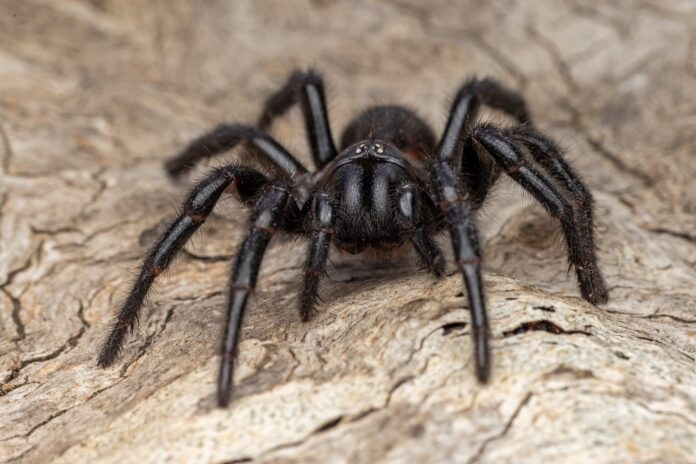
Venom from a funnel-web spider found on K’gari has been used to develop a drug that prevents damage during heart attacks and strokes.
University of Queensland researchers have started clinical trials to assess the safety, tolerability and dosage of IB409, a novel drug developed from a molecule in the venom.
Molecular biologist Mark Smythe says the molecule could minimise heart and brain damage in patients, which would save lives and reduce the burden on the health care system.
“Currently, there is no way of protecting your heart or your brain during a heart attack or stroke,” he said.
“This molecule will make a major difference to people dealing with a heart attack or stroke.
“It has a very big societal impact.”
Clots formed during heart attacks and strokes reduce blood flow to patients’ hearts, leading to significant tissue damage, Professor Smythe said.
Current treatments help restore blood flow – IB409 is designed to protect or minimise heart damage during a heart attack or stroke.
“There are no drugs on the market that do such a thing,” Prof Smythe said.
Help keep independent and fair Sunshine Coast news coming by subscribing to our FREE daily news feed. All it requires is your email at the bottom of this article.

Preventing damage during a heart attack or stroke would result in patients having healthier hearts and brains after their medical episodes.
“Which means your quality of life is going to be significantly better,” Prof Smythe said.
Researchers have previously recorded “exceptionally promising” preclinical results with a protein called Hi1a, which was derived from the venom of a funnel-web spider from K’gari, formerly known as Fraser Island.
They believe Hi1a could reduce damage to the heart and brain during heart attacks and strokes by preventing cell death caused by a lack of oxygen.
Brisbane-based biotechnology company Infensa Bioscience then transformed Hi1a into a miniaturised molecule – and the new drug being tested.
Phase one of clinical trials tests the safety of IB409 in healthy volunteers.
In phase two, researchers will examine the ability of IB409 to protect heart tissue during a heart attack.
If the drug is successful and becomes approved for use, it’s likely to be administered by paramedics and medical practitioners to provide early protection to patients suffering heart attacks and strokes, Prof Smythe said.
Prof Smythe is Infensa’s chief executive and a UQ researcher.
Phase one of the trials was funded by a $17.8 million grant from the federal government and philanthropic support from the Victor Chang Cardiac Research Institute and St Vincent’s Hospital in Sydney.
Researchers from Infensa, UQ, VCCRI, Monash University, the Baker Heart and Diabetes Institute, St Vincent’s Hospital, the Alfred Hospital in Melbourne, and The Prince Charles Hospital in Brisbane have contributed to the project.



