

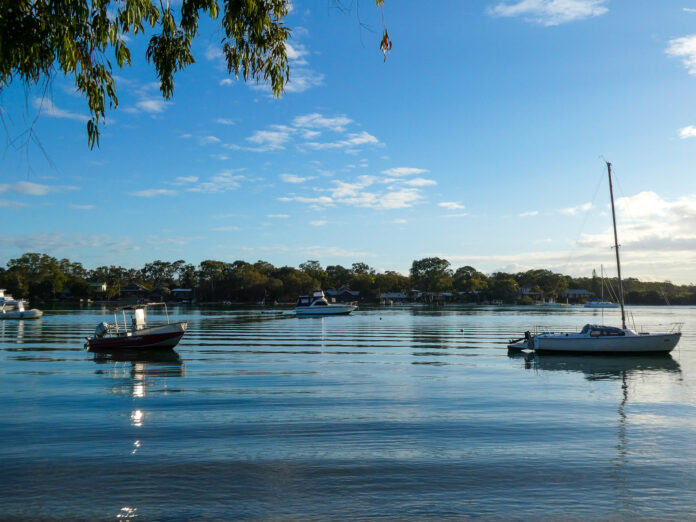
A picturesque water catchment has lost its A-grade rating for the first time in nine years after it was swamped by wild weather in 2022.
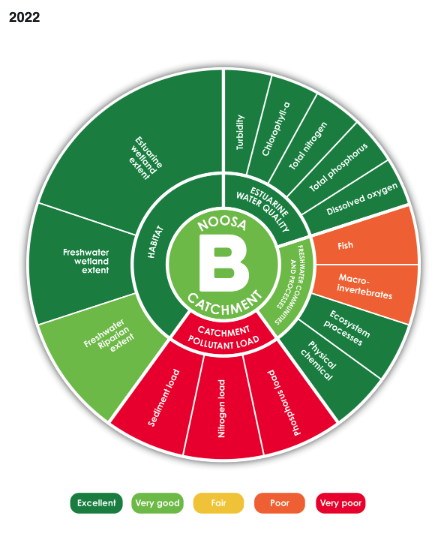
Noosa dropped from an A- to a B in the latest Healthy Land and Water Report Card, after holding a perfect record since 2013.
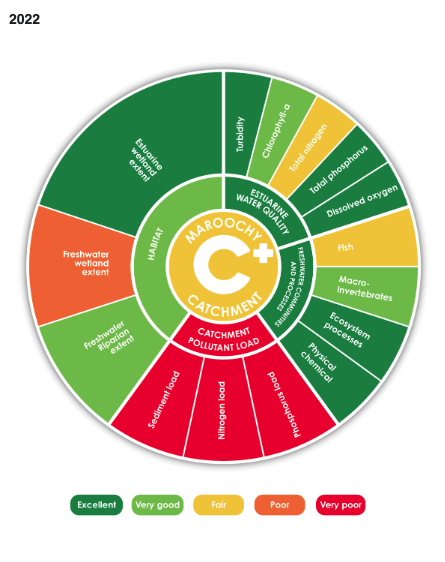
Nearby Sunshine Coast catchments Mooloolah and Pumicestone also experienced downgrades (C+ to C and B+ to B- respectively). Maroochy maintained its C+ rating, while there was a general decline in regions around southeast Queensland.
Noosa rating drops
Noosa Council’s acting environmental services manager Rebecca Britton said significant rain had led to a decline in the health of Noosa River and its catchment.
“Noosa’s rating declined slightly from excellent (A-) to good condition (B), largely due to the floods transporting more than three times the amount of pollutants into the river than in the year before,” she said.
The report card said pollutant loads had increased from moderate to very high, with sediment (mud) loads increasing from 349kg/ha in 2021 to 1112kg/ha in 2022.
Run-off also delivered very high loads of nitrogen (19.3kg/ha) and phosphorus (1.6kg/ha), after rainfall and river flows transported pollutants from areas downstream.
Ms Brtitton said the overall health of Noosa’s waterways was still strong and the report card “shows Noosa residents are some of the most satisfied with their local waterways in all of southeast Queensland, with a 78 per cent rating”.
Neighbouring catchments
Pollutant loads also increased in Sunshine Coast catchments due to rainfall and river flows.
A Sunshine Coast Council spokesperson said the report card was “a vital tool in working towards council’s target of maintaining and improving the ecological health of waterways and wetlands across each of our river catchments to a good or excellent grade by 2041”.
“The overall report card grades of B- for the Pumicestone Passage, C for the Mooloolah catchment and C+ for the Maroochy catchment mostly showed small declines on the previous year, which is reflective of the February floods,” they said.
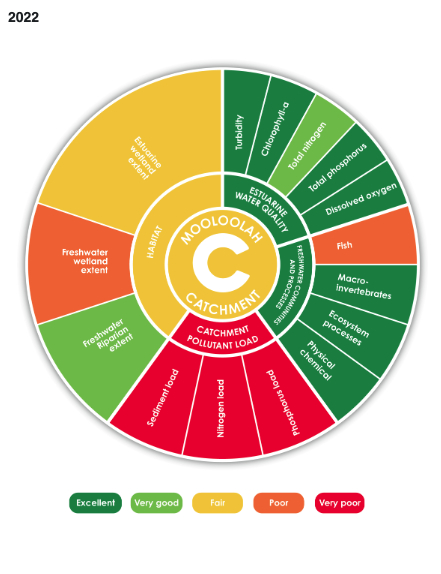
“During this severe weather event, widespread and heavy rainfall in our catchment areas flushed heavy sediment and nutrient loads into our waterways.”
Council said a purpose-built erosion and sediment control facility was designed and created as part of efforts to reduce sediment entering our waterways, via the Environment Levy.
“This facility assists the construction, development, agricultural and environment industries improve management, practice and understand erosion and sediment control,” the spokesperson said.
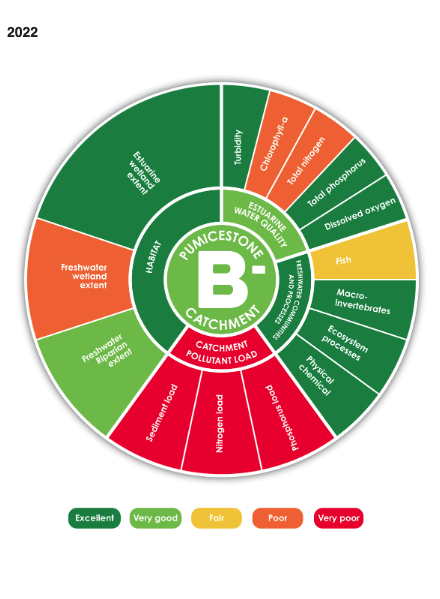
The levy “also supported the initiation of a Construction Management and Waterway Protection Taskforce to improve water quality protection practices across building and development sites”.
Sampling stations and strategies
University of the Sunshine Coast lecturer in environment and engineering Luke Verstraten said report card results across the region were “surprisingly good given the extremely wet start to the year”.
“I think receiving a passing grade or better under these conditions for all Sunshine Coast and Noosa catchments is a testament to the many activities that occur across our region to protect and enhance our waterways,” he said.
“It was very encouraging to see the ratings for freshwater fish improve in nearly all of the local catchment, even though the pollutant loads increased dramatically with all of the stormwater runoff.
“The main indicator that went backwards for 2022 was the pollutant loads, sediment, nitrogen and phosphorous, and this was likely the reason we saw a slight decline in the overall ratings for some of the local catchments.
“It would be great if we could get some sampling stations in our Maroochy, Mooloolah and Noosa catchments to track this further, as currently only the Pumicestone Catchment has a sampling station that collects pollutant data during major flow events.
“The results are showing us that we need to work towards reducing the levels of sediment, nitrogen and phosphorous that our catchments produce.
“A range of strategies can be employed to achieve this, from engineered stormwater quality improvement devices routinely fitted into our urban developments, maintaining and enhancing vegetation and wetlands across our catchments, and being mindful of activities we do on our properties, such as sparingly using fertiliser and allowing runoff to infiltrate into the soil if possible.”
Have your say on catchments
Water utility company Unitywater is calling on the community to have their say on how the four catchments are managed into the future.
Noosa and Sunshine Coast residents can register to be part of community consultation in early 2023, when the Water Matters Plan will be open for feedback.
Unitywater is working with its council partners and the community to develop the plan that safeguards the long-term health of the catchments and waterways.
Unitywater executive manager sustainable infrastructure solutions Daniel Lambert said it was especially important to seek input from local people who are familiar with the four catchments and their unique qualities.
“Our region’s population is growing and as a provider of essential services, we need to properly plan to meet the needs of our customers now and in the future,” he said.
“And you cannot be a water utility in the modern world without acknowledging the part we play in total water cycle management and the potential we have to contribute in a meaningful way to sustainable development, resilience and prosperity.”
The Water Matters plan will contribute to Unitywater’s net zero sustainability goals.
Help keep independent and fair Sunshine Coast news coming by subscribing to our free daily news feed. All it requires is your name and email. See SUBSCRIBE at the top of this article.



