
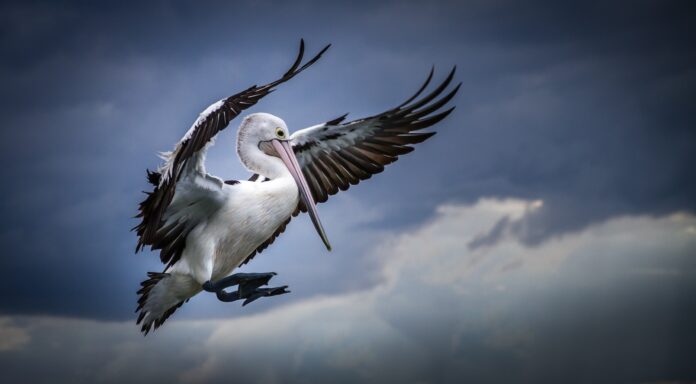
A colossus of the bird world is maintaining one of its healthiest populations in Australia on our Sunshine Coast shores.
And that’s despite being forced to adapt to a new kind of survival as suburbia encroaches on its coastal habitats.
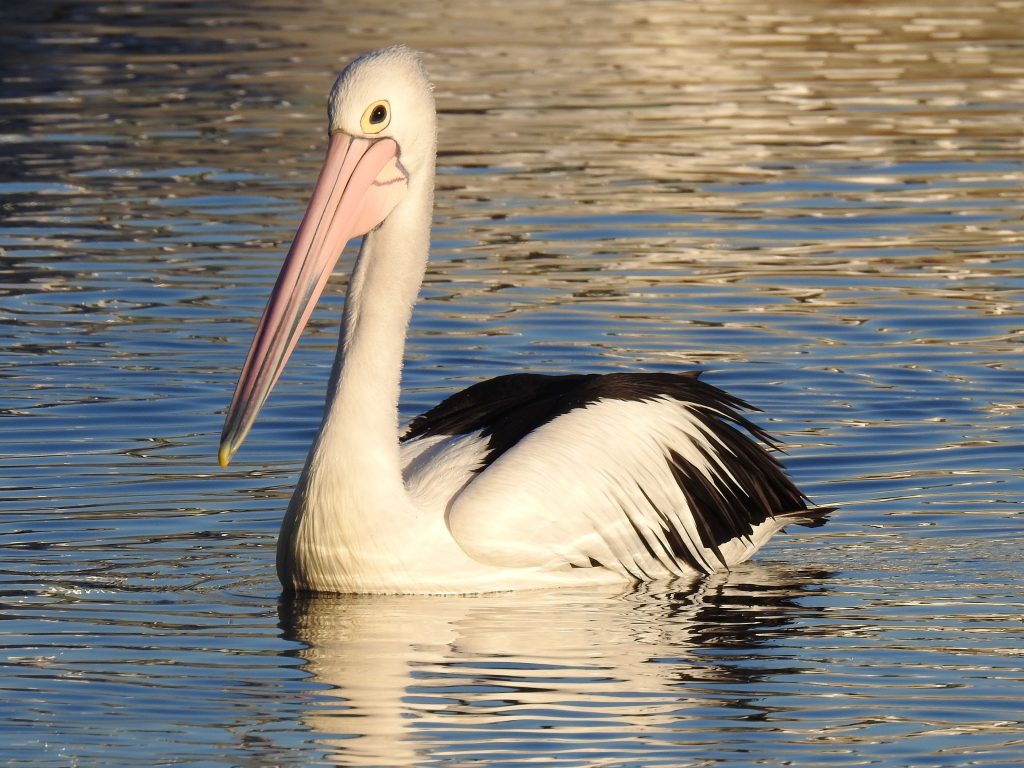
Australian pelicans (Pelecanus conspicillatus) that can be seen sunning themselves on Sunshine Coast beaches and boardwalks, soaring like mini jumbo jets across the sky and even perched atop light poles are reminiscent of some menacing, prehistoric creature.
Dr Dominique Potvin, University of the Sunshine Coast senior lecturer in animal ecology, described pelicans as the second-heaviest flying bird in Australia, behind brolgas, with one of the biggest bills at up to 0.5m long.
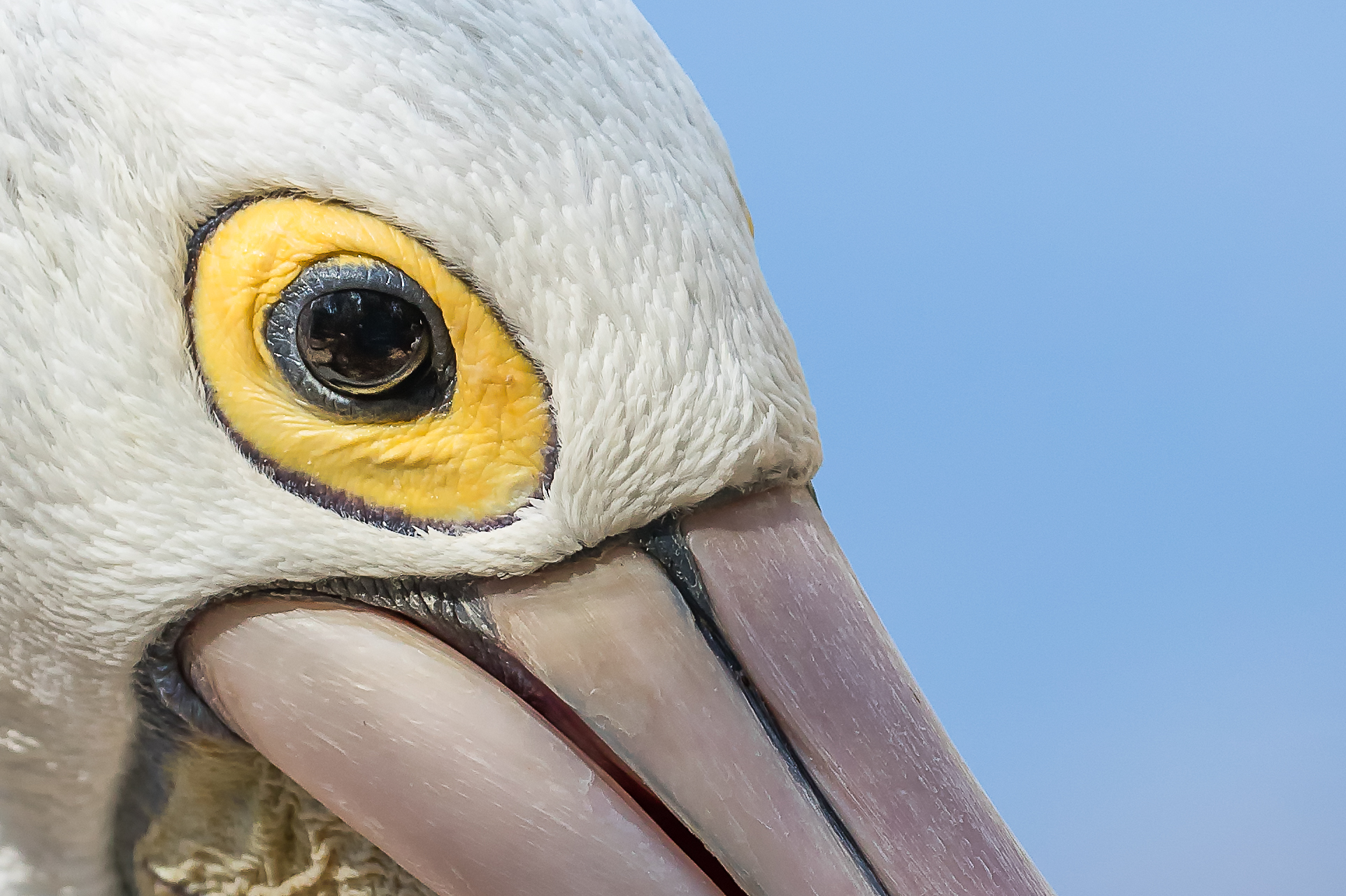
They have one of the largest bird body sizes in terms of length, yet still manage to convey grace and serenity.
The stark white and black pattern we’ve become so used to identifying with our Australian variety is actually unique among the pelican species.
And while fish is their main diet, pelicans also scavenge by finding crustaceans and other aquatic invertebrates, as well the eggs or young of other seabirds. Their bill is designed to scoop up their meal and drain the water before swallowing.
Dr Potvin, who specialises in ornithology, birds, animal behaviour and evolution, said that while we associate pelicans with our beaches, “home is a bit of a strange concept” to such creatures.
“They are very nomadic and so ‘home’ might mean many things,” she said.
“The Atlas of Living Australia has approximately 2200 records of pelicans in the Sunshine Coast since 2020, so it’s definitely a healthy population, numbers-wise.”
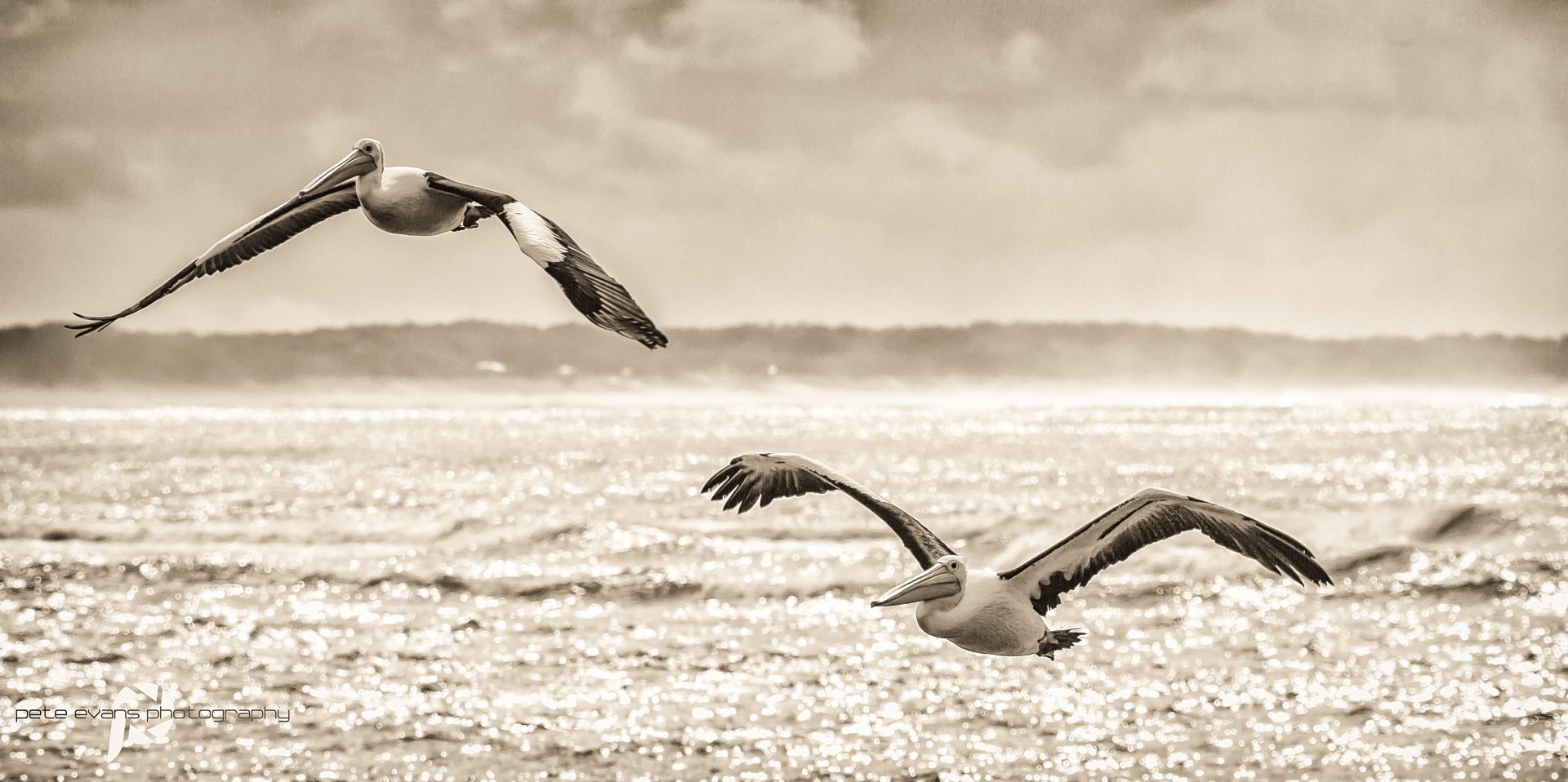
Defying their size, pelicans do not find long distances arduous. They sometimes travel upwards of 1000 kilometres from tropical regions during the winter to breed in places such as Lake Wyara in Currawinya National Park, on the Queensland border with New South Wales.
“Pelicans are thought of as coastal birds because coasts are much more consistent in their food availability and water levels (that is, the ocean doesn’t dry up),” Dr Potvin said.
“However, pelicans like to be undisturbed when they breed, and as you can imagine, most coastal areas in Eastern Australia are highly subject to human disturbance.
“So, inland lakes and floodplains – especially in La Nina bumper years – are particularly attractive as places to raise young.
“Pelicans are great at long-distance flying, so it also doesn’t necessarily take too much effort for them to cross large expanses to get to suitable breeding grounds.
“Their wings are actually well proportioned for long-distance migrations. They are expert at high-altitude flying – on average about 1000m in the air, soaring to cover hundreds of kilometres for hours and hours. Flapping and take-off are the most energetically expensive parts of flying for them.”
But while their regal stature may command respect, pelicans still face a growing number and variety of human threats in the shared coastal space.
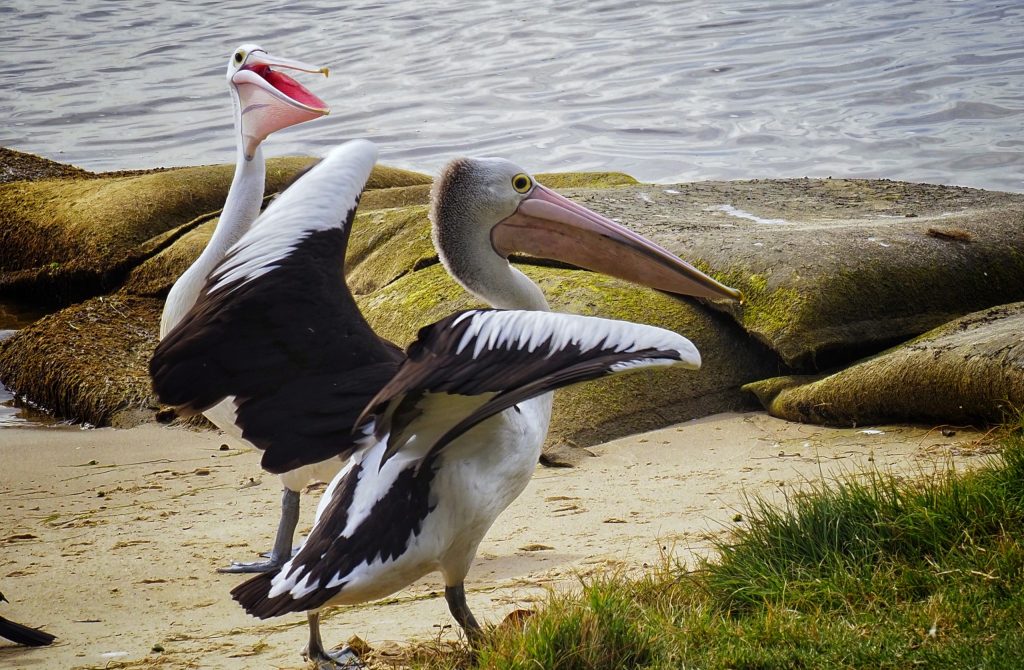
Royal Society for the Prevention of Cruelty to Animals (RSPCA) wildlife vet nurse Breanna Pitt said the 1300 ANIMAL hotline at times took calls concerning injured or displaced pelicans.
“Members of the public often can’t contain or don’t know how to handle an animal of their size, so they call for help from the RSPCA rescue teams or local seabird speciality care groups,” she said.
“We also receive a large number from care groups seeking treatment for injured or sick pelicans.
“We see a variety of injuries but hook/fishing line injuries are the ones we see most, alongside Botulism and general exhaustion/weakness after landing in residential areas (they need quite a good run-up to get lift with how big they are and with all of the development near the beaches, they land in people’s backyards and end up trapped).
“While a lot of the fishing line and hook injuries we see are quite varied, some of the worst has been legs and wings almost self-amputated from how tight the line is wrapped around.
“We’ve also seen pouches with large, irreparable tears.”
Ms Pitt said handling precautions needed to be taken for the safety of staff and the feathered patient because of the pelican’s size and bill.
“Depending on the degree of their affliction, the level of medical care and rehab needed can be very high,” she said.
“The bigger the patient is, the bigger the surgical procedure, medication doses, food required and housing space that is needed.
“When they start feeling better, they definitely show their personality more and are quite boisterous pre-release back into the wild.”
Ms Pitt offers one final warning: don’t give in to pelicans and seagulls on the hunt for hot chips at beach picnic tables.
“Any kind of food that isn’t part of a wild animal’s natural diet can be fatal,” she said.
“Human food causes blockages as the food makes its way down. It also alters their blood parameters because of the oil and sugar contents.
“People underestimate how intelligent these birds are: they know when people are on the beach, it means food and they can become reliant on it.
“In the long term, it shortens their lives dramatically.”
If a pelican or any other bird or animal is in distress or danger, call 1300 ANIMAL (1300 264 625) for help and advice 24/7.
SUBSCRIBE here now for our FREE news feed, direct to your inbox daily!