
Twenty-five per cent of Australian Defence Force veterans are living with the debilitating post-traumatic stress disorder.
Alarmingly, one veteran commits suicide every second week.
One Sunshine Coast charity is working to reduce those numbers by covering the costs of an otherwise expensive animal therapy program.
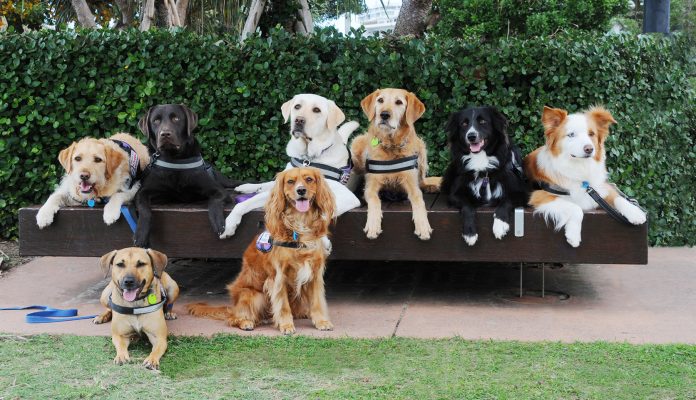
PTSD Dogs trains suitable rescue dogs to provide mental and physical support to sufferers who seek a better quality of life.
Among their skills, these highly-trained dogs can sniff out pain, take washing out of the machine and provide weight-bearing support.
It costs around $40,000 to train and house a dog. Despite being a recognised therapy support, there is little funding available to those who require an assistance animal.
This is where PTSD Dogs comes in. They cover all associated costs including ongoing training and veterinarian bills, but they are in need of community help.
CEO and founder Angie Weeks said although the organisation was hoping to secure a major benefactor, donations big or small would help to ensure the charity’s long-term future.
Mrs Weeks, who launched PTSD Dogs after her own experience with the debilitating illness, said the program was bridging a gap for sufferers.
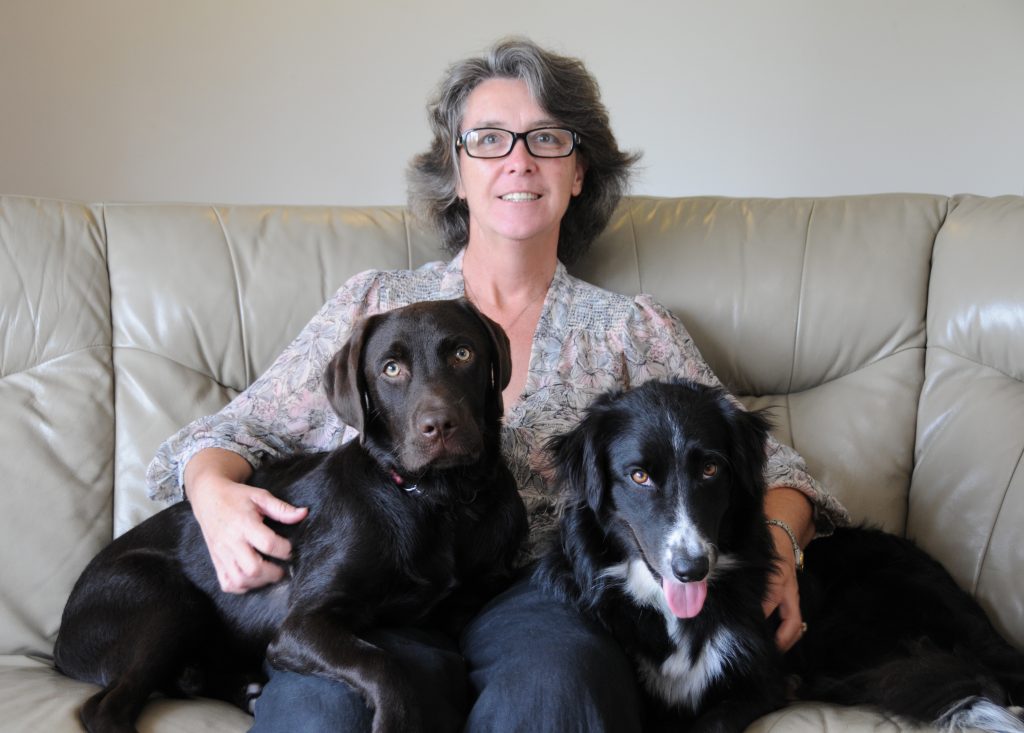
Her husband Roger suffers from PTSD. He spent 14 years in the air force, which left him with chronic pain that resulted in major spinal reconstruction surgery.
“My husband, back in February 2018, shared his exit plan with me,” Mrs Weeks said.
“His psychiatrist back in 2014 had recommended he get a PTSD-trained assistance dog.
“It was going to be a four-year wait and cost $40,000 and I knew I didn’t have that time.
“This is where it all started… He’s had Rosie his PTSD assistance dog now for three years.”
Mrs Weeks said Rosie had been life-changing for her family.
“[PTSD] is a silent illness. These people tend to lock themselves away and become isolated.”
Between 2001 and to 2018, 465 ADF servicemen and women took their own lives. Of these, 57 per cent were veterans.
Help keep independent and fair Sunshine Coast news coming by subscribing to our free daily news feed. All it requires is your name and email. See SUBSCRIBE at the top of this article
The Department of Veterans’ Affairs Transition and Wellbeing Research Programme 2020 key findings found that those who had been discharged were at a greater risk of poor mental and physical health outcomes compared to the rest of the Australian community, and those who were still in service.
Compared to those still in service, nearly three times as many transitioned ADF personnel had high to very high post-traumatic stress symptoms.
PTSD (17.7%), panic attacks (17%), agoraphobia (11.9%) and social phobia (11%) were the most common types of anxiety disorders in veterans and those who transitioned into the reserve service.
Sunshine Coast veteran Laurie Cattanach was diagnosed with PTSD following 16 years with the Australian Army.
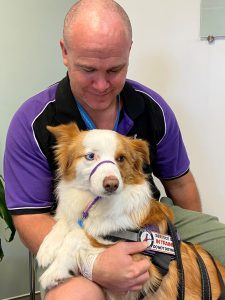
The 45-year-old, father of five has endured nine surgeries and had a neuro-stimulator implanted into his spine for pain relief.
He met Mr and Mrs Weeks at the Eumundi Markets where they were fundraising for PTSD Dogs, he applied for the program and was accepted.
October marks four years since Buddy the border collie came into Mr Cattanach’s life.
“Before I got him, I struggled to leave the house,’’ he said.
“I didn’t really see much of my five girls. I struggled, was barely getting out of bed and was not being part of the world.
“I’d had chronic pain for a very long time. Buddy has learnt to smell my pain.
“He’s trained to be able to smell it and paw me to let me know. If I stand too long I start to hurt and before I know it, I’m really sore.
“I clench my teeth at night a lot and it gives me headaches. Buddy has learnt to come and wake me up.”
Buddy is also able to provide physical support when Mr Cattanach walks.
“A lot of people with PTSD and mental health problems, especially from the military, struggle with normal life,” Mr Cattanach said.
“An assistance dog allows us to live more of a normal life than we would without a dog.
“I’m doing an art course now and learning a lot more skill-wise to hopefully be able to sell as an artist. Buddy has allowed me to do that.
“I was a very angry person because I was in pain all the time. Buddy will give me that love and affection unconditionally.
“I find now that I’m able to give more love and affection back to my girls.”
PTSD Dogs has trained 20 dogs through the program and each was rescued from death row or from a family who could no longer house the pup.
“I feel grateful to have been able to help people,” Mrs Weeks said.
“I’m extremely grateful for what we’ve been able to achieve and the people who have come into our lives.
“I do look back now and think, ‘wow’.
“What we have achieved in a very short period in time is because of community spirit.”
For more information about the program or to donate, visit ptsddogs.org.au
If you need help, contact:
Open Arms – Veterans and Families Counselling – 1800 011 046
ADF All-hours Support Line – 1800 628 036
Lifeline – 13 11 14
Beyond Blue Support Service – 1300 22 4636