
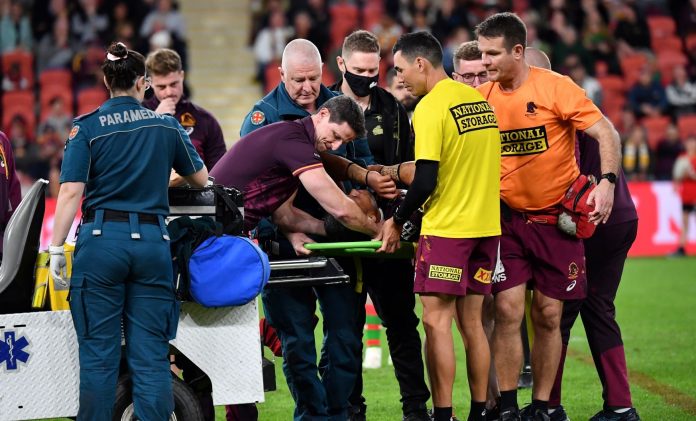
I think it is fair to say that the word “concussion” has received more airtime in mainstream media than any other form of injury or illness in the past 12 months.
Many sporting bodies have now developed strict policies and procedures in improving management of participant safety in contact sports across all levels.
Concussion is mentioned in daily news cycles, athletes are being medically retired on the basis of repeated concussions and community sport has adopted strict return-to-play protocols.
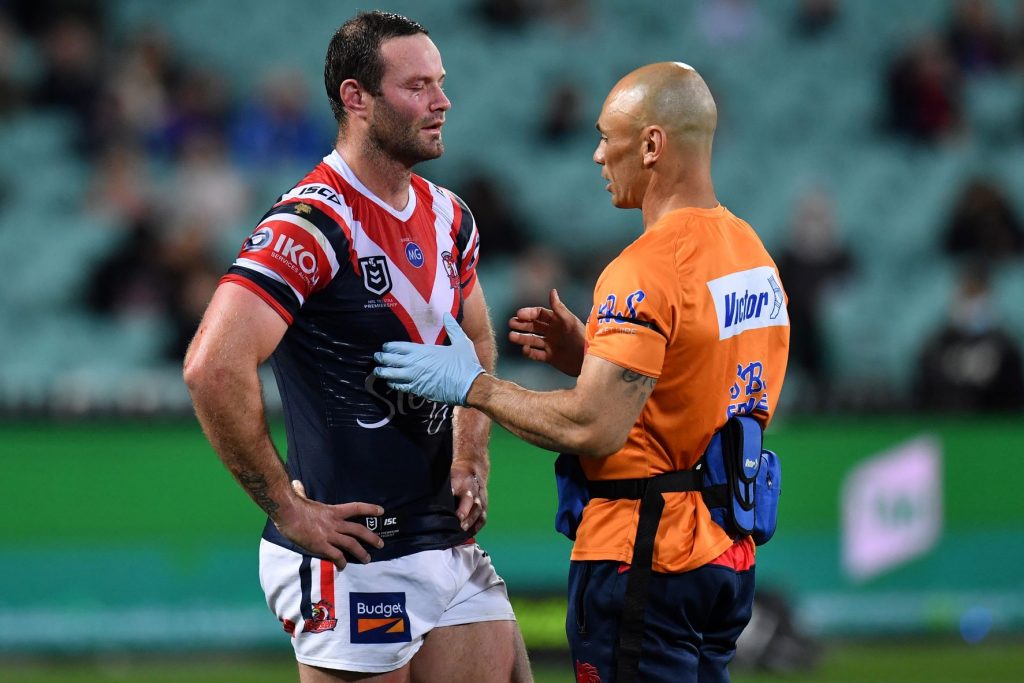
So why all the fanfare now about a condition that has been around for as long as blokes have had testosterone and the desire to strike each other’s heads? The simple answer is: medicine.
The reason for the recent significant shift in the management of concussion, can be largely attributed to Dr Bennet Omalu, a neuropathologist in America, who performed autopsies on former NFL players.
Those of you that have seen the Hollywood movie Concussion, starring Will Smith, will be familiar with Dr Omalu.
His recent work brought to light earlier research conducted by doctors dating back as far as the 1920s, who investigated why some boxers appeared as “punch drunk” in everyday life.
Dr Omalu’s recent research has been the first to attempt to fill a large gap in current medical knowledge about concussion, which was, what actually is concussion? It also looked at what structure in the brain gets damaged in a concussive event.
The problem we were facing in the world of concussion was that we were unable to explain structurally why athletes were presenting to clinicians with signs and symptoms that were similar to that of a traumatic brain injury, without any signs present on current forms of imaging.
Therein lay the problem. Concussion has long been seen as nothing serious and often referred to as a “head knock”. This was often relayed in an athlete who would often use the classic old saying “I’ll be sweet”, and hence no further questions were asked.
When performing a brain autopsy on multiple retired NFL players, Dr Omalu closely examined the brain tissue.
What he found in 76 of the 79 cases he examined, was an abnormally high concentration of a protein within the brain tissue that occurs due to damage within the brain cells themselves.
Of important note, these same types of proteins found in brain tissue are also found in conditions such as Dementia and Alzheimer’s.
Dr Omalu named this presenting condition, Chronic Traumatic Encephalopathy (CTE), and reported that this progressive disease was most likely caused by repeated head trauma.
CTE can present with symptoms such as memory loss, confusion, Parkinson’s-like tremors, walking problems, impaired judgement, depression and personality changes.
In Australia alone, there is now a very long list of former professional athletes who have reported these symptoms, a long time after finishing their chosen sport.
The problem we currently face is, at present, CTE can only truly be diagnosed under the microscope after autopsy, which presents the next challenge for researchers in order to be able to diagnose CTE in living brains.
So where to from here?
- As parents and coaches, we need to ensure we are employing safe practices and adhering to the best practice management guidelines.
- The “I’ll be sweet” approach used in prior generations needs to be seen as outdated and now dangerous regarding concussion.
- Concussion is an evolving injury. You cannot rule out a concussion immediately after a traumatic incident.
- If in doubt, sit out!
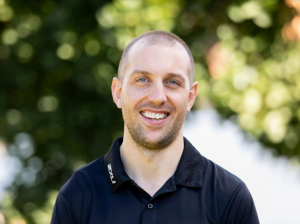
Jordan Craig is an APA Titled Sports and Musculoskeletal Physiotherapist and founder of Back to Bounce Sports Physiotherapy. He was previously an anatomy lecturer at Australian Catholic University, University of the Sunshine Coast and Griffith Universities and has worked with the Melbourne Victory, Brisbane Bullets and Football Federation of Australia. The views expressed are his own.