
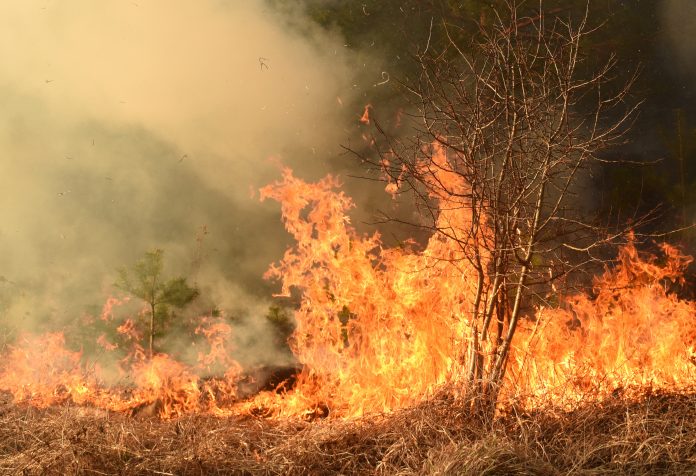
Sunshine Coast residents are being urged to become ‘citizen scientists’ and help predict the severity of future bushfires in the region.
University of the Sunshine Coast (USC) has received a $498,426 Federal grant to deliver a new ‘NOBURN’ mobile app, which is designed to engage the public.
It offers locals the opportunity to participate in a research project, by capturing photo evidence of fuel loads, dryness and structure of forests.
Artificial intelligence tools will then be used to predict the probability, severity and burn area of potential bushfires, based on images submitted.
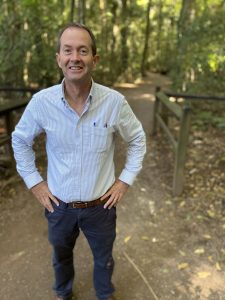
Federal Member for Fisher, Andrew Wallace, said the project could make the region safer.
“Though much of our community was spared the worst of the Black Summer bushfires, parts of our region were impacted,” he said.
“If we don’t act to monitor and understand local risks, then next time it could be much worse.
“Bushfires will always be a risk on the Sunshine Coast, but with the help of Sunshine Coast locals, the University of the Sunshine Coast, and the Federal Government’s support we can gather the data we need to mitigate against that risk and to reduce the impact bushfires have when they do happen.”
The outcomes of the research project will assist in disaster resilience, preparedness and response to bushfires.
“USC’s grant will enable ‘citizen scientists’ on the Sunshine Coast to work hand in hand with the community and make a direct contribution to a scientific research project of true national significance,” Mr Wallace said.
In the 2019-20 fire season, more than 10 million hectares were burnt, destroying over 2000 homes.
Follow Sunshine Coast News on Facebook.
The cost to Australia was estimated to run into the billions and has had a devastating impact on the agriculture, forestry and tourism industries.
There are currently limited resources to support accurate prediction and effective response to large-scale fire events.
“To make this project a success we will need as many locals as possible to sign up and get involved, so please, keep an eye out for the NOBURN app this year,” Mr Wallace said.
The grant is being delivered through the Australian Government’s Citizen Science grants, which provide grant funding of between $150,000 and $500,000 for projects that support community involvement and participation in scientific research.
Help us deliver more stories by registering for our free daily news feed. All it requires is your name and email. See SUBSCRIBE at the top of this article.
Minister for Industry, Science and Technology, Christian Porter, said the grants would help raise community awareness of science, while allowing participants to make significant contributions to research.
“These grants continue the Government’s commitment to making science relevant and accessible to people of all ages across the nation, and complements our support for events like National Science Week and institutions like Questacon,” he said.
“The projects supported in this round of the program are in four priority areas: disaster resilience and preparedness; environmental change; cyber security and artificial intelligence; and food and agribusiness. These all have practical applications and benefit to Australia.”
Citizen Science grants are supported under the Inspiring Australia – Science Engagement Programme (IA-SEP).
More information about the projects funded under this grant can be found at: www.business.gov.au/grants-and-programs/citizen-science-grants/grant-recipientsround-2