
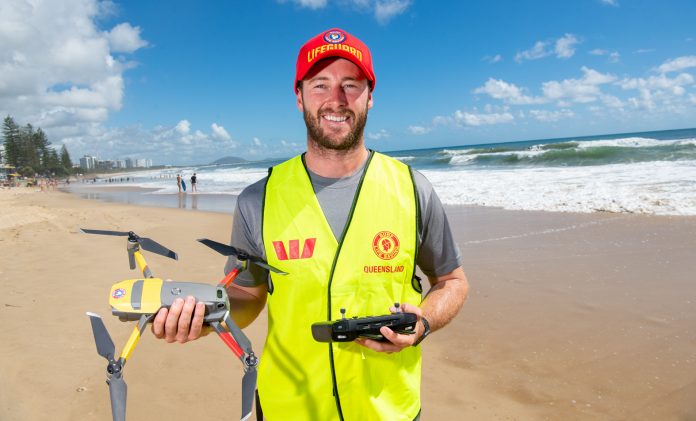
Shark-detecting drones being trialled to reduce the risk of attacks could become a permanent part of beach patrols after delivering additional life-saving and marine research benefits.
This comes as experts and conservation groups look to develop alternative shark control measures in the region after gathering at the Marine Species Protection Symposium at Noosa.
The SharkSmart trial began in September 2020 putting “eyes in the sky” at five South East Queensland beaches, including Alexandra Headland and Coolum North. It also included North Stradbroke Island, as well as Burleigh and Main Beach on the Gold Coast.
Latest figures show 54 sharks – including 25 more than 2m in length – have been sighted to date, forcing four beach closures at North Stradbroke and Burleigh.
A Fisheries Queensland spokesperson said three sharks were identified by drone at Alexandra Headland where they were monitored to ensure there was no immediate risk to water users.
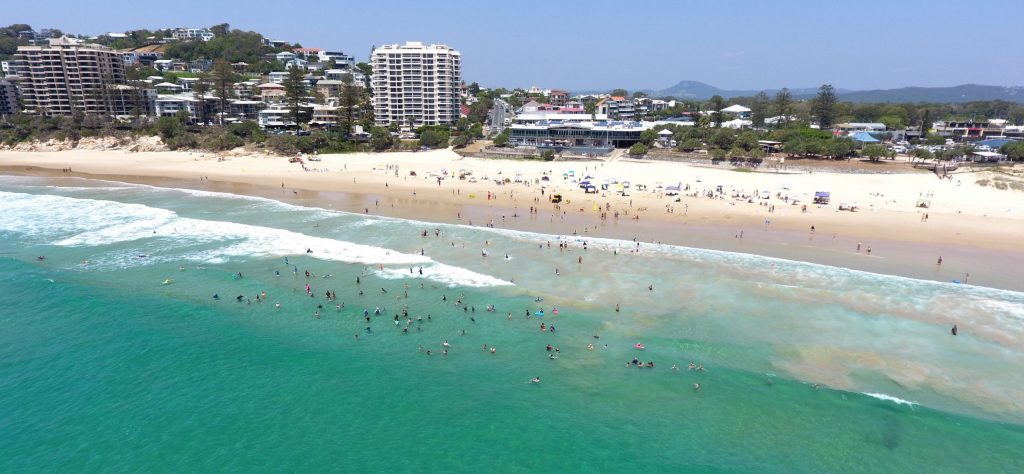
The spokesperson said the trial would continue until October 4 – the end of the spring school holidays.
“As well as looking out for sharks, the SharkSmart drone trial has enhanced general beach safety on the Sunshine Coast,’’ he said.
“Surf Life Saving Queensland drone pilots assisted the rescue of four people caught in a strong rip current at Coolum North.
“Information about other marine fauna spotted by drone is also being recorded during the trial to contribute to wider scientific research.
Help keep independent and fair Sunshine Coast news coming by subscribing to our free daily news feed. All it requires is your name and email. See SUBSCRIBE at the top of this article
“This includes an Australian Humpback dolphin spotted by drone at Coolum North, a rare sighting for the Sunshine Coast region.’’
Experts believe there are only a few thousand of the species left and they usually stay in rivers and shallow estuaries. There is a small colony in Tin Can Bay.
The Fisheries spokesperson said a final evaluation report with detailed analysis would be completed at the end of the trial.
This report would help inform government decisions on whether drones may be an effective long-term tool at Queensland beaches.
Surf Life Saving Queensland regional manager, Aaron Purchase, said SLSQ would be supportive of drones being implemented on a permanent basis.
Mr Purchase, who is also a sunshinecoastnews.com.au columnist, said the trial had given some productive ideas on how the technology could be further leveraged to make beaches safer.
He said the drones gave “an improved, overall picture of the beach’’ and had a much broader application than just shark spotting.
“They can feed vital information back to lifeguards. It’s like having extra eyes.
“If they do spot a shark, it might be one we have missed.
“They might also help identify other potentially-dangerous situations.
“We have already seen how they can help with searches (for swimmers), such as the Coolum incident, which had a successful outcome.
“We would love to see this become a more regular part of our services into the future.’’
Do you have an opinion to share? Submit a Letter to the Editor with your name and suburb at Sunshine Coast News via: news@sunshinecoastnews.com.au
The initiative was part of the Queensland Government’s investment of $1 million per year toward research and trials of alternative shark detection and mitigation technologies.
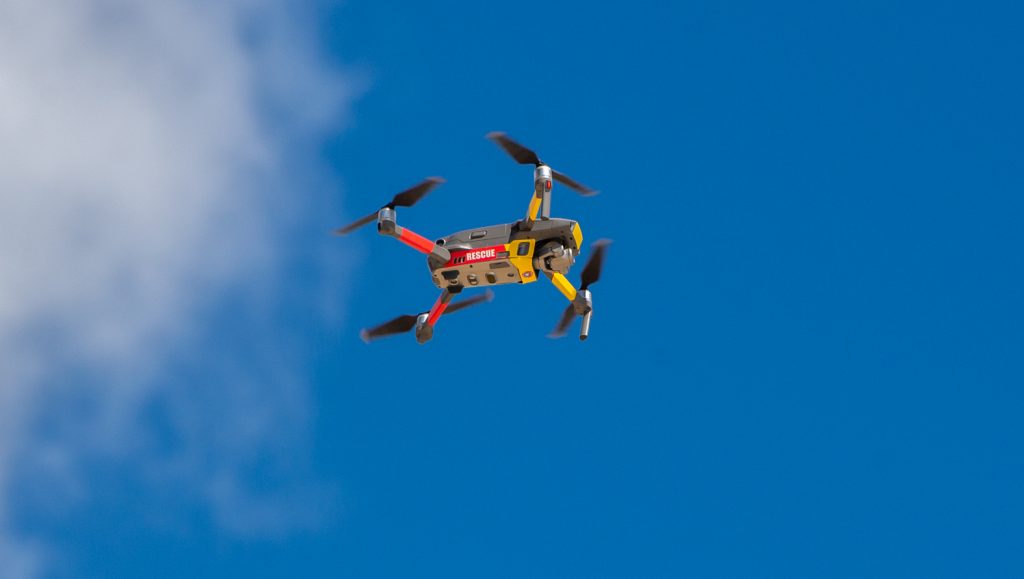
Marine species experts and conservation groups met this week to develop alternative shark control measures for Noosa’s beaches.
The Noosa Biosphere Reserve Foundation (NBRF) hosted a Marine Species Protection Symposium on Tuesday to develop a trial for Noosa that would safeguard humans while minimising harm to marine life.
“We are keen to find alternative shark control measures that provide protection for both marine species and beachgoers,” NBRF director Greg Schumann said.
Current methods under Queensland’s Shark Control Program, such as drum lines or net barriers, provide a level of human protection, however, non-target marine species including dolphins, turtles, juvenile whales and threatened shark species continue to be caught in this equipment.
The symposium was facilitated by leading shark experts Dr Charlie Huveneers and Dr Daryl McPhee and brought together marine conservation groups, local surf lifesaving clubs, Noosa tourism operators, local and state government representatives, leading researchers, and marine experts.
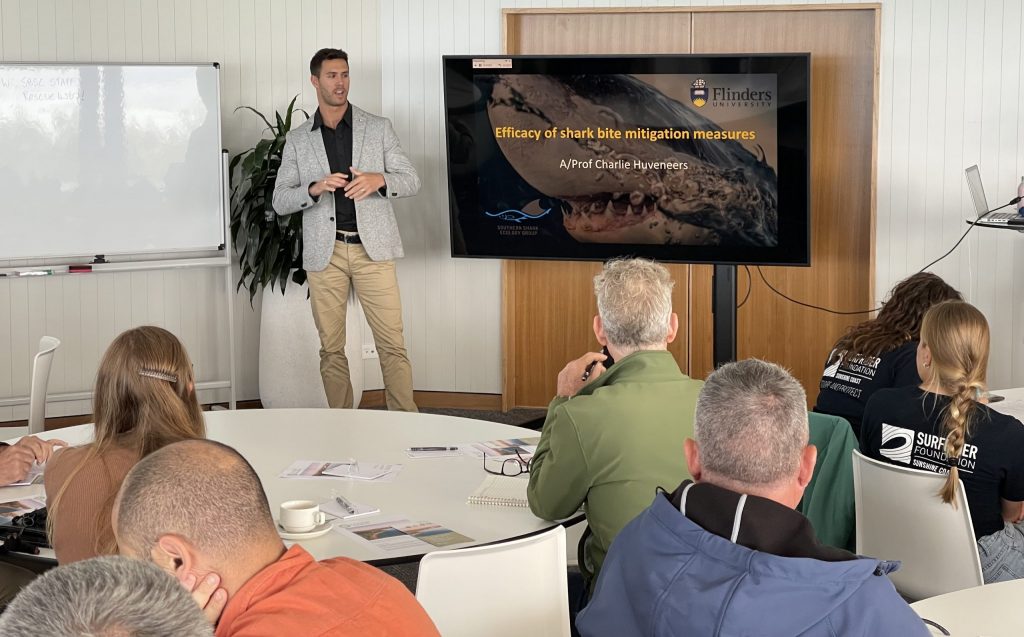
Stakeholder groups presented key considerations and the Department of Agriculture and Fisheries presented current practices and future alternative options.
Dr Daryl McPhee from Bond University said that the goal was to minimise impacts on non-target species in the Noosa Biosphere Reserve.
Outcomes of the Marine Symposium will be finalised in the coming weeks with a proposal for a bespoke trial of shark control measures in the Noosa Biosphere Reserve submitted to the Queensland Government in June.
Noosa was designated a Biosphere Reserve in 2007 under the UNESCO Man and Biosphere Program.