

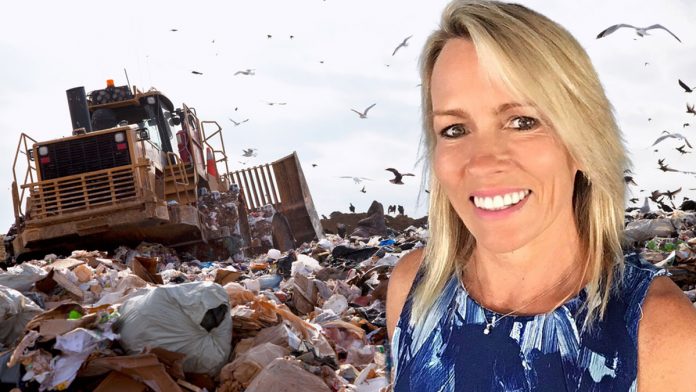
It is hard to fathom how much food we throw out.
Gobsmacking, it is. Nonsensical. Gluttonous.
OzHarvest, Australia’s leading food rescue organisation, says a third of the average Aussie household bin is food waste. The Federal Government says for every five bags of groceries that we buy, the content of one will be chucked away.
We are literally creating mountains with the extra milk we bought which is now past its expiry date, the half-eaten contents of our crisper drawers, and that left-over pasta that no one felt like eating the next day.
And COVID-19 made it worse: as we locked down, the national bill for wasteful food choices ramped up. The Department of Agriculture, Water and the Environment says food waste costs our economy a whopping $20 billion annually.
Rabobank’s 2020 Food Waste Report, released this week, shows we added an extra $1 billion in food waste this year, with $1043 worth of perfectly edible food making its way into the average household slop bucket in the past year.
It is as if we thought that if we were going to be forced to be distant from the world, then by George we would use the space and time to cook ourselves silly even if there is no way known we could eat it all.
Sales of self-prepare food kits (a huge food waster, apparently) went through the roof and food delivery services like Uber Eats went gangbusters. Not all of these delicacies ended up in our mouths.
Shockingly Queensland – which has been less hampered by restrictions than other states – is Australia’s second-biggest food waster behind NSW.
We can do better because economically, environmentally and socially, we simply must.
The issue is not just one for the hippies and softies: the Federal Government in 2016 set a goal for us to halve our food waste by 2030, aligning with United Nations sustainable development goals.
The government is identifying wasteful chinks in the food supply chain, and has plans to bolster the food rescue sector to help the one in five Australians who do not have adequate access to food.
Its stats show a fifth of the water used in agriculture is used to grow food that is ultimately discarded and that throwing away a single burger wastes the same amount of water as having a 90-minute shower.
It also says food waste is a monster greenhouse gas emitter, so gassy once in landfill that it blows a hole into the atmosphere.
While all this sounds as dire as it is disgusting, all is not lost.
We can choose a different behaviour. We can buy only what we need by making weekly meal plans. We can freeze leftovers, today’s dinner can also be tomorrow’s lunch and we can use older veg and fruit to make soup, stir-fry or pies.
Every person’s effort makes a difference and if nothing else, our wasteful, wanton ways should give us (portion-controlled) food for thought.
Jane Stephens is a USC journalism lecturer, media commentator and writer.



